Facility management in which “people” play a central role in enhancing regional power. The thoughts of a planner who embodies the mission of the PPP Division
Miki Mori has been involved in the operation of public facilities since 2005. At NOMURA Co.,Ltd., a company specializing in spatial design, layout, she has led public-private partnership (PPP) facility management operations. Mori has realized an operation style where "people are the main focus." We delve into her 18 years of PPP projects.
Leading public-private partnership projects: managing cultural facilities and participating in new project competitions
Mori is a planning director in the PPP section of the Business Production Headquarters' Public-Private Partnership Project Development Department. PPP is a scheme in which public and private parties collaborate to provide public services. It is a system that aims to improve efficiency and quality by utilizing private capital and know-how, and is also called public-private partnership. Mori has been involved in PPP projects since 2005 and has been responsible for the management of public cultural facilities.
Mori: "The main job of the PPP division is to operate public cultural facilities. Currently, we operate 17 facilities nationwide, with a total of over 200 staff members across all facilities. Head Office has a team of 12 people who manage and support operations."
Our mission is to provide services that are welcomed by visitors and local residents through facility management. At the same time, we aim to partner with the local government that installs the facility and contribute to resolving issues in the facility and the region."
In 2022, the PPP Division to which Mori belongs will be placed under the Business Production Division, and we are also taking on the challenge of expanding into new areas.
Mori: ``Recently, our customers are not only local governments but also private companies.We have also begun to provide solutions that support not only operation but also the pre-construction stages of facility construction, such as financing and proposing new services. We are also expanding the types of facilities we operate.Currently, we are mainly operating museums, but in the future we would like to expand to various areas such as libraries.''
Mori says that in competitions, there are more opportunities to collaborate with other departments in order to create new value.
Mori: "Since 2021, our company has been focusing on social good activities, and we are working with our in-house social good team to propose inclusive participation experience programs. Recently, we have seen an increase in PFI (Private Finance Initiative) projects, where private companies handle everything from facility design to operation, so collaboration with displays design team is becoming increasingly important."
Some cases have been successful precisely because NOMURA Co.,Ltd. is a company where various departments collaborate and work together as one team.
Mori: "The Hamamatsu Science Museum, for which we were commissioned to handle everything from design to operation of the facility renovation using the DBO method (*), was an extremely challenging project, with only a year and a half from schematic design to completion. However, because displays design and operational plan proceeded in parallel, we were able to reflect the opinions of the prospective operators in displays design."
I'm still involved in the operation as a person in charge at Head Office office, and I've grown attached to the facility that I was involved in from the planning stage. At the Hamamatsu Science Museum, we aim to create a place where children can think for themselves by trying out various things. So, there was a period after the opening when we had to make various adjustments, but the staff members have made good use of displays and are working every day to make them even better."
What Mori valued in the PPP project was the voices of visitors and staff.
Mori: "Our company is a professional in displays, but we believe that the perspectives of visitors and the staff who are constantly working to improve things on-site are very important in order to make the facility even better. Hamamatsu Science Museum is preparing to update displays displays next year, and the staff are taking the lead in planning improvements to displays and new displays to realize the original concept in the best possible way, based on visitor trends and activities over the past four years since the museum opened."
We listen to the voices of our customers and staff and reflect them in our next displays. I believe that being able to grow the facility by passing the baton from designers to staff is a strength unique to NOMURA Co.,Ltd., which has always pursued the revitalization of spaces."
Incorporating a marketing perspective into cultural facilities and making it the cornerstone of PPP
During his student years, Mori studied aesthetics and art, and traveled to museums both in Japan and abroad. After graduation, he intended to work for a house builder, but by chance, he learned about NOMURA Co.,Ltd.
Mori: "My reason for applying to NOMURA Co.,Ltd. was attending a company information session with a friend. I was interested in the work after looking at the company brochure, but what impressed me even more was the high level of enthusiasm and vibrant atmosphere among the employees. Moreover, they were recruiting women for sales positions, which was rare at the time. I remember thinking that this was a company where women could also thrive."
In 1989, Mori joined the company as its first female sales representative. She worked in sales for about five years, handling displays for major manufacturers, before transferring to the Cultural Environment Research Institute, NOMURA Co.,Ltd. 's think tank, and simultaneously transitioning to a planner role.
Mori: "I started working with cultural facilities after becoming a planner. I feel that the experience I gained as a planner is connected to my current work. My main responsibility back then was displays planning for cultural facilities, but I also helped with the basic concept and business plan when establishing museums."
In addition to examining the functions and social roles of museums, I also gained experience in research. In my research work, I collaborated with museums and evaluated how visitors use displays, striving to understand the gap between the creators' intentions and the needs of visitors. I believe I had a valuable experience, such as learning that even small adjustments to displays can dramatically change visitors' reactions."
In 2002, he also took on the challenge of full-scale marketing research. It is said that this was an unusual initiative for a cultural facility at the time.
Mori: “We conducted an awareness survey not only among museum visitors but also among people who had never visited the museum, and realized that the values sought by senders and visitors are often different.For example, people with small children and As a result, the purpose of using the museum and the viewpoints differed from those who did not.Until then, I had not been able to clearly imagine what kind of people would visit the museum and what they were looking for.
By hearing real voices and conducting large-scale surveys, the image of visitors changes completely. I think that experience has had a big influence on my current work."
Mori: ``Until then, our work had been up to the opening of the facility, but at the PPP Development Center, we were dealing with many things for the first time, such as preparing for the opening and operating the facility.In the beginning, we were just trying to figure out how to proceed with the help of the facility's staff and internal members. I went.”
The main character is “people”—By collaborating with local volunteers, the number of annual visitors has increased by 100,000 in five years
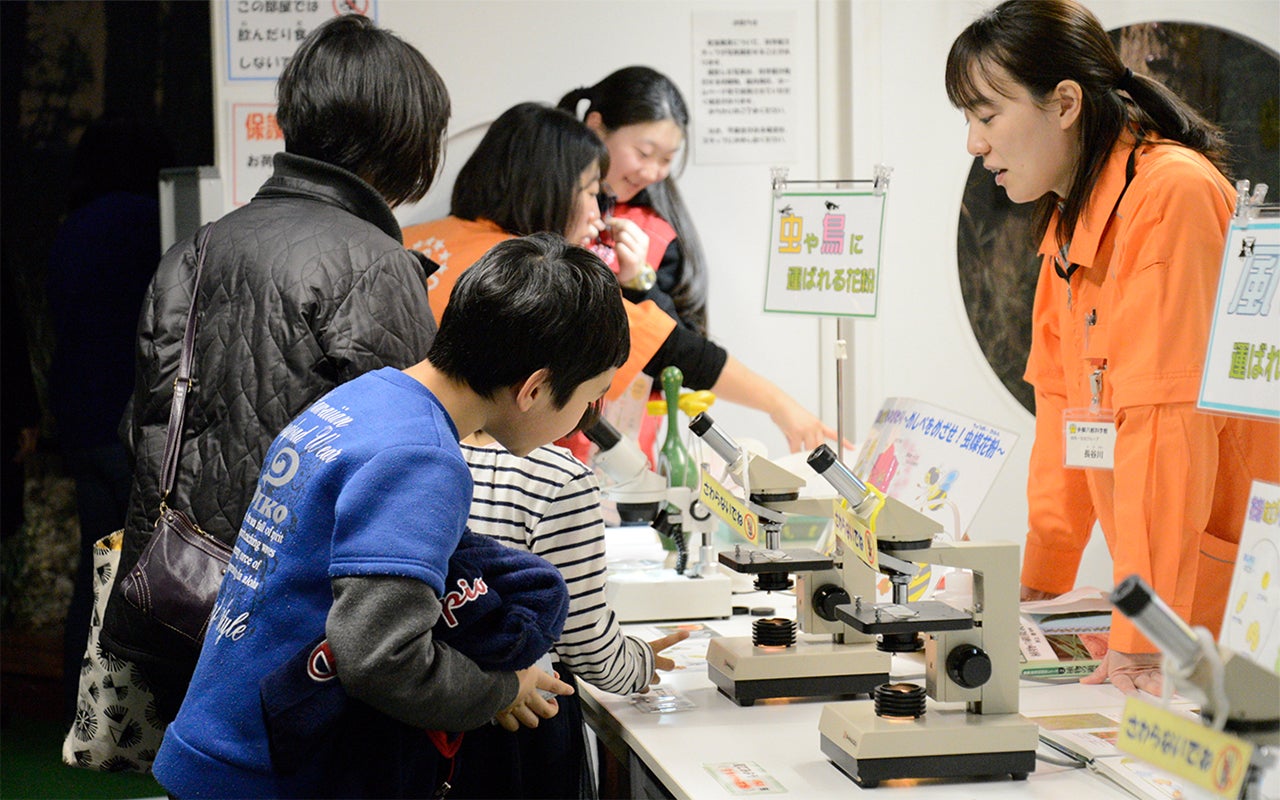
▲ Observation of pollen at the Tama Rokuto Science Museum “Shizen Lab”. Staff and volunteers support the operation.
There is one piece of work in the PPP project that left a particular impression on Mori. That happened when I was involved in the management of the Tama Rokuto Science Museum, which was renovated in 2013.
Mori: "This project involved renovating displays at the Tama Rokuto Science Museum, which had been open for about 20 years. Our mission was to consider what kind of facility we wanted it to be and to create a space to realize that vision. What we emphasized was creating a place where people could interact with each other. The main focus wasn't displays themselves, but the people. We wanted the staff and volunteers to be the main players, and to create a facility that would be a stage where local people could thrive."
The museum has been renovated with the concept of "Try it out, Participate in it, and Have a conversation." Operations began with the aim of making the facility a hub for the region, bringing people together and creating something. As a result, in five years, the number of annual visitors has increased by approximately 100,000 compared to before the renovation.
Mori: "The key to our success is 'people.' First and foremost, it's the efforts of our staff. They've created a lab where we can conduct experiments and observations while interacting with visitors. We also collaborate with local research institutions, universities, and companies to hold various displays and hands-on events."
Also, the power of local volunteers cannot be overlooked. When it first started operating, it was a group of about 60 people, but as the local community started to work together to make the science museum more exciting, the group grew to a maximum of 150 people, from children to adults. A new management style has been created in which staff and volunteers work together. Thanks to this, I feel like the facility has become a place where I can make new discoveries and try new things every time I visit. We have created a science museum that can grow through dialogue with visitors and local residents."
Mori says that the company's unique mindset has contributed to the success of the museum and other operations.
Mori: "At the facilities we operate, it's not uncommon for former employees of NOMURA Co.,Ltd. to be in charge. Some were formerly in sales or production, and some are working in cultural facilities for the first time, but they take the lead in thinking about how to make visitors enjoy themselves and how to improve the facilities."
Looking at things like this, I strongly believe that our employees have a deep-rooted desire to not only create things, but also to provide better services to customers and create new value. At the same time, I feel that the facility has been able to grow because the staff and local people who run the facility sympathize with this mindset."
We want to be a company that creates new value without being bound by conventional frameworks.
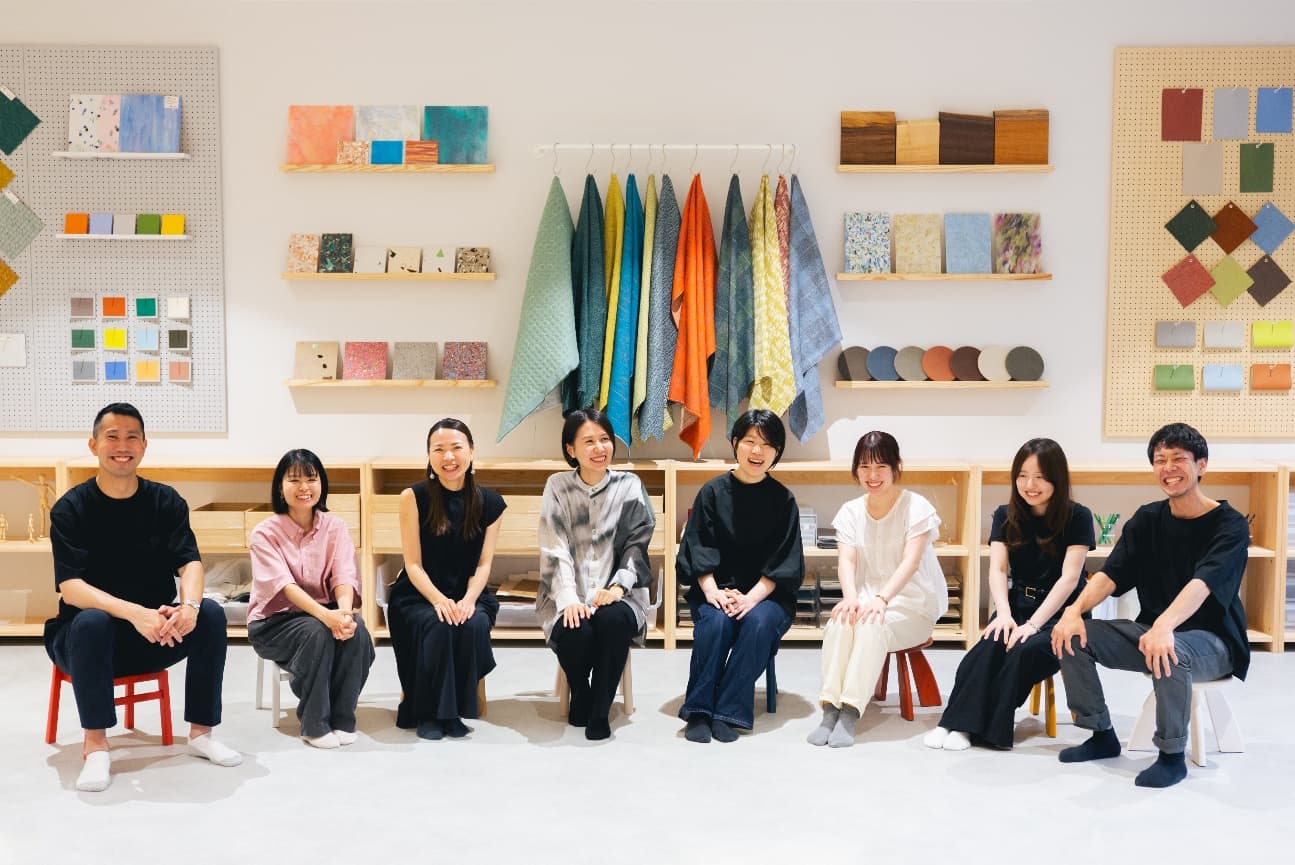
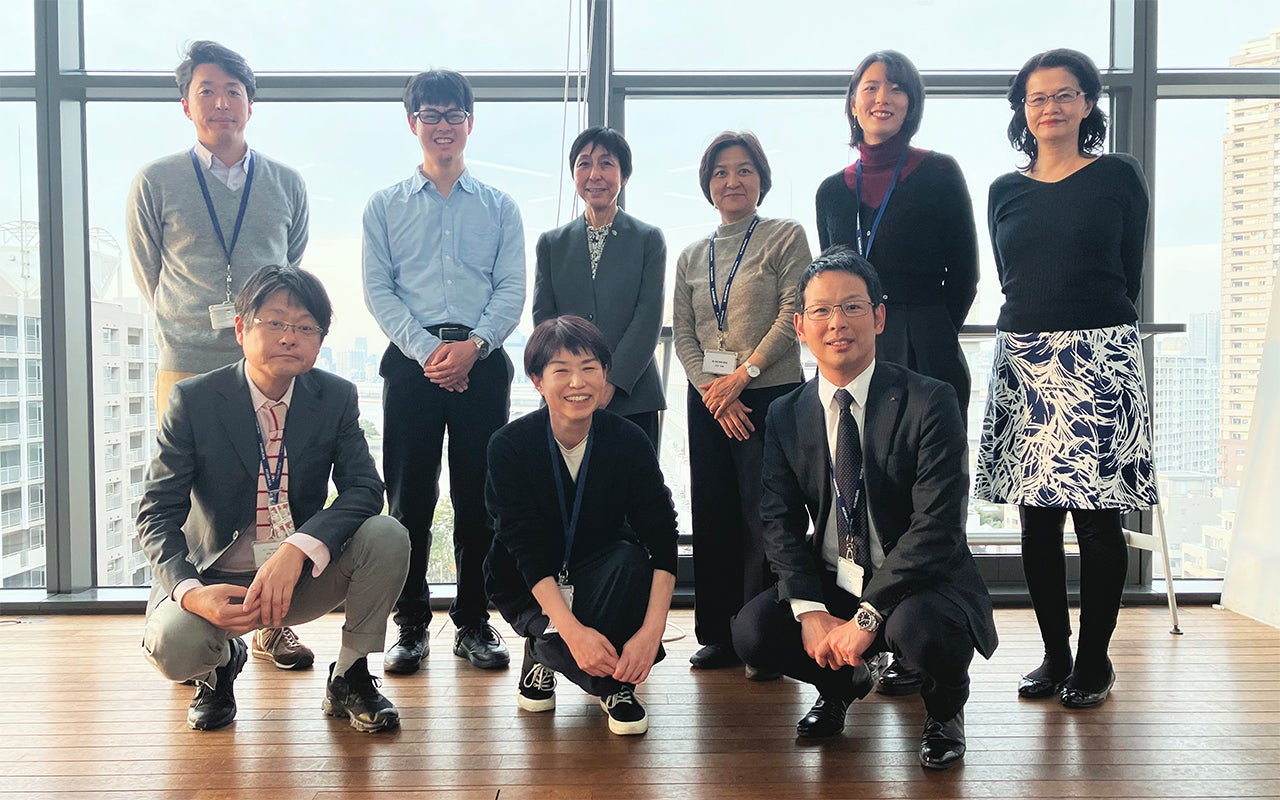
▲ Some of Head Office members involved in facility management. This small, elite team supports the operation of 17 facilities nationwide.
In 2023, Mori will have been involved in PPP projects for 18 years. Looking back on the past, we are emphasizing that we have entered an era in which new value is required.
Mori: "In recent years, PPP projects have seen an increase in PFI (Private Finance Initiative) work, and I feel there is a demand for facilities that can create new value. As a company, we need to leverage our experience in design, construction, and operation while also broadly incorporating new perspectives. Going forward, we hope to develop new value by strengthening cooperation across departments within the company, as well as reaching out to partner companies that share the same values."
Mori also says that he wants to be someone who can create new value. Continue as follows.
Mori: “Cultural facilities in the future are expected to take on forms that are not bound by conventional frameworks, and we want to be the ones who create new value there, not anyone else.When the opportunity arises, we want to be the ones who create new value. I want to be ready to jump in and form a team with a variety of people.I want to continue to help create things that have never existed before in various regions.''
NOMURA Co.,Ltd., guided by its management philosophy of "We contribute to creating a rich human environment by creating new value based on respect for humanity," has pursued the possibilities of space. For 18 years, through its PPP (Public-Private Partnership) projects, it has been working to connect "people," "regions," "culture," and "environment," which also lead to social good. How will the relationship between people and space change in the future? The key to that lies with the forests.
*The contents are as of December 2023.
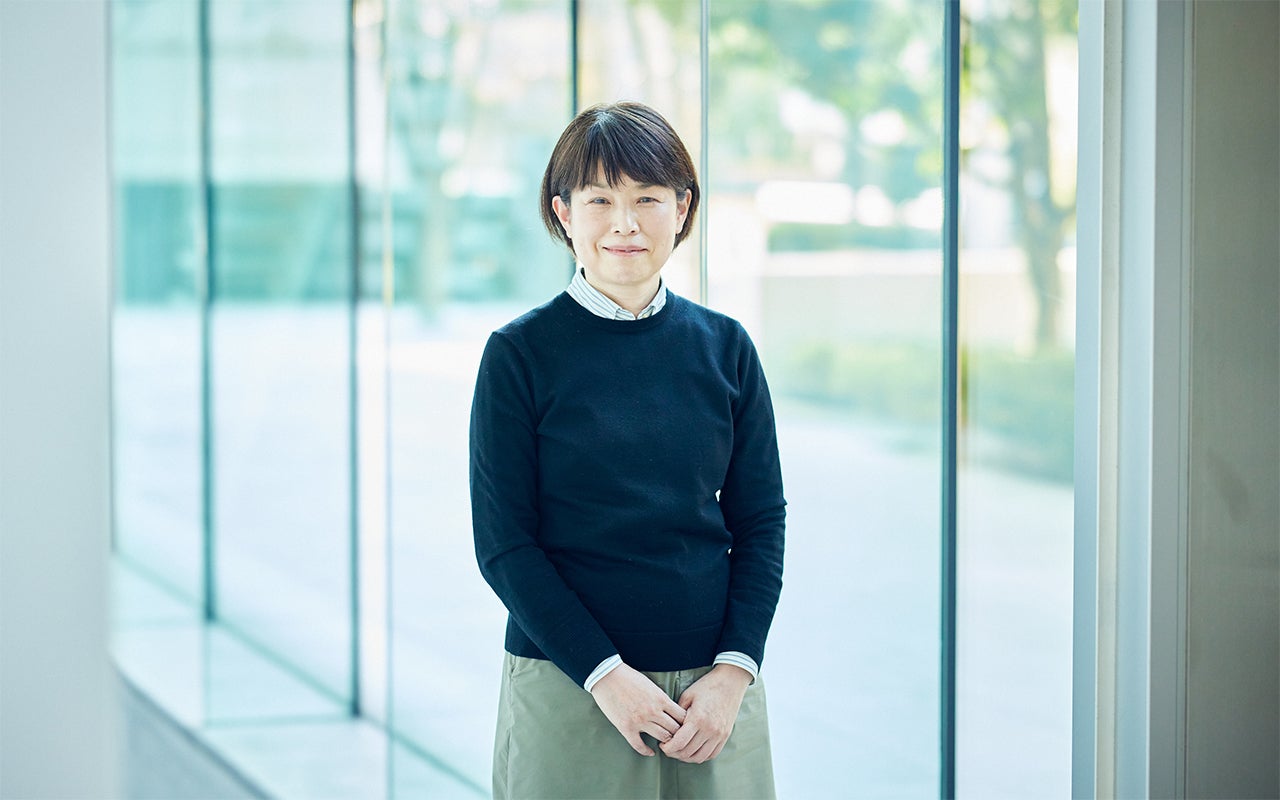
Miki Mori
I primarily handled displays and business planning for the development of cultural facilities. In 2005, I moved to a department responsible for the operation of public facilities, mainly involved in museum operation planning. In 2022, I moved to the Public-Private Partnership Project Development Department of the Business Produce Headquarters, expanding the scope of my work.
Facility management in which “people” play a central role in enhancing regional power. The thoughts of a planner who embodies the mission of the PPP Division
PAGE TOP
Contact us
Please contact us using the button below if you have an inquiry, want to request a quote or request documents. We have created a separate “FAQ page” that lists the most common questions we are asked. Please take a look at this page if you have a question.
This website uses cookies to improve customer convenience and also to maintain and improve the quality of our services. Click the “I Agree” button if you agree to the use of cookies. Refer to the Privacy Policy for details.




![Drawing out children's passions through numerous experiences [Part 1]](/_next/image/?url=https%3A%2F%2Fnomura-kogeisha.g.kuroco-img.app%2Fv%3D1779774440%2Ffiles%2Fuser%2FSCENES%2FVol.05%2FPandD_JUNOPARK%2F477A3016b_jitsuga.jpg%3Fwidth%3D800&w=1920&q=75)