
To recreate the former vibrancy of the forest together with the local people.
- #Tohoku
- #Award Winning
- #Regional activation
- #Architecture
- #Sustainability

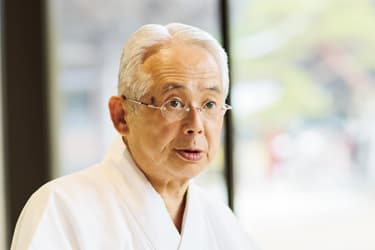
Morihiro MurataTakekoma Shrine
chief priest
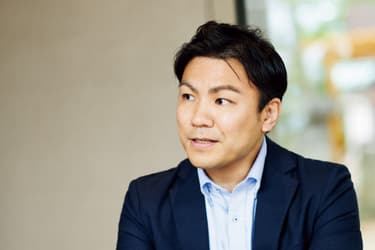
Kenta Takahashi77 Bank
(Seconded to 77 Digital Solutions)
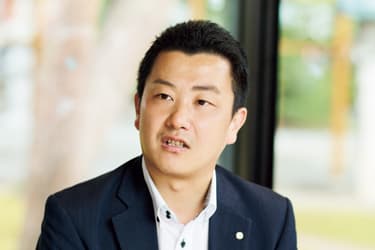
Naoki TakasawaSeventy-Seven Bank Iwanuma Branch and Iwanuma West Branch
leader
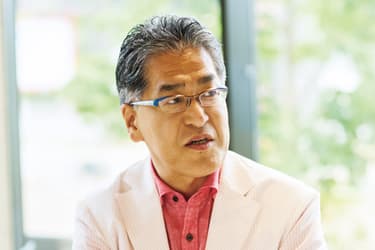
Kenichi Sakazume,NOMURA Co.,Ltd.
Business Production Division, Second Management Department, Leasing Relations Department, Producer
Keisuke Yoshida,NOMURA Co.,Ltd.
Sales Promotion Headquarters Tohoku Branch Sales Department Chief
Kensaku Shirodo,NOMURA Co.,Ltd.
Creative Headquarters, Second concept design Center concept design Department 1, Shirodo Room, Room Chief Designer
Sustainability ─ Shrines that bring people together across the ages
Takekoma Shrine [Takekoma no Mori CAFE Ichirimanbai]
Iwanuma City, Miyagi
Takekoma Shrine is located in Iwanuma City, a lush rural area about 20 minutes south of Sendai Station on the Tohoku Main Line. Founded in the Heian period
This shrine is one of the most famous in Japan. Since ancient times, it has been counted as one of the three great Inari shrines in Japan, and is widely worshipped as the local guardian deity.
However, as times have changed, the number of visitors has gradually decreased. In order to make the temple the center of regional revitalization, local people have come together to take on a project to bring back the liveliness of the temple grounds.
A god of rice cultivation dating back to the Heian period
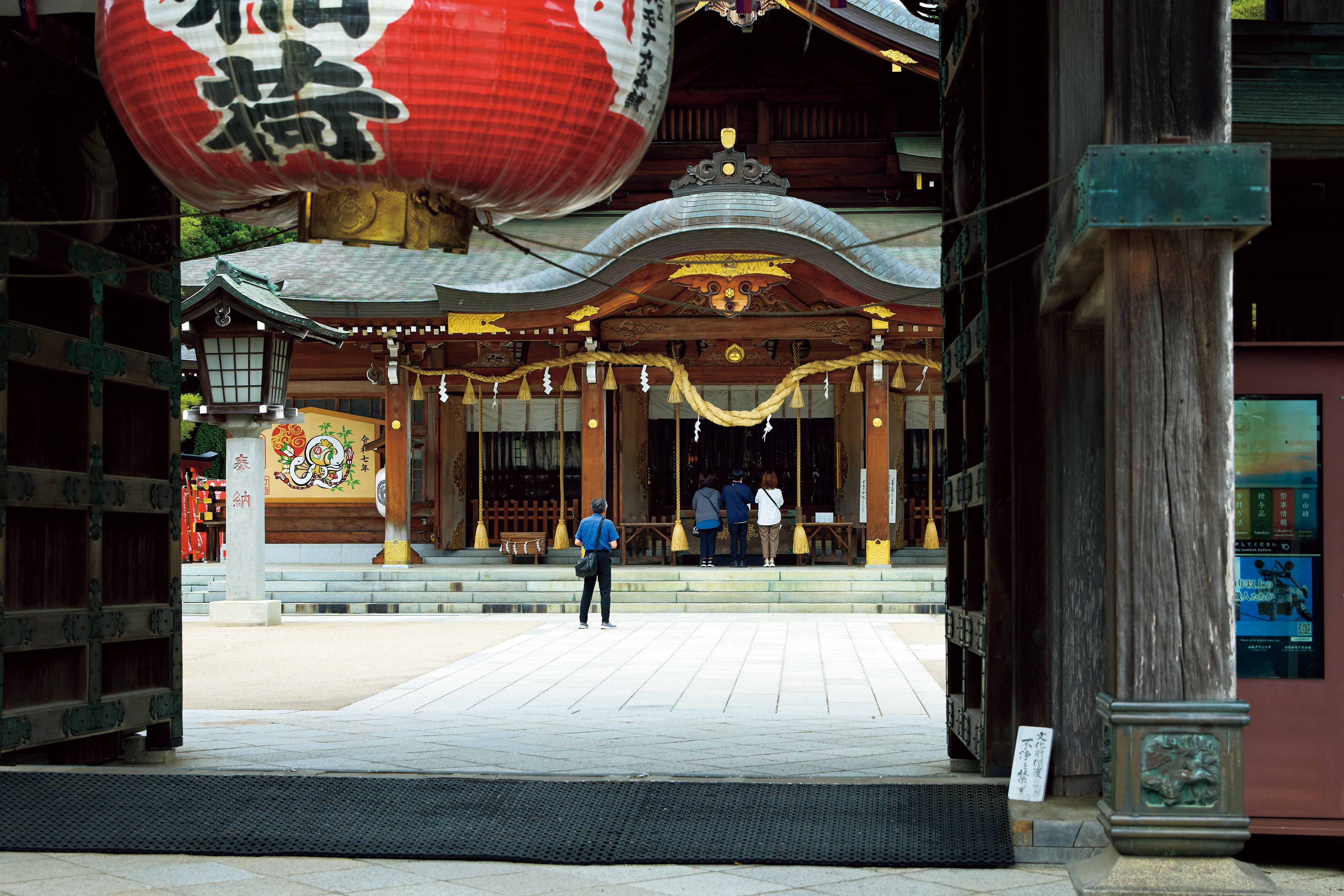
Takekoma Shrine was founded in the 9th year of the Jowa era (842 AD). Since then, the shrine has a history of nearly 1,200 years, and according to the chief priest, Murata Morihiro, it was founded to enshrine the god of agriculture.
"The shrine was founded by Ono no Takamura, who also appears in the Hyakunin Isshu. He was the great-grandson of Ono no Imoko, who was known as an envoy to the Sui Dynasty, and a member of a family of government officials who served the Imperial Court. He founded Takekoma Shrine when he was appointed to Mutsu Province as the governor of Mutsu. At the time, the Imperial Court had two local offices in Kyushu, Dazaifu to keep an eye on the Kumaso, and Taga Castle in the Tohoku region to counter the Emishi, as its offices in the unification of Japan.
Taga Castle was not only a military base, but also a fairly large-scale governing body with administrative, medical, and educational responsibilities.
Ono no Takamura, who was appointed to Taga Castle as the governor of Mutsu Province, believed that economic power was necessary to stabilize the people's sentiments. That's why he brought in a group of immigrant engineers specializing in civil engineering and medical care. This included rice cultivation techniques. Rice cultivation, which was introduced from the continent, had already spread to the western part of Japan, but the Tohoku region was quite behind, so I think he placed importance on spreading rice cultivation techniques.
So, when Takekoma Shrine was first built, we deliberately brought in Inari. Usually, Hachiman, the god of military fortune, is enshrined there, but we chose Inari, the god of agriculture. After that, Takekoma Shrine received patronage from the Oshu Fujiwara clan and the Date clan, and grew to the point where worshippers spread all over the country. At its peak, there were 300 branch shrines across the country. When I was young, tour buses would line up and groups would come from all over the country to visit at each season, such as New Year's Day, Hatsuuma Day, and the autumn festival. Pilgrimage trips would combine visits to Kinkazan Koganeyama Shrine and Shiogama Shrine with hot springs and other activities."
However, such group visits gradually disappeared.
Revitalizing the shrine also revitalizes the local area
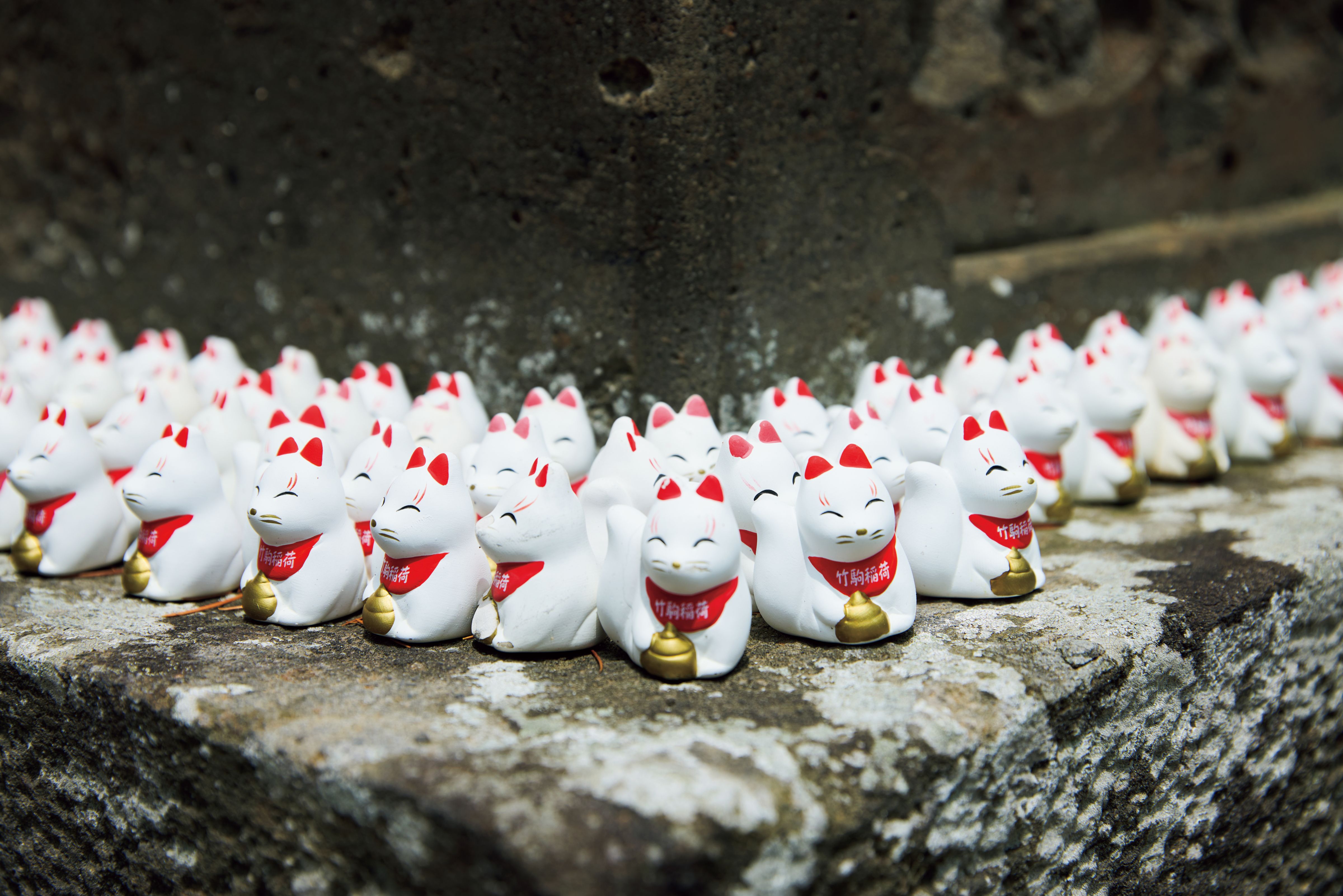
This year marks Murata's eighth year as chief priest. As the number of group visits by devotees has decreased with the change of generations, he has begun work on improving the grounds in an effort to bring back the former bustle.
"We replaced the paving stones in front of the shrine with permeable ones, created a place for worshippers to rest next to the Karamon gate, and installed new toilets. We also created a shop selling local products called Takekoma Market. There is a large building on the shrine grounds called the Sanshuden, which is used as a wedding venue, and we were thinking about turning it into a facility to attract customers by adding a small cafe function or something similar."
The chief priest consulted with the local financial institution, 77 Bank, about revitalizing the shrine. Takahashi Kenta, who was in charge of NOMURA Co.,Ltd. in the bank's regional development department at the time, says:
"It all started with us wanting to do something about the assembly hall. However, as I spoke with the chief priest, the topic broadened to include issues facing the local community and Takekoma Shrine itself. As the local deity, Takekoma Shrine is an extremely important shrine not only for the Iwanuma area but for Miyagi Prefecture as well. It also has a heavy historical legacy. While we wanted to do something unique and new, we didn't just aim for something innovative; we wanted to create a shrine that was rooted in the community and beloved by the local community. We worked together to consider what form that should take."
Naoki Takazawa of the Iwanuma branch, who took over from Takahashi midway through the project, said that because this was a project to revitalize the local guardian deity, he felt that the cooperation of local businesses and people was essential.
"This town doesn't have many people passing through, especially on weekdays. Takekoma Shrine is the symbol of Iwanuma City, so I've always thought that if we could liven up the town, it would help liven up the town and revitalize it. However, even if people come to pray, they often leave soon after. It's important to increase the length of their stay and the number of repeat customers. As a bank, we have relationships with a variety of local businesses, so we want to use that network to get a variety of people involved and revitalize the area with the help of local people. I thought that was the role that only a local bank could play."
The chief priest, Mr. Murata, decided to solicit proposals from a wide range of companies with the cooperation of the consulting division of the 77 Bank. Of the proposals received from several companies, the one that resonated with him the most was the plan from NOMURA Co.,Ltd..
"The plan was to set up a new cafe near the tower gate on the temple grounds, rather than in the Sanshuden. It would be a glass-walled building, so people could relax and enjoy their meal while looking out at the trees in the temple grounds. From the outside, the cafe would appear to blend right into the forest. It's in a different location from the Sanshuden, but I thought this was exactly what I wanted."
Find a local partner
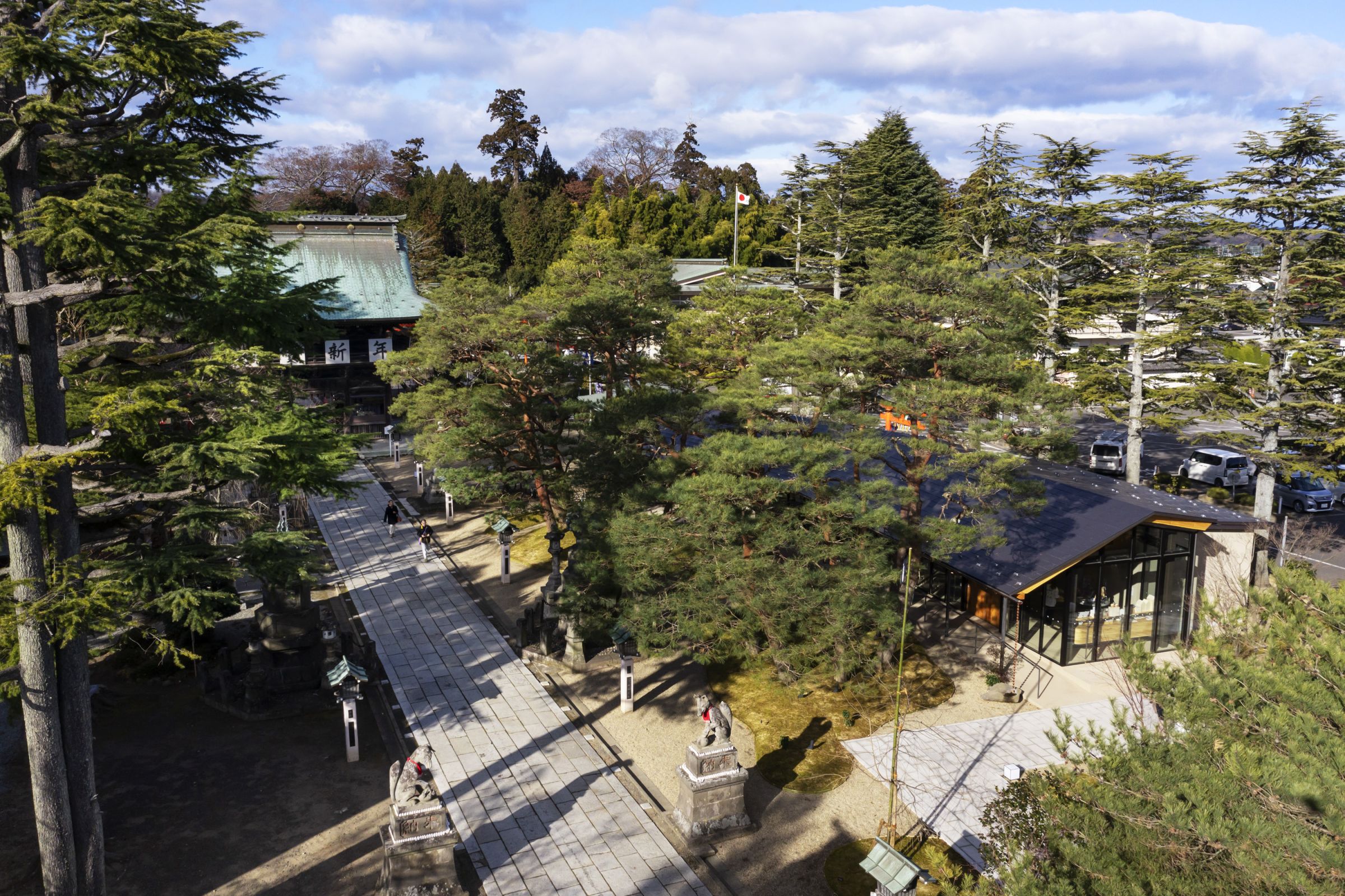
Kenichi Sakazume, the producer at NOMURA Co.,Ltd. who compiled the proposal, explained the reason for choosing a plan other than the Sanshuden (assembly hall):
"There is a large parking lot between the approach leading from the torii gate at the entrance to the main hall and the Sanshuden. This means that worshippers are not directed towards the Sanshuden on the other side of the parking lot. On the other hand, there is still a nice atmosphere on the approach side. I thought this would be a good place to open a cafe."
In fact, according to the shrine's chief priest, Murata, Sakatsume and his team's proposal included more than just concept design of the cafe; it also included a perspective on revitalizing Takekoma Shrine throughout the year.
"During the presentation of our proposal, we were shown data on the flow of people at Takekoma Shrine that had been analyzed using smartphone location information. When I saw the graph, I was shocked. There was a big peak in January, but then there was no peak at all until the end of the year. In the past, there were visitors every season, but now they are completely dependent on the first shrine visit of the year. NOMURA Co.,Ltd. Ltd. suggested that we come up with a way to increase attendance throughout the year."
NOMURA Co.,Ltd. proposal was officially adopted, and the search began for local collaborators, including a cafe management company, construction company, and landscaping company. To do this, the networks of the shrine, the 77 Bank, and NOMURA Co.,Ltd. were mobilized. For example, who should they entrust with menu development? The person they found was Chef Ogata Minoru of Sendai's one-star French restaurant, nacrée. Yoshida Keisuke, sales manager at NOMURA Co.,Ltd. 's Tohoku branch, who paved the way for participation in this project and was responsible for developing and coordinating with local collaborators, says:
"We had previously worked on Chef Ogata's restaurant at our Tohoku branch. Through that connection, we had a brief consultation and that's how it all began. As it's food served at a cafe, it's a bit different to high-end French cuisine, but they were happy to accommodate our requests and repeatedly made prototypes."
Local collaborators were found one after another in fields other than menu development, and after confirming their skills, they were asked to participate in the project.
50 heated discussion meetings!
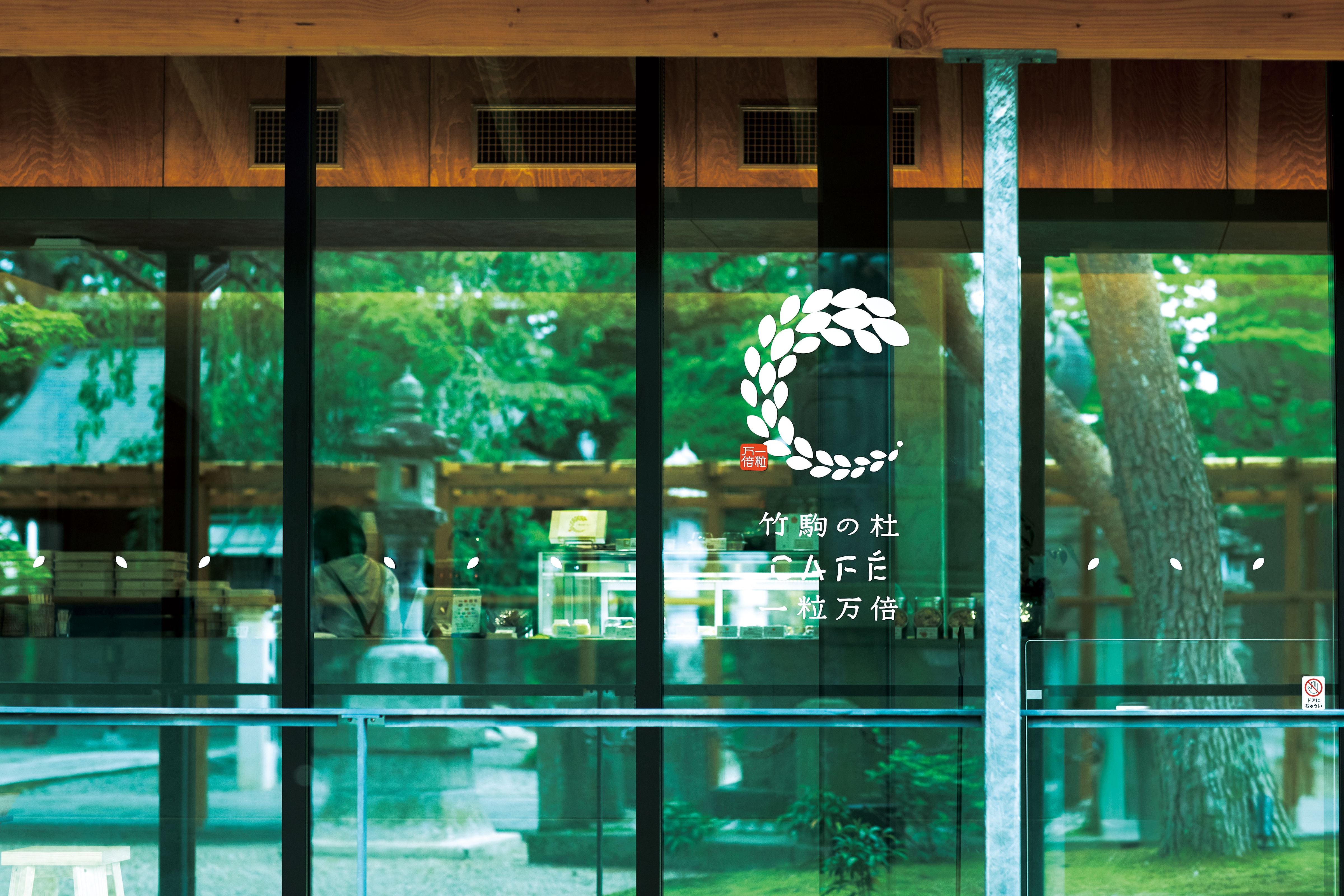
The concept of the new cafe has been decided to be "One Grain, One Million."
"In recent years, Ichiri Manbai Day has become popular as an auspicious day, but rather than jumping on the bandwagon, we wanted to return to the original meaning of the day as a shrine dedicated to the god of agriculture. Revitalizing the region requires revitalizing the local community. A place where all kinds of people gather, each one of them becoming a grain of rice that will bear fruit ten thousand times over. I proposed this idea with the hope of creating a cafe like that," says Sakatsume.
What was unique about this project was that a review committee was set up at each stage of the process to thoroughly discuss and make decisions. The number of participants varied from session to session, but generally the shrine side consisted of around 10 people, including priests and parishioner representatives, and around 5-6 people from NOMURA Co.,Ltd. Heated discussions were held at each meeting.
"The oldest head of the parishioners is 86 years old. The youngest are in their 20s. They are all very talkative. They are very passionate," says Sakatsume.
"It wasn't as if we were just approving of what the chief priest said, but rather each of us had our own opinion. Everyone spoke about the project as if it were their own. In the end, the meetings were held about 50 times," says Yoshida.
The most heated discussion during the meeting revolved around the cafe's logo. Murata had given the cafe the themes of "a cafe in the forest" and "the essence of an Inari shrine," but the debate continued endlessly on how to symbolize these in conjunction with the phrase "one seed yields ten thousandfold." Kensaku Jōdo, the designer at NOMURA Co.,Ltd., who was in charge of the overall project concept design, recalls:
"We wanted a logo that would appeal to people of all ages. We wanted something a little new and modern, but also had the traditional shrine feel. It was difficult to find the right balance. When we listened to everyone's opinions, we received a lot of suggestions from perspectives we had never thought of. Because it's an Inari shrine, we had to think about how to shape the rice plant and rice motifs in a way that was somewhere between concrete and abstract, like hitting a volleyball back and forth each time. Including derivative shapes, I think we ended up creating around 35 proposals."
Murata says that this meeting was the unifying force behind the project.
"Through discussions held together with representatives of the shrine parishioners and others, interest in and understanding of the project increased. Many good ideas were expressed from a variety of people. The procedures were difficult, but once an idea was expressed, a proposal reflecting that idea would be submitted to the next meeting, so everyone became more and more serious about the project."
Reflecting the opinions of the shrine maidens
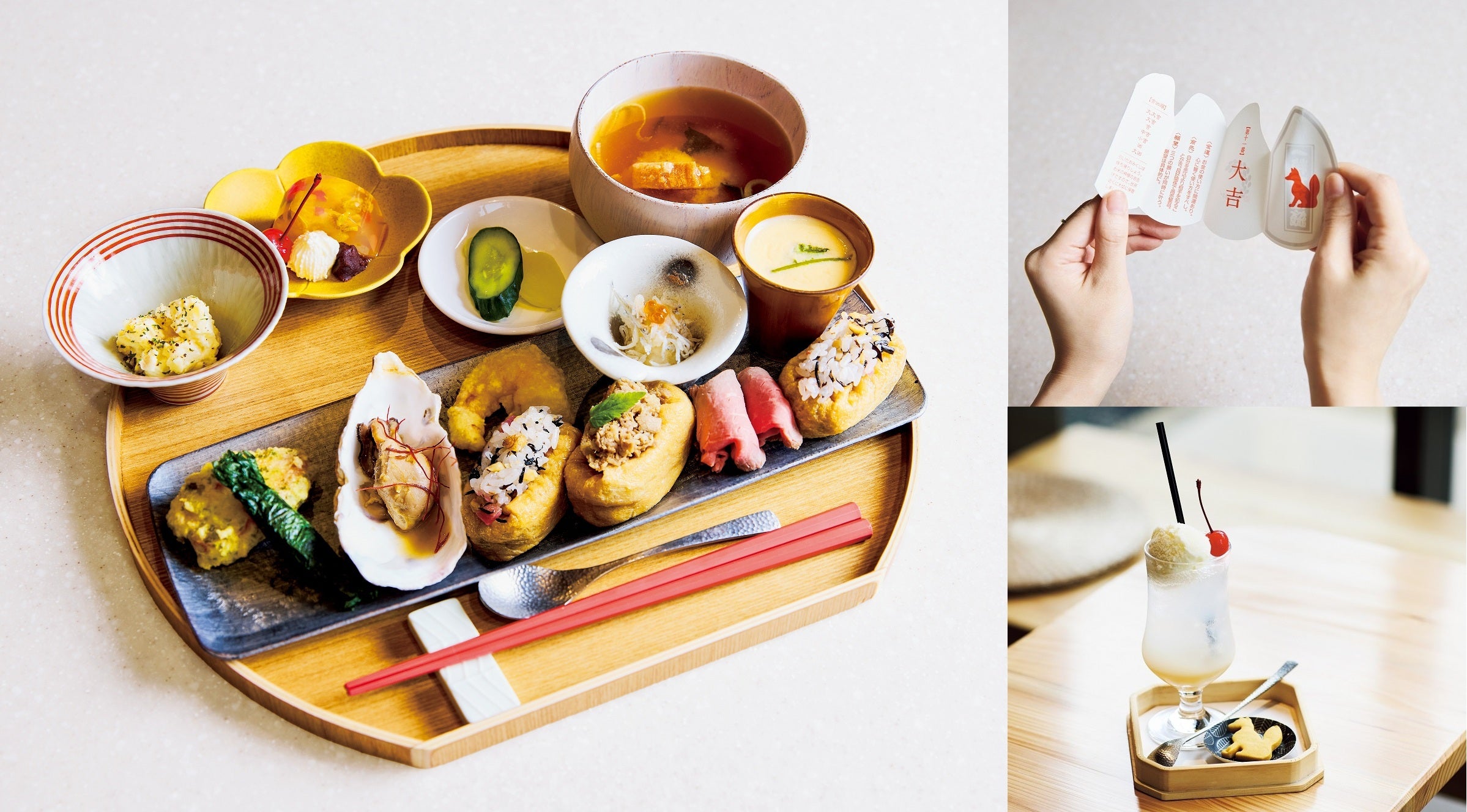
Another topic that the people involved passionately exchanged opinions on was the development of the cafe's menu. A tasting event was held for the original menu items that Chef Ogata had created, and young women, including shrine maidens and administrative staff, participated. This was because they wanted to hear the opinions of the target demographic.
"I visited all the tableware wholesalers in Sendai, but all they had were old-fashioned pieces, so I went all the way to Arita in Saga to look for more. In the end, I chose pieces that would suit the sensibilities of young people, and had the chef assemble the tableware based on that.
So, at the tasting event, the shrine maidens came up with a huge number of opinions. Some said that since it's an Inari shrine, the fox cookies should be paired in pairs, and that they wanted the beauty of the overlapping torii gates and pine trees to be expressed. Others said that the containers should definitely be transparent. Some even filled two A4 sheets of paper with their opinions, including illustrations.
The cafe hadn't been built yet, so we rented a restaurant inside Sendai Airport, and discussions continued until late at night when the lights in the airport building were turned off," says Sakatsume.
Later, the shrine maidens' opinions were incorporated and a significantly improved menu was completed. The original meals and parfaits were garnished with playful "Ichi-Gome-Manbai Fortunes."
Embrace the forest and blend into it
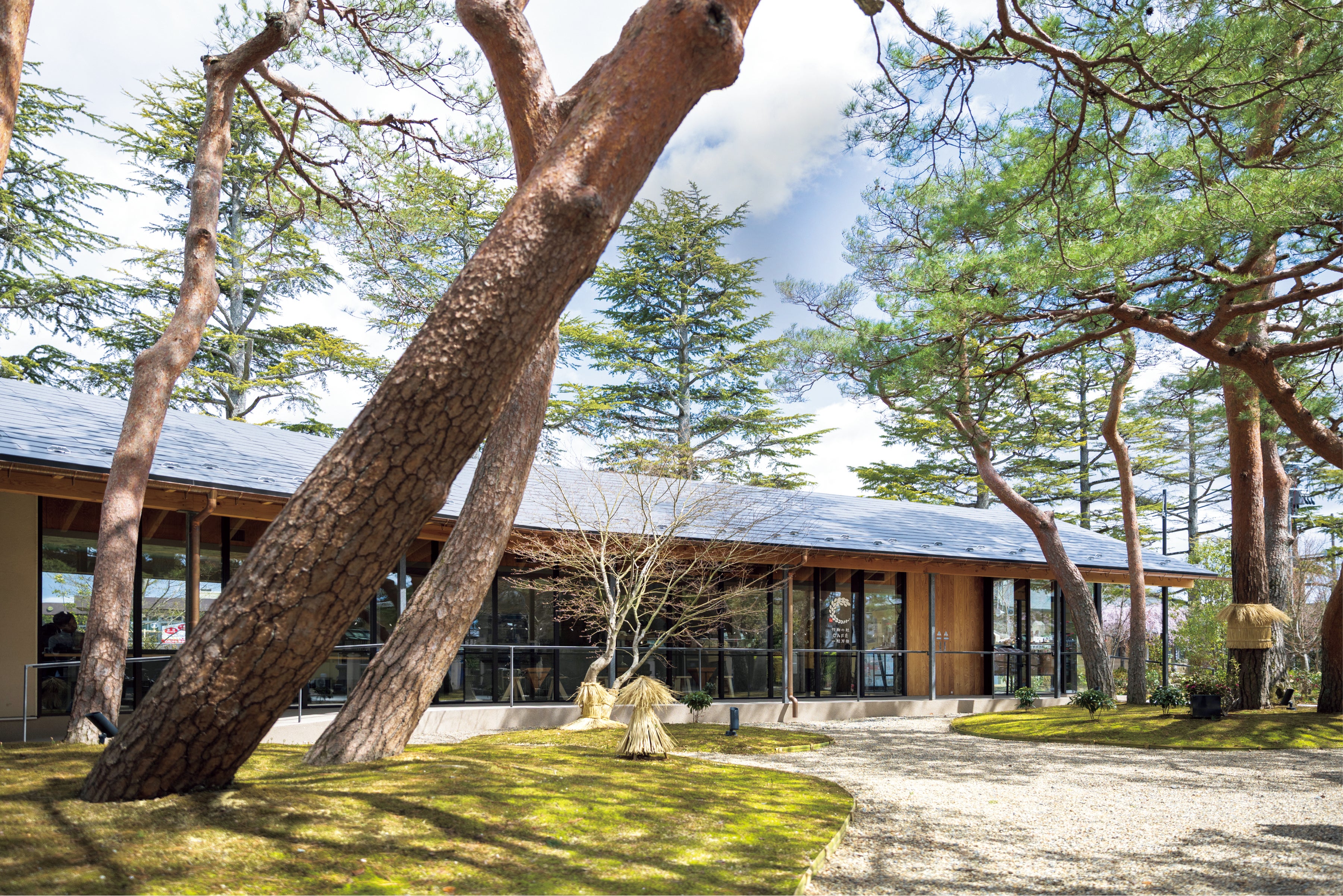
Designer Shirodo explains that the creation of the cafe space was based on a clear concept design concept from the beginning.
"We planned the landscaping, architecture, and interiors concept design as an integrated whole. The building should blend into the surrounding forest, and when you're inside, you should feel the long history and comfort of the shrine. We made many models to consider the location, and as a result, we decided on a spot slightly closer to the torii gate than in our initial proposal."
Before construction began, we inspected the trees that were planted in the building. Some trees, such as old trees, needed to be felled, and we also used oak wood affected by oak wilt, obtained with the cooperation of a forestry cooperative in Miyagi Prefecture, as rafters and furniture. All the furniture with the logo engraved on it is upcycled. We used minimal sawing to preserve the natural look of the wood, and even used slightly uneven rafters for the ceiling.
Furthermore, although there is a red pine forest right in front of the cafe, when viewed from inside the cafe, only the trunks are prominent, and you don't really get a sense of the greenery. So, we planted moss around the base of the red pines to create the atmosphere of a deep forest, and added 23 new types of plants around the area to create a forest where you can feel the changing seasons. We have also installed lighting equipment so that the red pine forest and moss look even better at night."
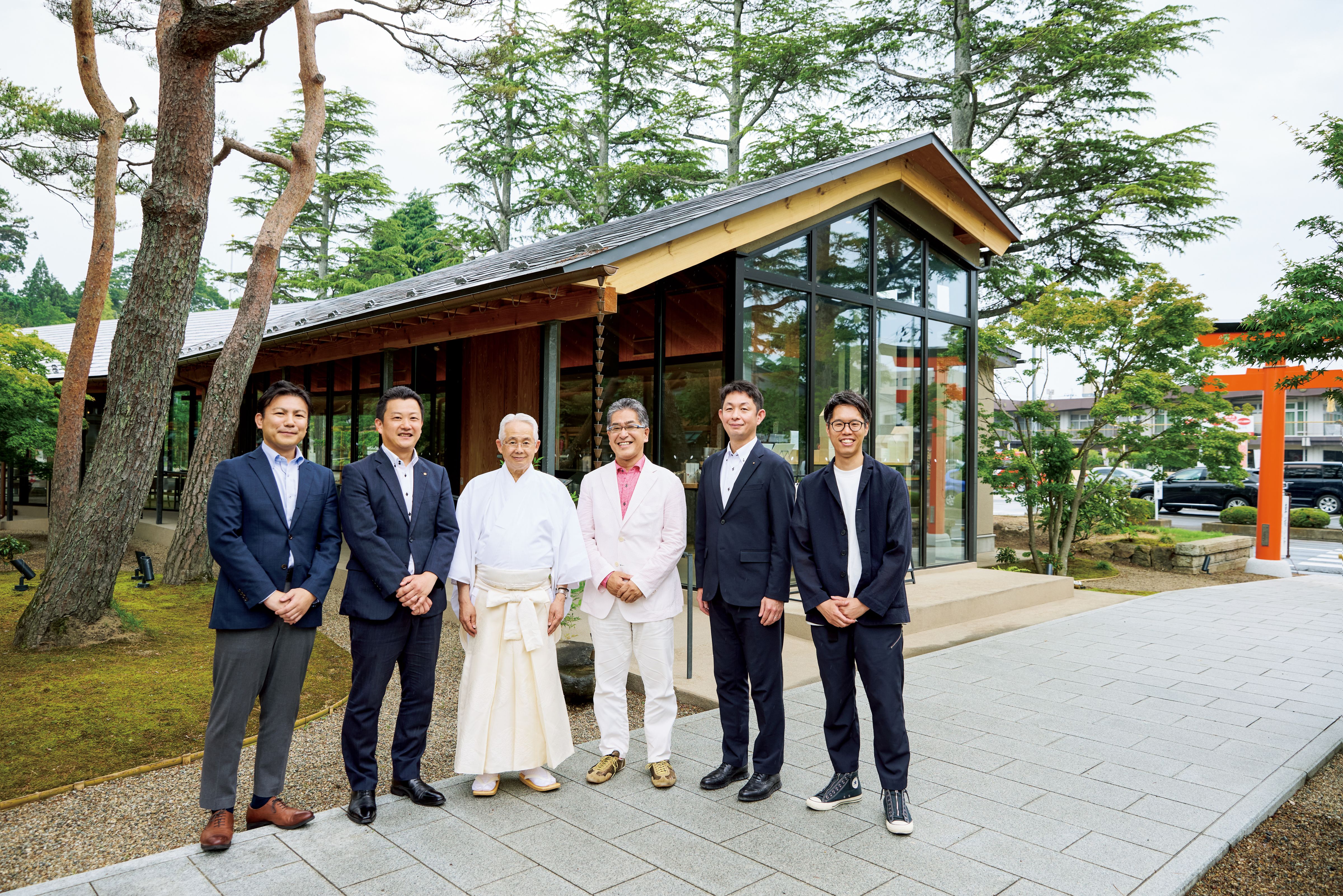
The completed cafe building is open and spacious with glass walls, making it seem to blend seamlessly into the surrounding forest.
Now that the construction of the cafe is complete, Yoshida of NOMURA Co.,Ltd. is savoring the feeling that it was all built by the local people.
"Because this is a cafe that everyone participated in and created together. The shrine couldn't have done it alone, and we couldn't have done it on our own. It was only possible to create it with the participation of the bank, local business owners, and even the head of the shrine parishioners and shrine maidens."
Takazawa of Seventy Seven Bank hopes that this will have a ripple effect on the local community.
"Each region has many wonderful things. However, only local people know about them, they are rarely made public, and only people from outside can experience them. The way of communicating these things also depends on how well you do it. This place is close to Sendai Station and Sendai Airport, and I hope that it will become a hub where tourists from outside the prefecture and overseas can learn about Takekoma Shrine and go on to explore the wonderful things in the prefecture."
The result was a "cafe with a strong message"
In fact, the cafe is off to a good start. Sakatsume says this is the result of planning that took a long-term perspective and went as far as to consider the operating income and expenditures.
"We've had a lot of customers come, and even though it's been a while since we opened, the momentum hasn't dropped as much as we expected. We're expecting sales of around 80 million yen in the first year, which is the same level as the store in front of Sendai Station. In addition to food and drink, the popularity of our newly developed souvenirs, including our Fox Cookies, is also helping to boost our numbers."
Chief priest Murata says that the opening of the cafe has changed the way people use the temple grounds.
"This cafe has a very strong message. It's not just a cafe, but it lives within the overall shrine. We've seen a visible increase in the number of worshippers, and we've started holding regular concerts in the cafe. We've also started planning a variety of events on the shrine grounds. The cafe was just the first step, but I think there's a lot we can do from now on as a hub for the local community."
Now, a single grain of rice is about to sprout.
(Interviewed in June 2025. Titles in the article are those at the time of the interview.)
Interview and text by Tsuyoshi Nose (former editor-in-chief of Nikkei Trendy)
Photo by Kazumi Kiuchi
profile
Morihiro MurataTakekoma Shrine
chief priest
Kenta Takahashi77 Bank
(Seconded to 77 Digital Solutions)
Naoki TakasawaSeventy-Seven Bank Iwanuma Branch and Iwanuma West Branch
leader
Kenichi Sakazume,NOMURA Co.,Ltd.
Business Production Division, Second Management Department, Leasing Relations Department, Producer
Keisuke Yoshida,NOMURA Co.,Ltd.
Sales Promotion Headquarters Tohoku Branch Sales Department Chief
Kensaku Shirodo,NOMURA Co.,Ltd.
Creative Headquarters, Second concept design Center concept design Department 1, Shirodo Room, Room Chief Designer
NOMURA's Media

- NOMURA Co.,Ltd.SCENES


![Drawing out children's passions through numerous experiences [Part 1]](/_next/image/?url=https%3A%2F%2Fnomura-kogeisha.g.kuroco-img.app%2Fv%3D1779774440%2Ffiles%2Fuser%2FSCENES%2FVol.05%2FPandD_JUNOPARK%2F477A3016b_jitsuga.jpg%3Fwidth%3D800&w=1920&q=75)


Please contact us using the button below if you have an inquiry, want to request a quote or request documents.
We have created a separate “FAQ page” that lists the most common questions we are asked.
Please take a look at this page if you have a question.