
A rich and comfortable interior, a new proposal for wooden architecture
- #Kansai
- #Award Winning
- #Osaka Kansai Expo
- #fairwood
- #Architecture

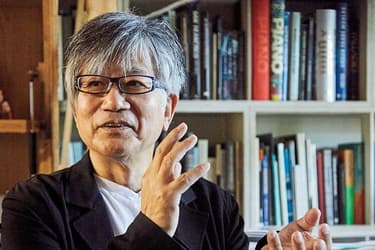
Echiyo Suzuki,NOMURA Co.,Ltd.
Executive Creative Director, Creative Division
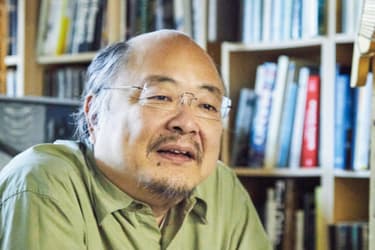
Mr. Mikio KoshiharaUniversity of Tokyo
Professor, Department of Wood Structure concept design Institute of Industrial Science
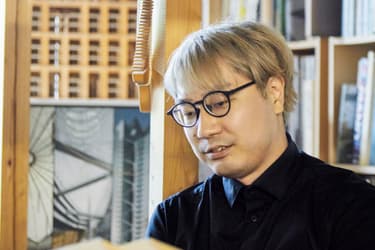
Takuya ImaiKAP
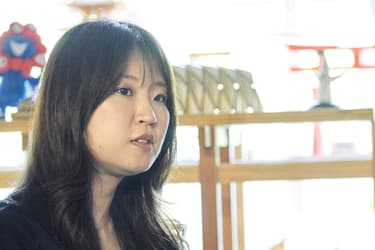
Nana Kosano,NOMURA Co.,Ltd.
Business Production Division, Architectural Production Department, Direction Section, Designer
Technology & Engineering - Ultimately simple structure and construction method [Wooden architecture]
RITE Future Forest
2025 World Expo, Japan
The 2025 Japan International Exposition (Osaka-Kansai Expo) is also a competition of architecture. In a corner of the venue, which is filled with pavilions with unique concept design, there is a small but futuristic wooden building that looks ahead to practical use in the very near future. It is the guidance hall of the demonstration plant [RITE Future Forest] which captures carbon dioxide from the atmosphere. Now, as wooden architecture is attracting global attention from a sustainable perspective, the project team has taken on the challenge of building an architectural structure that is extremely simple, yet difficult precisely because of its simplicity, for the first time in Japan.
Creating a "forest" with the same area as the inside of the large roof ring
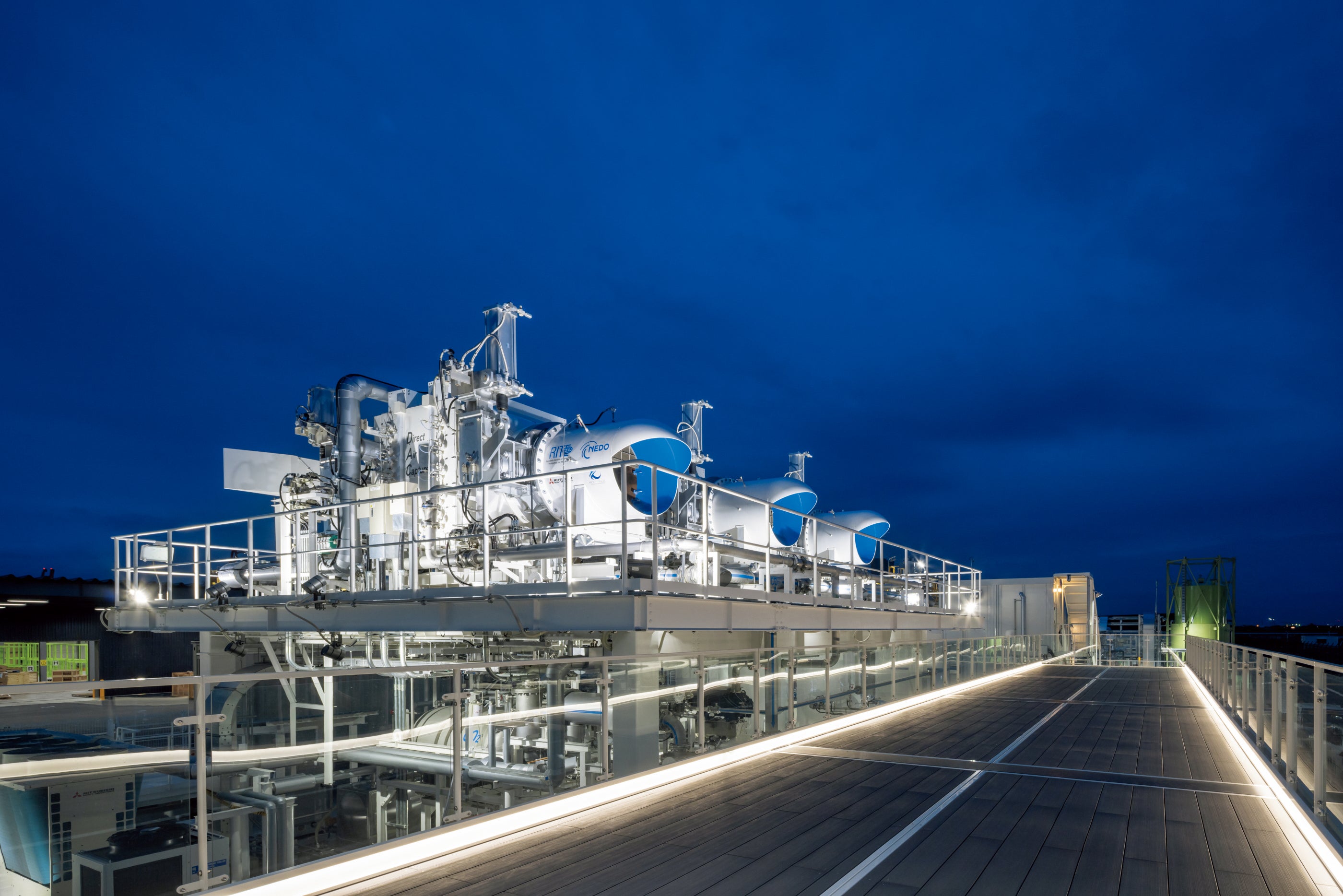
[RITE Future Forest] is located in the management area of the Expo site. It's a facility that visitors reach by shuttle bus from the general area where they can freely roam. As the bus approaches, you can see the plant, characterized by three large protruding air intakes, and the distinctive white building with its unique vault shape.
The exhibitor of this facility was RITE (Research Institute of Innovative Technology for the Earth), a public interest foundation established with the aim of investigating, researching, and developing industrial technologies that contribute to the preservation of the global environment.
displays features a demonstration plant for DAC (Direct Air Capture) technology, which captures carbon dioxide (CO₂) from the atmosphere. It is actually operational and is capturing CO₂ from the surrounding area at the Expo site. In addition to the DAC plant, there are explanatory graphics and interactive displays about carbon capture and storage (CCS) technology, which stores the captured CO₂ deep underground, and technology that utilizes CO₂ as a carbon resource for asphalt paving materials and methane gas production. Next to the plant is a wooden building shaped like origami. This is a guidance hall that presents the mechanisms and significance of DAC and CCS to general visitors in an easy-to-understand video format.
Echiyo Suzuki of NOMURA Co.,Ltd., who was in charge of overall production, including design administration, displays, direction, and operation, for [RITE Future Forest], says that she started the project completely by trial and error.
"Only the approximate site area had been decided, but none of the people involved knew where in the Expo site they would be installed, whether it would be possible to operate the DACs there, how many units would be required, or whether it would even be possible to demonstrate CCS. So we spent about two years drawing up sketches while changing the prerequisites. As we did this, we began to see the budget and other factors, and decided on three DACs to be installed.
In fact, the three DACs operating in Future Forest have the same CO₂ recovery capacity as if the entire inside of the Expo's large roof ring were covered in forest. It is, so to speak, the Forest of the Future itself. In the middle of the Expo site, there is a zone called Forest of Silence, where real trees are planted. Although it didn't come to fruition, I would have liked to have placed Future Forest within the Forest of Silence, making it a symbol of the future society that the Expo will showcase. It's real future technology in action before your eyes."
Because it's the Expo, we want to show technologies that will become widespread in the future.
Suzuki says that from the beginning he had a clear image of the buildings surrounding the DAC plant.
"Because it's a forest, I wanted the building to rise from the ground just like the trees. For the administration building, we used a modular house that flips up when pulled up from above by a crane, but I wanted the guidance hall to be made of wood. We made a large opening on the side facing the DAC plant, and visitors will wear mixed reality glasses that allow them to overlay virtual content on the real landscape. We wanted to show how invisible CO₂ is captured. However, we found that the mixed reality glasses didn't work well in bright places.
So we decided to make the Guidance Hall a closed space and place a see-through screen in the middle. There are audience seats on either side of the transparent screen, and they can see each other. The image appears to float in the empty space in the middle."
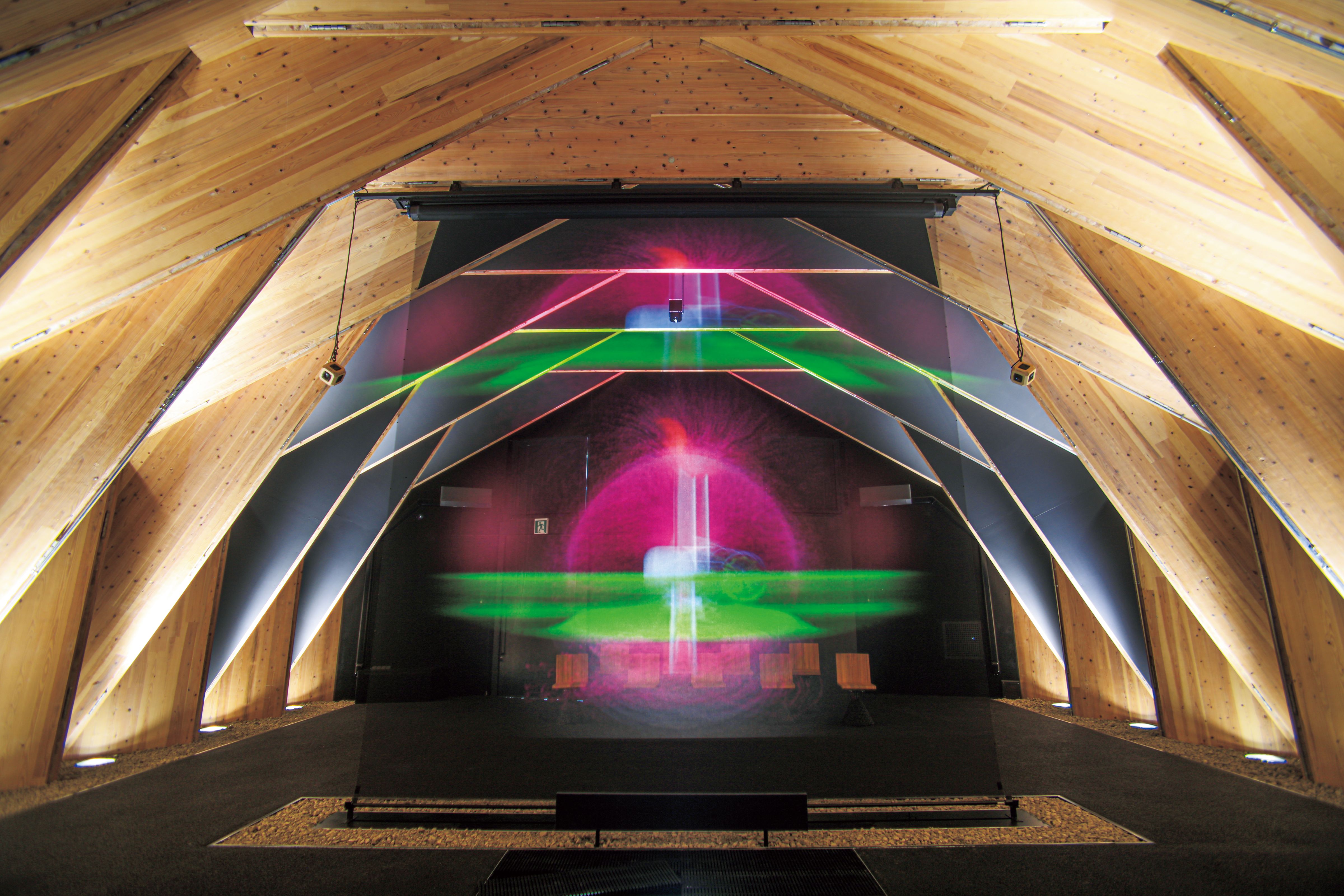
Although the mechanism for the Guidance Hall had been decided, the problem remained as to what kind of building would encase the space. Suzuki consulted with Koshihara Mikio, a professor at the Institute of Industrial Science, University of Tokyo, about the possibility of creating a building using CLT (a wood material made by laminating wood with its fibers crossed). Koshihara is a leading expert in the structural design of wooden buildings, and has extensive research into CLT.
"CLT can be made into large pieces, measuring 3m x 12m, so it can be used as a large surface material for roofs and floors. In reality, however, it is cut into thin strips and used for pillars and beams. Even when using it as a large surface material, a width of about 2.4m is realistic when considering road transportation. So, we have been conducting basic research for the past four to five years in collaboration with other universities and lumber manufacturers to see if we can connect it horizontally on site to make a large surface material and then fold the connected parts to create a folded-plate structure for buildings," says Koshihara.
After receiving the consultation, Koshihara presented two models. One was shaped like a Mongolian yurt. The other was shaped like a kamaboko (fish cake). Both were made by joining together CLT panels, and the surface had a unique shape reminiscent of origami crafts. Koshihara said:
"Originally, the World Expo was a place for each country to propose their own technologies. The technologies developed there don't just end up as displays, but have an impact and become widespread. I think it's important to create technologies that can serve as a base for everyone to use. In that sense, I imagined that a CLT building, with its simple structure, should be built at the World Expo."
Suzuki-san too
"It's meaningful to do it as part of the Expo architecture."
This resonated with us, and we adopted the kamaboko-shaped design due to the ease of use of the space.
Track the deformation trajectory of all panels in 3D
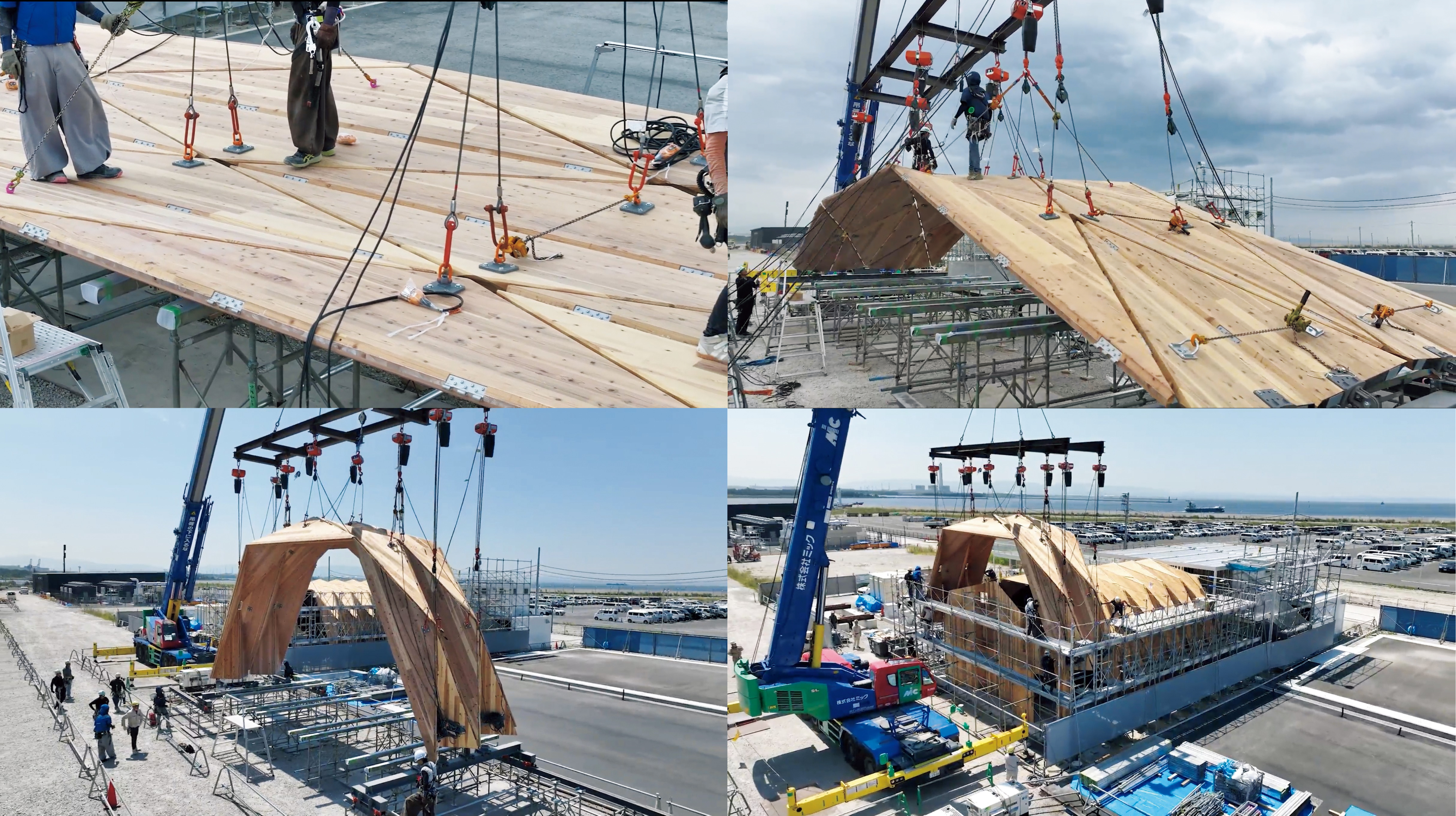
The Guidance Hall has an extremely simple structure as a building. 28 triangular CLT panels are lined up on the ground and connected with movable joints to form a huge rectangle. A crane is hung from the center, and gravity causes each section to bend, forming a folded-plate vault. Four of these are then connected to form a large building. If the structure is simple, the construction method is also simple. This has the advantage of making it easy to set up, dismantle, and relocate. However, because the structure and construction method are simple, there were some difficulties the first time around.
Takuya Imai of KAP, who was a student of Koshihara and has been involved in basic research since five years ago, and who was in charge of the structural design this time, conducted extensive 3D simulations.
"The CLT panels used are 9cm thick. The edges of the panels were pre-cut at a specific angle so that when they form a vault, the edges would make firm contact with each other, and the hang-up deformation would end naturally. Also, it's impossible to know how a rectangular plane will deform into a vault, and what trajectory each panel will follow, without 3D simulation. In particular, the parts that come into contact with the ground during the hang-up need to be supported with construction jigs for safety, and it's impossible to manufacture the jigs without knowing how they will move."
Initially, we envisioned the horizontal movement following a linear trajectory that converged towards the center of the panel, but in reality, it converged towards the center while drawing a subtle curve. Simultaneously with the horizontal curved movement, the panel rotated and rose. We could not have manufactured the jig to handle these complex movements without 3D simulation."
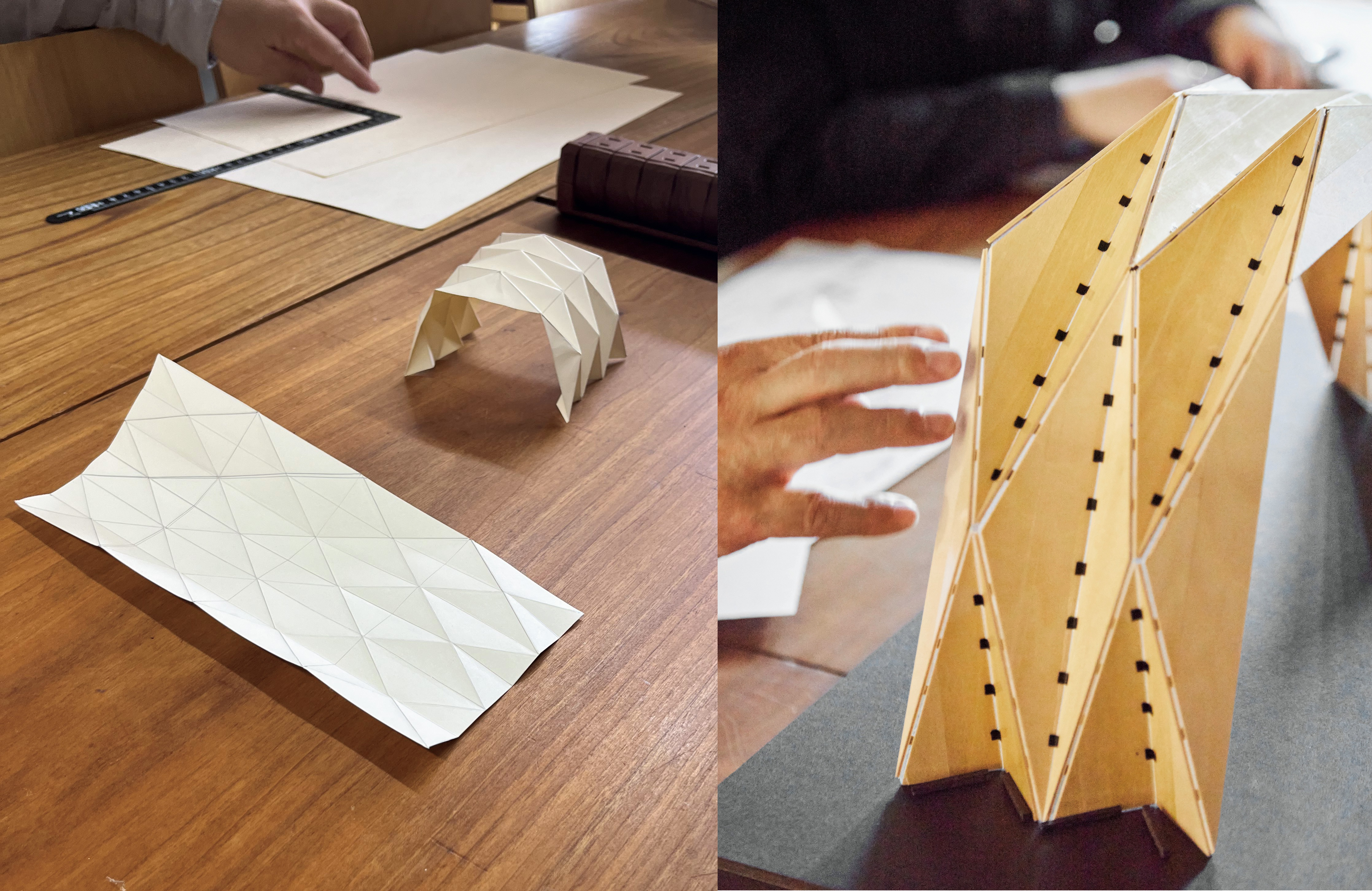
In fact, the same building could also be constructed by preparing scaffolding all over the building. In that case, the difficulties unique to the hang-up method would not arise. Koshihara's research team had previously built mockups and experimented with both methods, but Suzuki was determined to stick with the hang-up method.
"When I saw a video of an experiment using the hang-up method, I thought this was the perfect solution. The building grows just like a tree growing out of the ground. It's the very image of a forest."
The arches are connected with an error of less than 2mm!
As the structure of the building doubles as both the exterior and interiors, there were many instances where a completely different approach to normal design was required. Each time, the parties involved made adjustments and found a direction in terms of technology and design. Nana Osanai, a designer at NOMURA Co.,Ltd., who was in charge of design administration said:
"Coordination between the parties involved was very important because the building is directly connected to the structure construction and the design. For example, in terms of design, we wanted the CLT to grow directly out of the ground. In the case of wooden buildings, a raised foundation is usually necessary for waterproofing and wood preservation, but we did not want this to be visible. There is no precedent and no documentation on how to anchor the hung-up arch to the ground when it is installed. We don't even know how to clear the legal regulations. We proceeded hand-in-hand while consulting with everyone.
Waterproofing was a particular challenge. From a design standpoint, we wanted to show the wood of the CLT. From the standpoints of legal regulations and waterproofing, this would be difficult to do in a permanent building, but we wanted to take on a challenge that only a temporary building could offer. We also collected data on how much the color would change during the Expo if the panels were left unpainted and exposed to the rain. Even so, there would still be gaps between the panels, so we began discussing the possibility of waterproofing those areas with tape.
However, when we started discussing the possibility of relocating the building after the Triennial, we decided that since the CLT would be reused as a structural material, it was necessary to waterproof the entire building so that it would not be exposed to rain. The white color of the building is the color of the waterproofing coating. Since this was an unprecedented building, we had to deal with all kinds of legal and regulatory issues, but we cleared them one by one with the government.
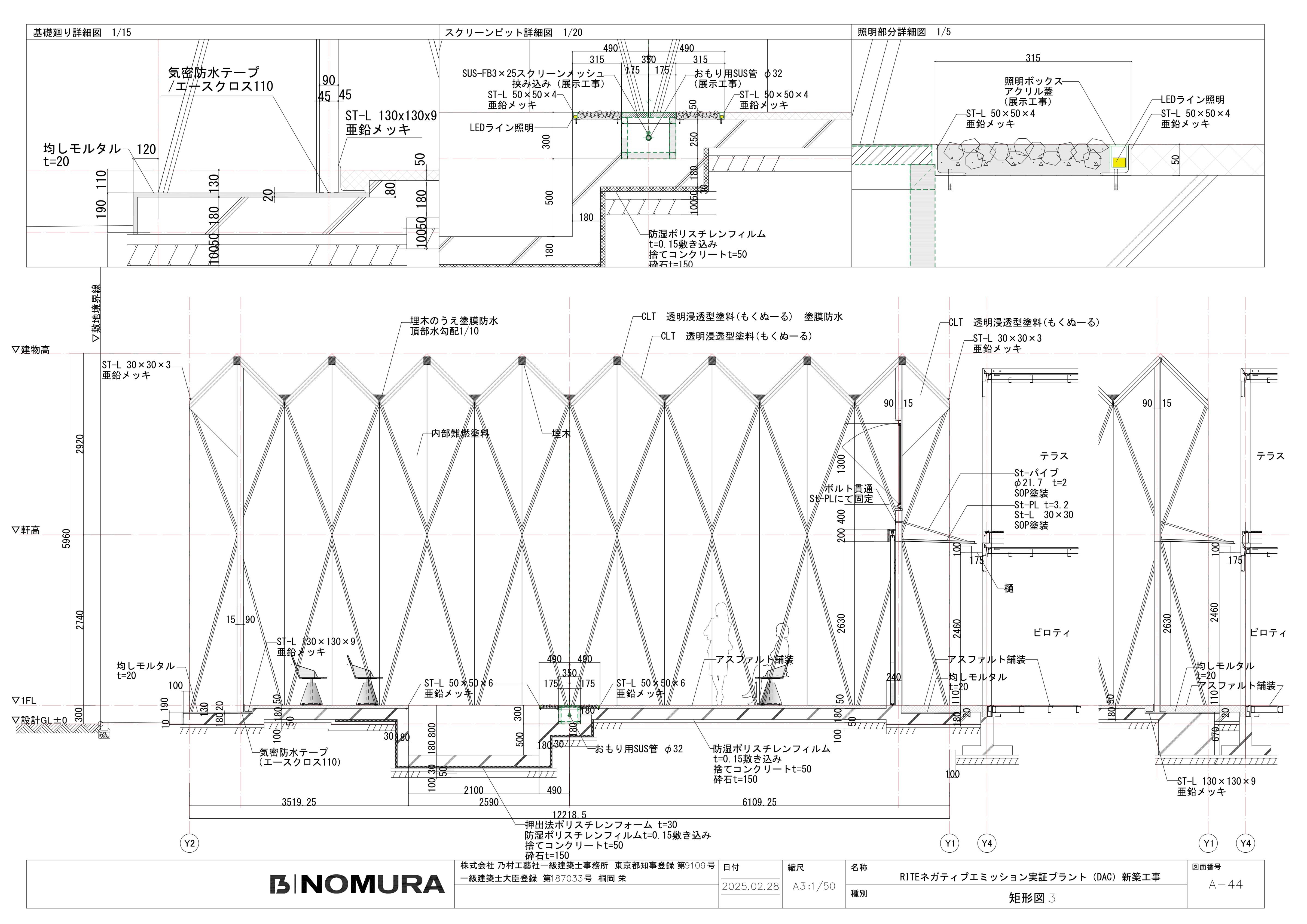
There were also difficulties in dividing the building into four parts and connecting them.
"Technically, it's possible to connect everything together and hang it up all at once. However, that would be costly in terms of heavy machinery and construction jigs, so we divided it into four sections. Then, we had a lot of discussion about what shape the metal fittings connecting the four sections should be, how precisely they should be installed, and what procedure should be followed," (Osano).
There are 12 metal fittings connecting the arches. The next arch, which is hoisted by crane, must be brought close to the larger arch that has already been installed, and all 12 fittings must fit together perfectly. Imai says he designed the metal fittings to minimize play.
"Both hinges interlock and a bolt is passed through them, but we left a 2mm clearance in the hole. Anything more than that would cause wobbling and affect the structural performance. In actual construction, we thought that an error of within 2mm would be acceptable."
A space that exudes awe and divinity emerges
After much preparation, the day of the hang-up finally arrived. The site was filled with excitement as a diverse range of people, including clients, people in the construction industry, and researchers, all eager to witness the moment the unknown building rose.
"The craftsmen working on the project are truly full of energy. As the creators, we have various concerns, but they're all fired up and ready to get it done in one go," (Suzuki).
Then the hanging began. At first, the deformation was sluggish, but with the momentum of the site, the arch rose up. All of the joints, which had been a concern, fit perfectly.
Koshihara, who was present at the event, said:
"It was great to see the proud and excited roofers on the arch. Building a building is like a festival, so everyone makes noise and puts their heads together to build it. I was glad to be able to be a part of that."
After the building was completed, project manager Suzuki was surprised by the richness of the interior space, which he experienced for the first time.
"I was worried about the small size of the building, but the interior space gives the impression of infinite expanse. Words like divinity and awe come to mind. It's also comfortable to be inside. It's like the caves in the Altamira murals, once inhabited by people. With no distinct walls or ceilings, this primordial, unintimidating space seems like a good option for spaces where people will live and spend their time in the future. I'd love to host a Noh performance in the Guidance Hall."
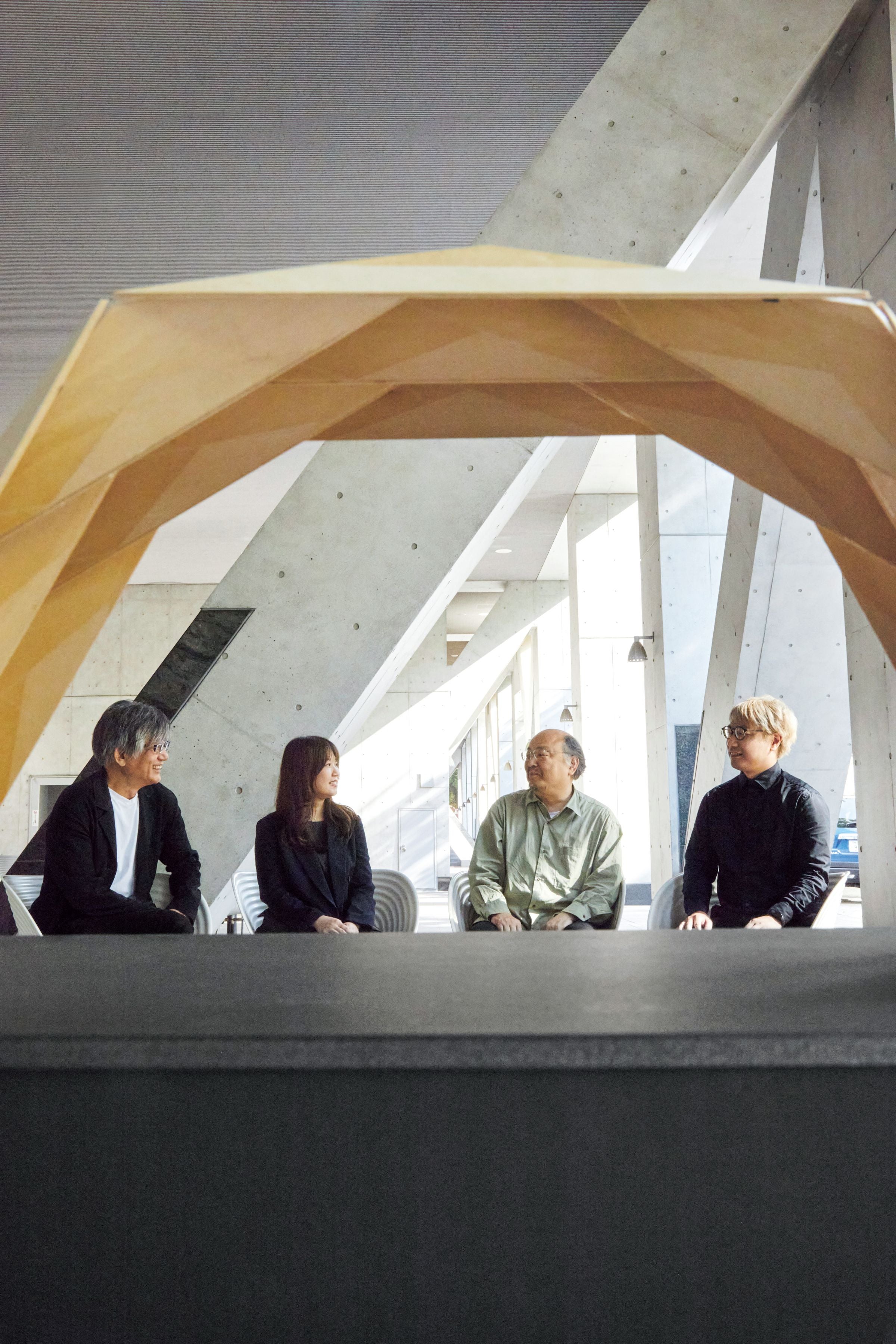
Koshihara of the University of Tokyo says that the folded plate structure of CLT can be developed in a more free form.
"Folded plate structures have been around for a long time, and there are many steel-framed and reinforced concrete structures. If it can be done with wood, then surely it can be used to build anything? Until now, folded plate structures have been used to create large, long spaces, but by focusing on the functional and emotional characteristics of space that are unique to wooden architecture, I think they can be expanded to all kinds of spaces and uses."
(Interviewed in May 2025. Titles in the article are those at the time of the interview.)
Interview and text by Tsuyoshi Nose (former editor-in-chief of Nikkei Trendy)
Interview photo by Kenta Yoshizawa
profile
Echiyo Suzuki,NOMURA Co.,Ltd.
Executive Creative Director, Creative Division
Mr. Mikio KoshiharaUniversity of Tokyo
Professor, Department of Wood Structure concept design Institute of Industrial Science
Takuya ImaiKAP
Nana Kosano,NOMURA Co.,Ltd.
Business Production Division, Architectural Production Department, Direction Section, Designer
NOMURA's Media

- NOMURA Co.,Ltd.SCENES


![Drawing out children's passions through numerous experiences [Part 1]](/_next/image/?url=https%3A%2F%2Fnomura-kogeisha.g.kuroco-img.app%2Fv%3D1779774440%2Ffiles%2Fuser%2FSCENES%2FVol.05%2FPandD_JUNOPARK%2F477A3016b_jitsuga.jpg%3Fwidth%3D800&w=1920&q=75)


Please contact us using the button below if you have an inquiry, want to request a quote or request documents.
We have created a separate “FAQ page” that lists the most common questions we are asked.
Please take a look at this page if you have a question.