
What's important is the aggregation and sharing of information, and on-site management of both offensive and defensive strategies.
- #Kansai
- #Osaka Kansai Expo
- #2025

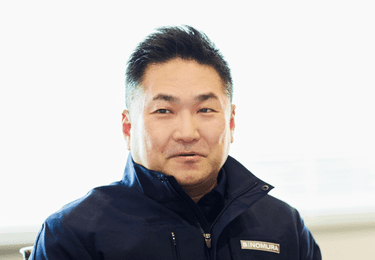
Eisuke Yokoshima,NOMURA Co.,Ltd.
Sales Promotion Division, Osaka-Kansai Expo Promotion Department, and Business Strategy Division, Production Function Strategy Department: General Manager/Manager
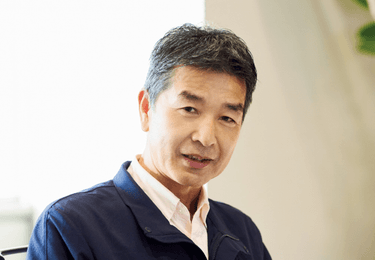
Jun EgamiNOMURA Co.,Ltd.
Sales Promotion Division, Osaka-Kansai Expo Promotion Department, Department Manager
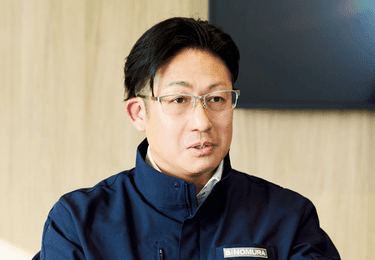
Kunihiko HashimotoNOMURA Co.,Ltd.
Sales Promotion Division, Osaka-Kansai Expo Promotion Department, Chief

Naoki Nakazato,NOMURA Co.,Ltd.
Sales Promotion Division, Osaka-Kansai Expo Promotion Department, Chief
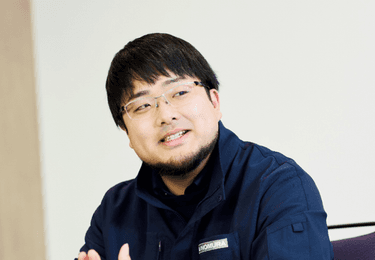
Hiroyuki Hirachi,NOMURA Co.,Ltd.
Sales Promotion Division, Osaka-Kansai Expo Promotion Headquarters
Technology & Engineering -Centralized management of numerous projects running simultaneously.
2025 World Expo, Japan
The 2025 Japan International Exposition (Osaka-Kansai Expo), held over six months from April 2025, attracted approximately 25,578,900 general visitors. The venue, surrounded by the iconic large roof ring, was filled with unique pavilions, each showcasing its own vision of the future society. NOMURA Co.,Ltd., Ltd. was in charge of more than 50 projects at the Osaka-Kansai Expo, including 25 pavilions. They approached this large-scale international exposition, the first in 55 years, with an unprecedented level of involvement. How did NOMURA Co.,Ltd. manage to bring together, support, and create more than 50 projects scattered across the vast venue? We spoke with five members of the Osaka-Kansai Expo Promotion Division, who were key players in this effort.
The ground is compacted so that access to the site can be made.
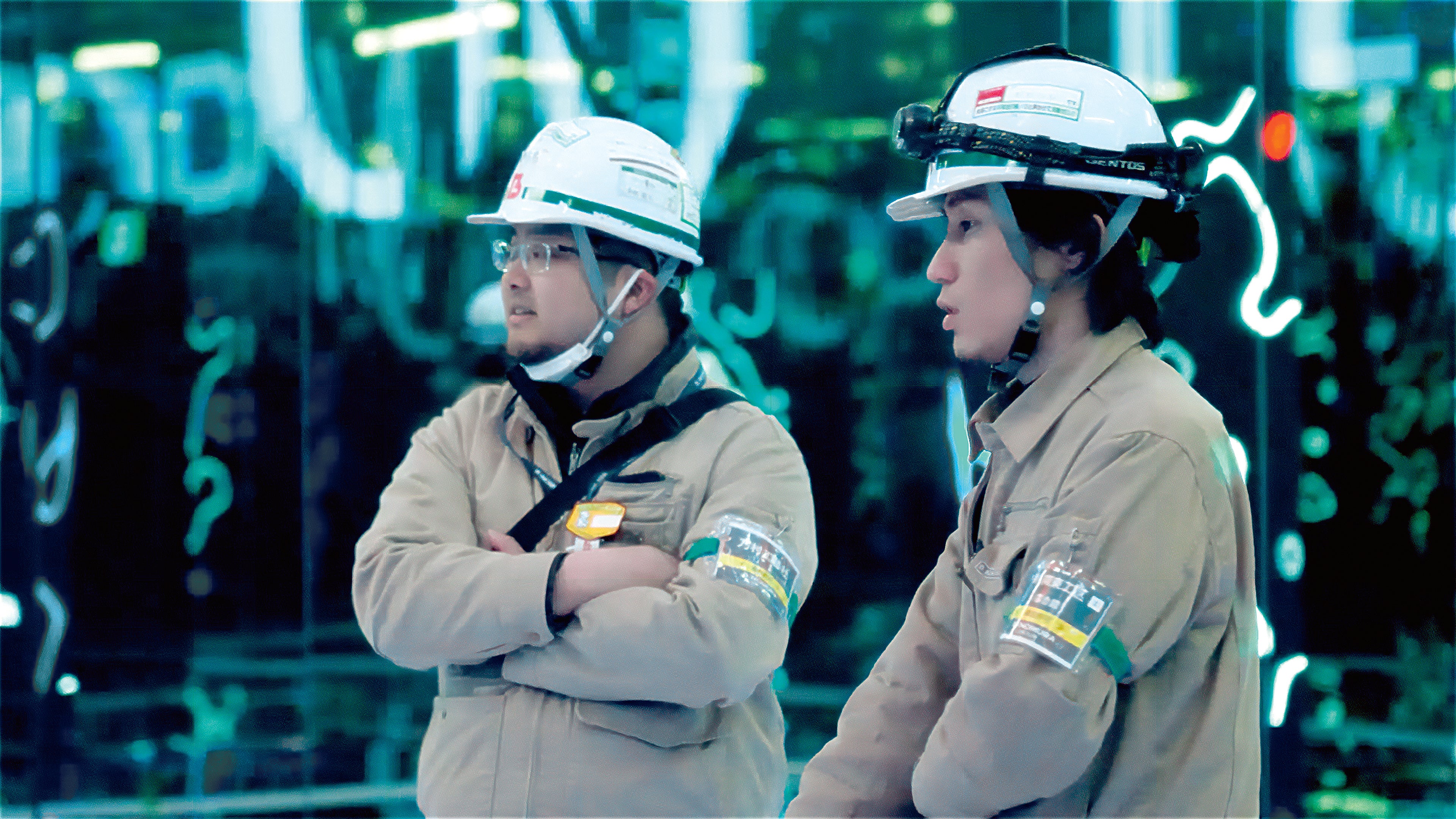
The teams in charge of each pavilion in Yokoshima had been working with the client for several years, but the Expo Promotion Management Department was only established in March 2024, just before construction at the venue began in earnest. Mr. Egami went to Osaka a year ahead of time to do preliminary work such as building relationships with cooperating companies, but by the time the management department was established, there were only three months until construction began on site.
On the other hand, the company's mission revolved around two key themes: "offense" and "defense"—maximizing the project as a business and coordinating it as a company-wide effort to bring it to a successful conclusion. First, we gathered the members to define our own roles and began by discussing how we should work as a team.
We're not in a position to directly manage the pavilion construction sites. Our job is to manage the people who are managing the pavilions. That's why we assigned members who can anticipate what's happening at each site and provide backup. Once construction actually begins, various problems and obstacles arise at each site and each section. Minimizing these risks and sharing and thoroughly disseminating information about the solutions became a major task for the overall management department.
The Egami site is divided into four main work NOMURA Co.,Ltd.,each centered around a different general contractor. Nomura Kogeisha's work sites were scattered across all fourareas, but the rules differed from area to area. Even just regarding equipment, in one area, everyone had to wear a reflective vest, or a heat-resistant visor had to be attached to their helmet. There were also differences in rules regarding the wearing of dust masks and cut-resistant gloves. And if you didn't follow these rules, you couldn't enter the site. You couldn't even start working.
Regarding the Hashimotovehicles, there were different detailed rules depending on the construction section, such as safety ropes to prevent falls, the installation of access stairs, and wheel chocks for the tires. These were all rules for safety management. There was a new worker orientation for each construction section, and after taking that orientation, in some cases, new workers had to take orientation for each building on site, and there were various other rules as well.
Since we are Nakazato, we acted as the point of contact for the entire NOMURA Co.,Ltd., understanding and organizing the differences in rules for each construction section in advance, and communicating them to the person in charge of each pavilion and the cooperating companies who would be coming to the site. In other words, we started by laying the groundwork for them to enter the site.Since there arefour construction sections, we color-coded them into foursections and created rulebooks for each section.
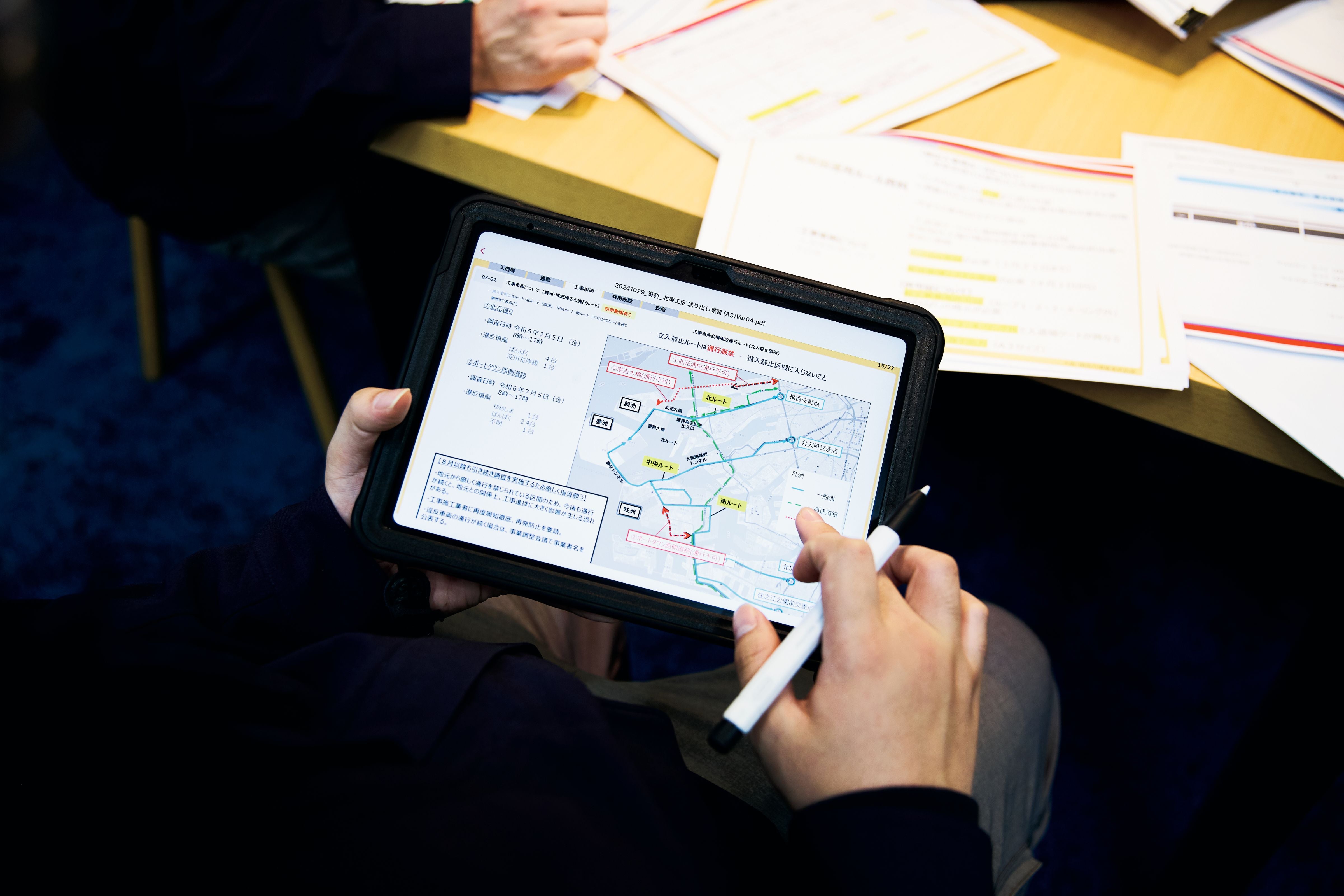
There are invisible lines at the site.
Besides the Nakazatosafety rules, there was a lot of other information that needed to be conveyed. People and materials had to get to the site in a vast construction area. Commuting routes started with buses, then changed to subways, but the routes that could be used changed constantly depending on the progress of the construction, so it was necessary to be aware of that. If information gathering was left to each individual site, some sites would be able to gather everyone smoothly, while others would not. At NOMURA Co.,Ltd. 's construction sites, our primary goal was to ensure that everyone could reach the site without any trouble finding an entry route.
There's an invisible line regarding the routes for transporting materials, and the overall rule is that you can't cross the boundary lines of each construction section. So, we had to check alternative routes. The roads that vehicles can use also change frequently, so we needed to update and communicate the latest information. The location of temporary toilets was also important information. We compiled all of this into paper documents for each construction section and distributed them, but there's no guarantee that people will look at paper documents. Some people just don't look at them. We wanted to make sure that everyone, down to the lowest-level workers, was aware of it, so I worked with Hirachi to create a memorable video and started distributing that.
To be honest, probably no one knows the exact route to the flat groundvenue, which is a source of anxiety. Even with a paper map, I think some people will still get lost. But if we show a video of the actual route, no one will get lost. We'll drive around and film the correct route. Then we'll edit it in fast-forward and distribute it as a guide video, so everyone involved can get to the site without delay. In addition to the route, we've also made sure that key points for new visitors' education, such as equipment and safety rules, are shown in the video.
We also created an explanatory video for the facial recognition system. The rule is that everyone entering and leaving the Expo construction site must register their face for facial recognition. However, the registration procedure is a bit complicated. You have to take a picture of your face with your smartphone to register, but even when we give people the explanatory documents, quite a few people have trouble doing it. So, we made a video explaining the registration procedure so that anyone can understand it.
Yokoshima:No matter how old the craftsman is, they have to register their face on their smartphone. Some craftsmen don't want to do that operation and therefore don't want to work on the Expo. There are also complicated rules for bringing in construction vehicles, so when Egami was contacting the cooperating companies in advance, there were quite a few people saying, "I don't want to do the Expo." So, our team decided to work on activities to lower those negative hurdles.
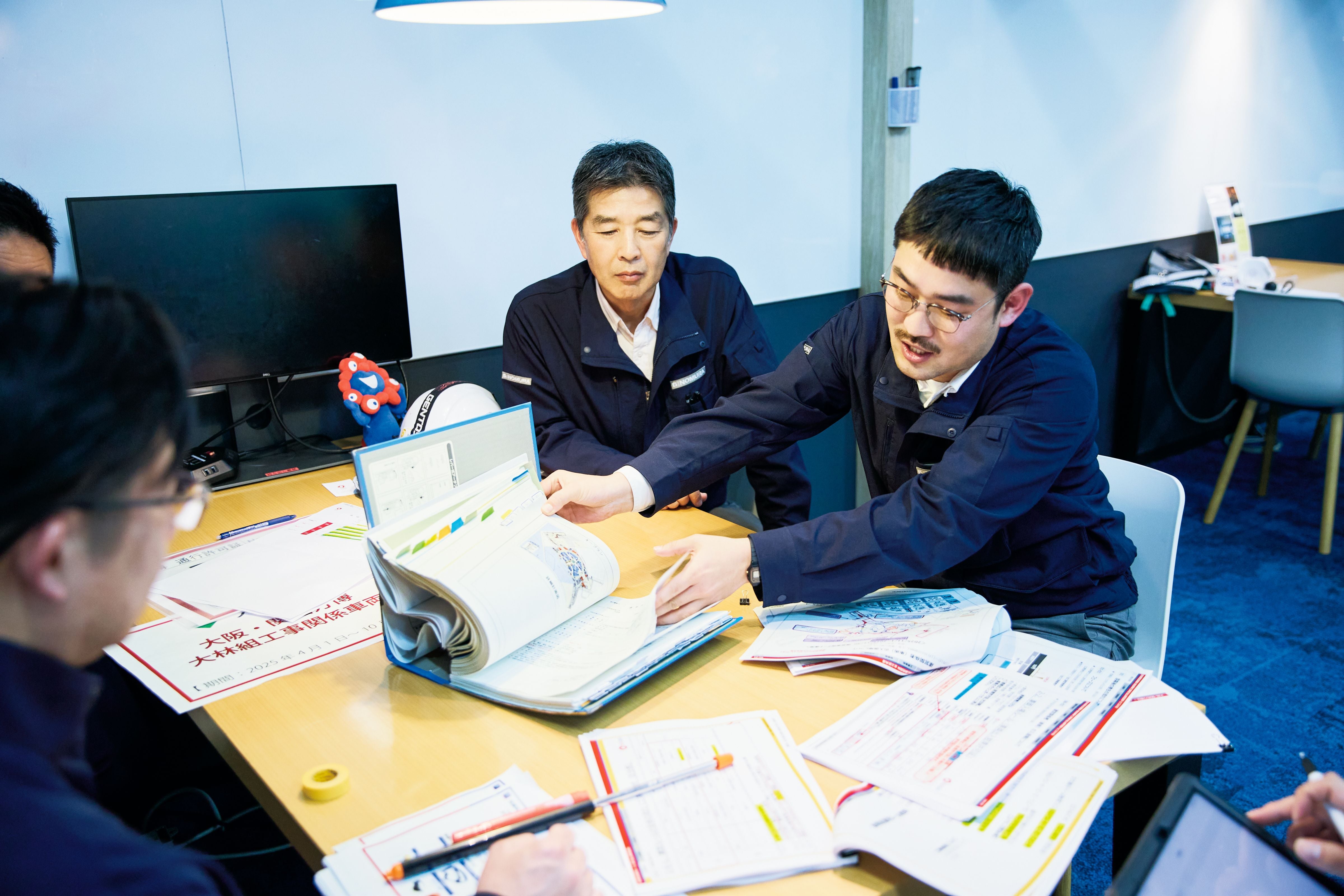
Let's take care of the site so much that we get change back.
Yokoshima: If the person in charge of each pavilion had to collect and organize all that information, it would be a huge undertaking. By having us consolidate the information, including the rules for each construction section, and then communicating it, we can save time and reduce the workload. We didn't think that such detailed information sharing would be necessary from the beginning, but once construction actually started, it was far from straightforward. Our team motto was to anticipate things and take precautions so thoroughly that we'd have more than enough to spare, and to take care of each site.
Egami: This time, 51,000 people, including employees, were on site at NOMURA Co.,Ltd.. The heads of the cooperating companies gave us high praise for the clarity of information gathering and communication. As the construction progresses, the rules for each work area are frequently updated. Even the delivery routes change daily, with some areas becoming off-limits. Therefore, updating the information we provide was extremely important. Moreover, it is necessary to confirm whether the information provided has reached everyone down to the lowest levels. Even with all that effort, there were cases where the information had not actually reached everyone, so that is something we need to work on in the future.
For example, when updating Nakazato's information, creating videos requires effort, so they can't keep up with real-time updates. So, the entire company used a smartphone construction management app. Relevant parties register accounts, and the notification feature is used to distribute information all at once. First, I send messages through the construction management app, then share them as paper materials, and stream videos with followers. Information is delivered through three different routes. construction Management apps are used in the construction industry and allow you to register drawings, documents, schedules, and more. The chat function allows for quick communication. It was a powerful tool for projects like the Expo, where multiple sites operate simultaneously.
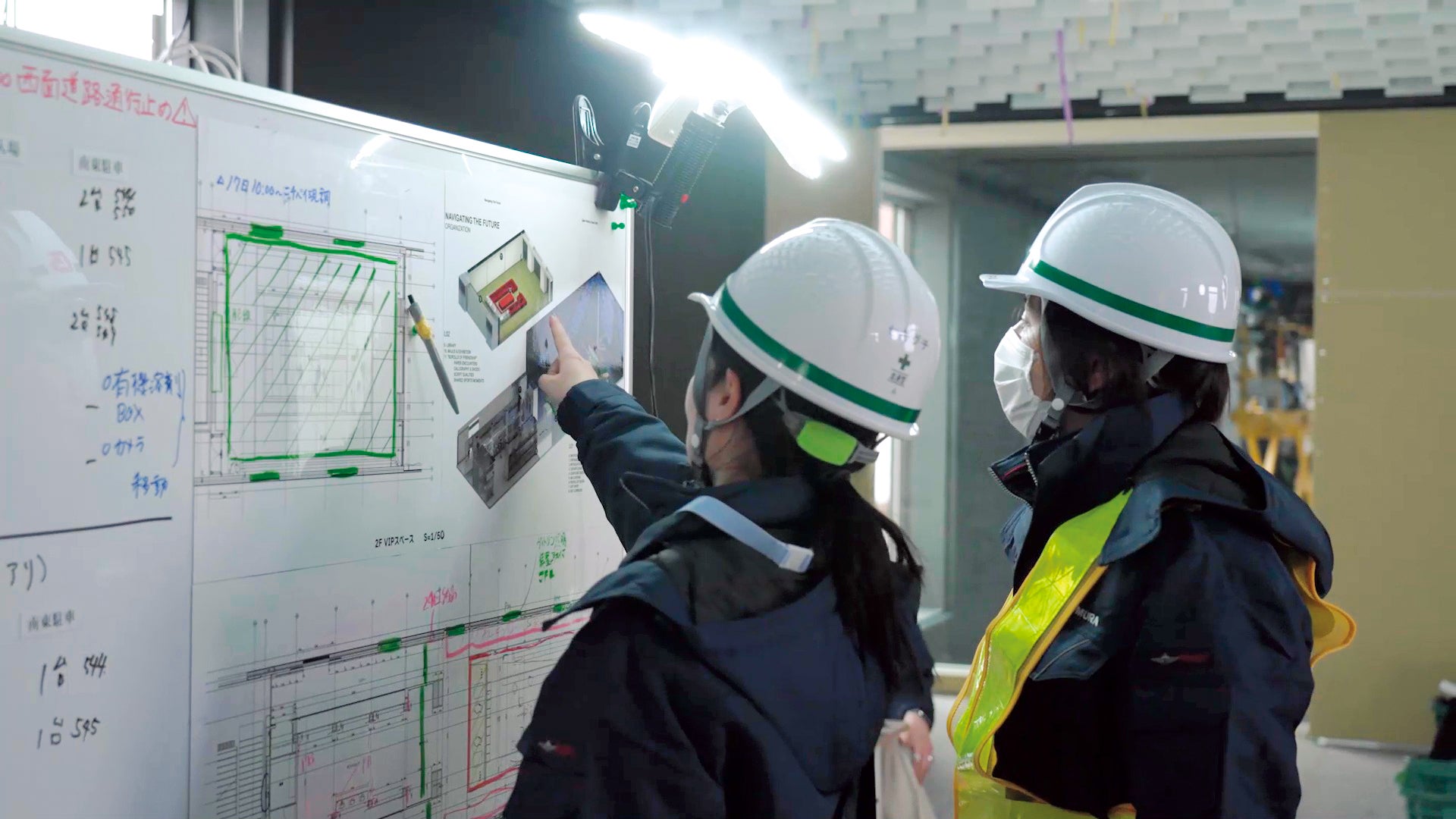
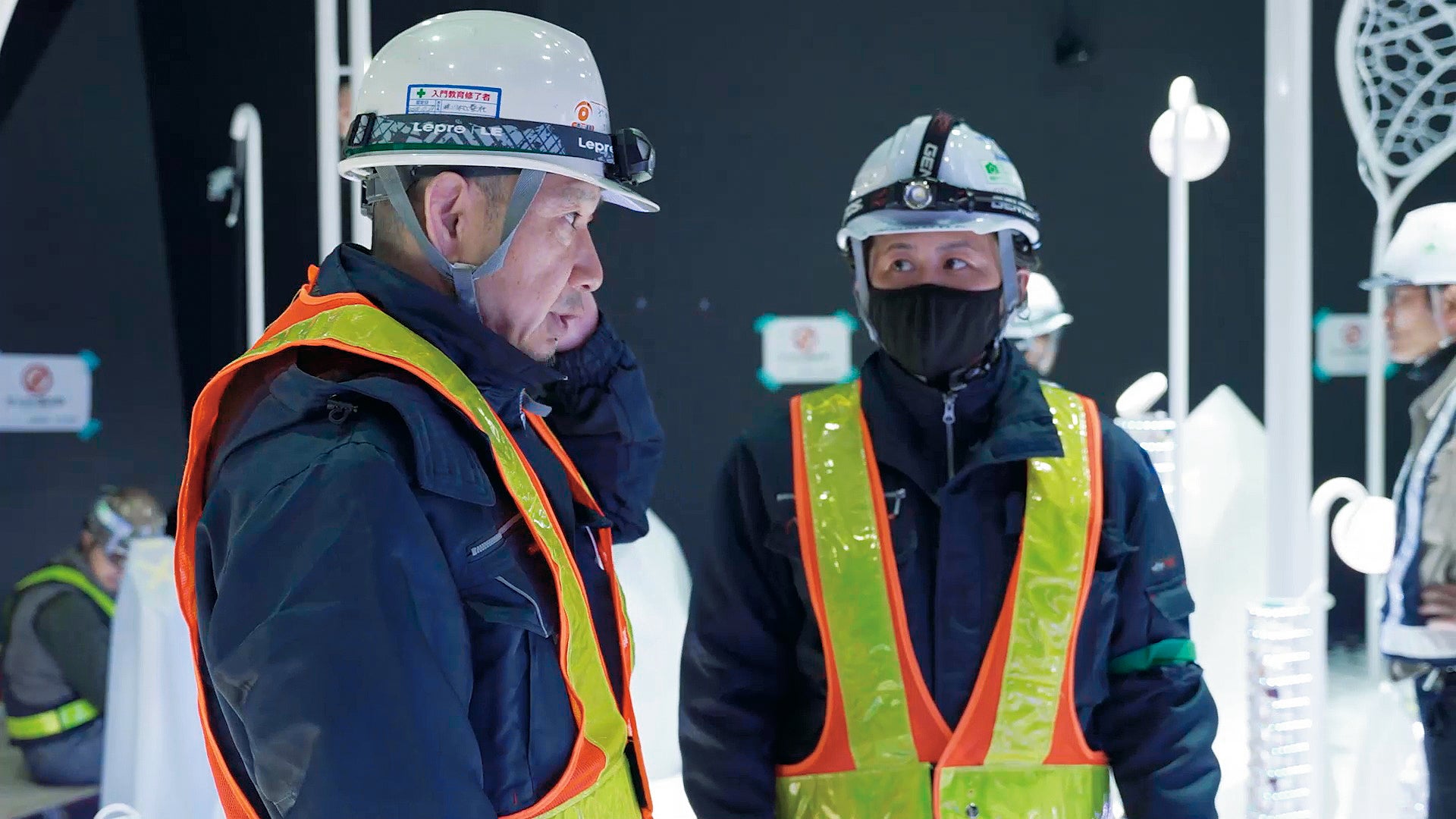
"Safety and Health Council" meetings 20 times a month
The most important thing about Nakazato's information dissemination was, of course, safety. Broadly speaking, there was a disaster prevention council meeting hosted by the General Affairs Department, where we called upon each site to implement safety measures. Separately, each pavilion held a safety and health council meeting once a month. There, we exchanged information and took back information and policies. The General Affairs Department had Mr. Hashimoto, who was in charge of safety management, and the person in charge of that construction section attending, so Mr. Hashimoto attended the safety and health council meetings about 20 times a month.
In addition to disseminating information from Hashimoto, daily safety checks were crucial. We walked around the site every day on safety patrols. The first step was to ensure that everyone was properly instructed and trained beforehand before entering the site. Even so, when temporary materials and scaffolding were being assembled and the site became complex, dangerous areas would sometimes become apparent. In such cases, we would provide instruction on the spot while showing materials, take photos, and share them with all sites at the disaster prevention council. There were also sites where unsafe behaviors were more likely to occur, so we increased the frequency of safety patrols at those sites and devised different methods of training. The daily safety patrols were mainly conducted by Mr. Egami and myself, but we also received cooperation from members of the General Affairs Department as well as employees of the Quality, Environment and Safety Promotion Department at the Osaka office.
Nakazato's heatstroke prevention measures were also part of safety management. There were quite a few construction sites with high temperatures and no shade. Members of the management department took turns preparing sports drinks early in the morning, filling 18-liter insulated jugs, and preparing them at the site office. These were then distributed to each construction site.
During the construction at Yokoshima, we were concerned about the power supply to the entire Yumeshima site, so we couldn't easily introduce temporary cooling equipment like spot coolers. So, we thought, why not try to cool ourselves from the inside out?
The distribution of sports drinks, which we started as an emergency measure, was quite well-received, and we received quite a few requests for refills. As a measure against heatstroke, we procured WBGT meters (heat index meters) that emit a warning sound when dangerous levels are reached, and distributed them to each pavilion. The general contractors in charge of each construction section were also very concerned about preventing heatstroke.
Nakazato: We only managed to implement this in one location, but we created a room where you can cool off inside by blowing cool air from a spot cooler into the tent.
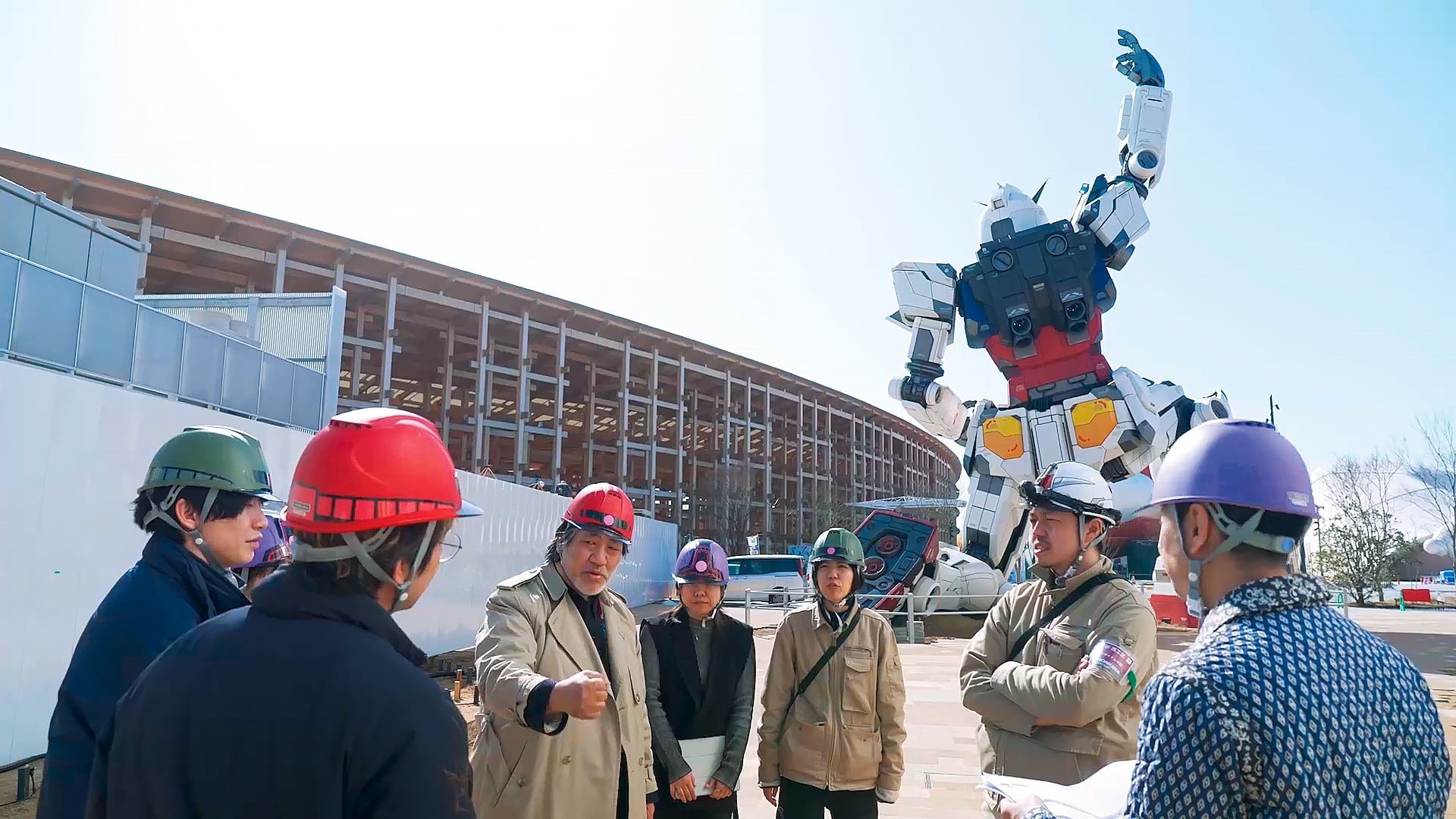
construction phase of the World Expo is also like a festival.
Yokoshima: Since this is the first large-scale international exposition in 55 years, I wanted as many employees as possible to experience it firsthand. With that in mind, we first welcomed 38 new employees hired for sales and production positions in Tokyo and Osaka for on-site training. The training was divided into four groups, each lasting one month. The training combined on-site work with classroom instruction. For the classroom sessions, we gave them assignments to think for themselves.
Nakazato: We designed the training to be experiential, prompting questions like, "How does this work?" and "Why?" We gave them a task, and they each looked at the site and thought about it on their own, then presented their findings the following week. After that, we had them actually get their hands dirty. They assembled walls, floors, and ceilings using basic building materials. The assembly methods are written in the building materials catalogs, which you can order and read carefully. We wanted them to discover these things for themselves. In the post-training survey, many people said, "My understanding of the work has deepened."
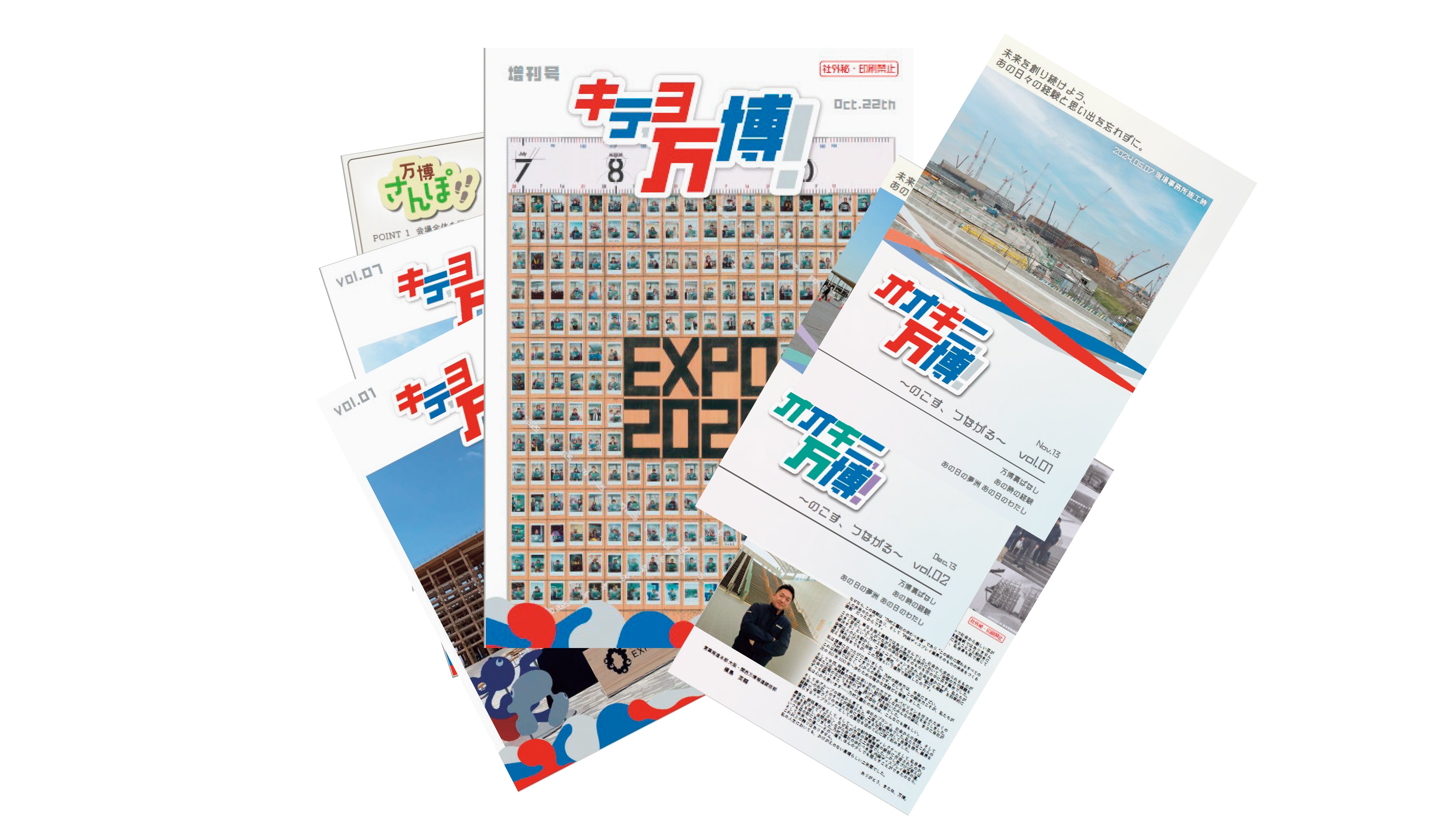
During the Egami Expo, we had a shift system in place for six months to prepare for any unexpected maintenance needs. However, there were very few instances where we had to scramble for work, which reaffirmed the high quality of our deliverables. So, Yokoshima suggested that we, who were closest to the Expo, should create an internal newsletter to let people know about it, and Hirachi created an internal newsletter called "Come to the Expo!".
We split up on the flat ground and introduced the explanations and highlights of each pavilion. I think we managed to cover almost all of them. We also talked about things like the delicious food and the restrooms. After seeing that, a lot of employees came over.
Egami: Expo is like a festival from construction phase through to the end of the event. I don't mean it in a frivolous way, but rather that contractors from all over Japan, and even from overseas, gather there. You can make connections and talk to people. I was able to experience and learn so much there. It was also great that we were able to set up a site office, which became a place for people involved to interact.
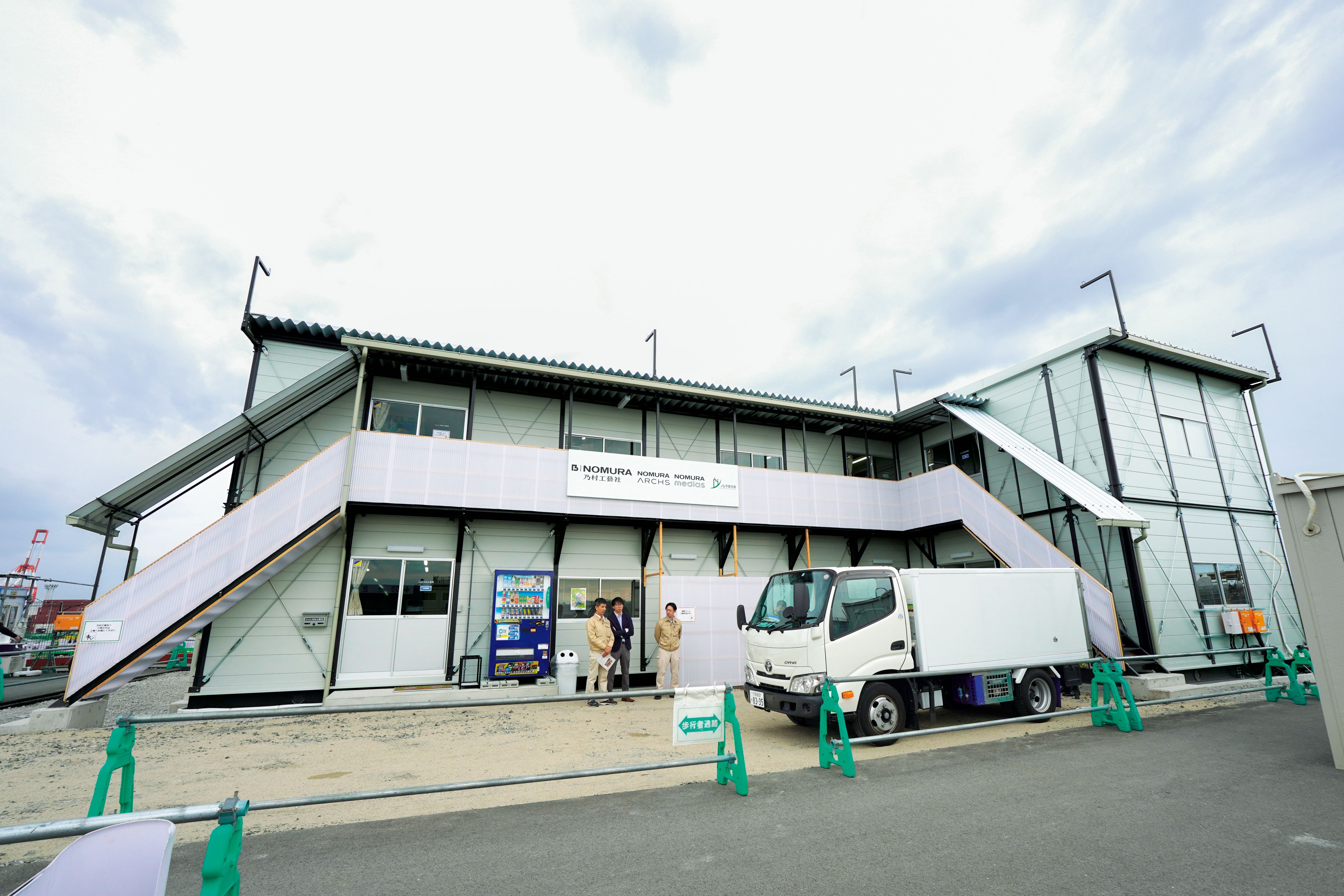
Yokoshima: Normally, NOMURA Co.,Ltd. doesn't have a site office of this size at its construction sites. But this became the base for both the "offense" and "defense" of the project. We had a representative from the materials trading company stationed there, which allowed us to reduce costs through centralized purchasing. Also, various incidents that occurred on site were resolved starting from the site office. I think the presence of a site office, where 80 to 90 people came and went at times, led to a sense of trust and security not only for our internal stakeholders but also for our clients.
It was a very uncertain start, like trying to grasp a cloud, but working on this World Expo was a great learning experience for me personally. The impact on the employees who experienced the Expo was so significant that I think it will influence their future work skills, careers, and outlook on life. It was also a great opportunity to reaffirm the breadth of work at NOMURA Co.,Ltd. and its ripple effect on society. I believe there is still so much we can do for the future.
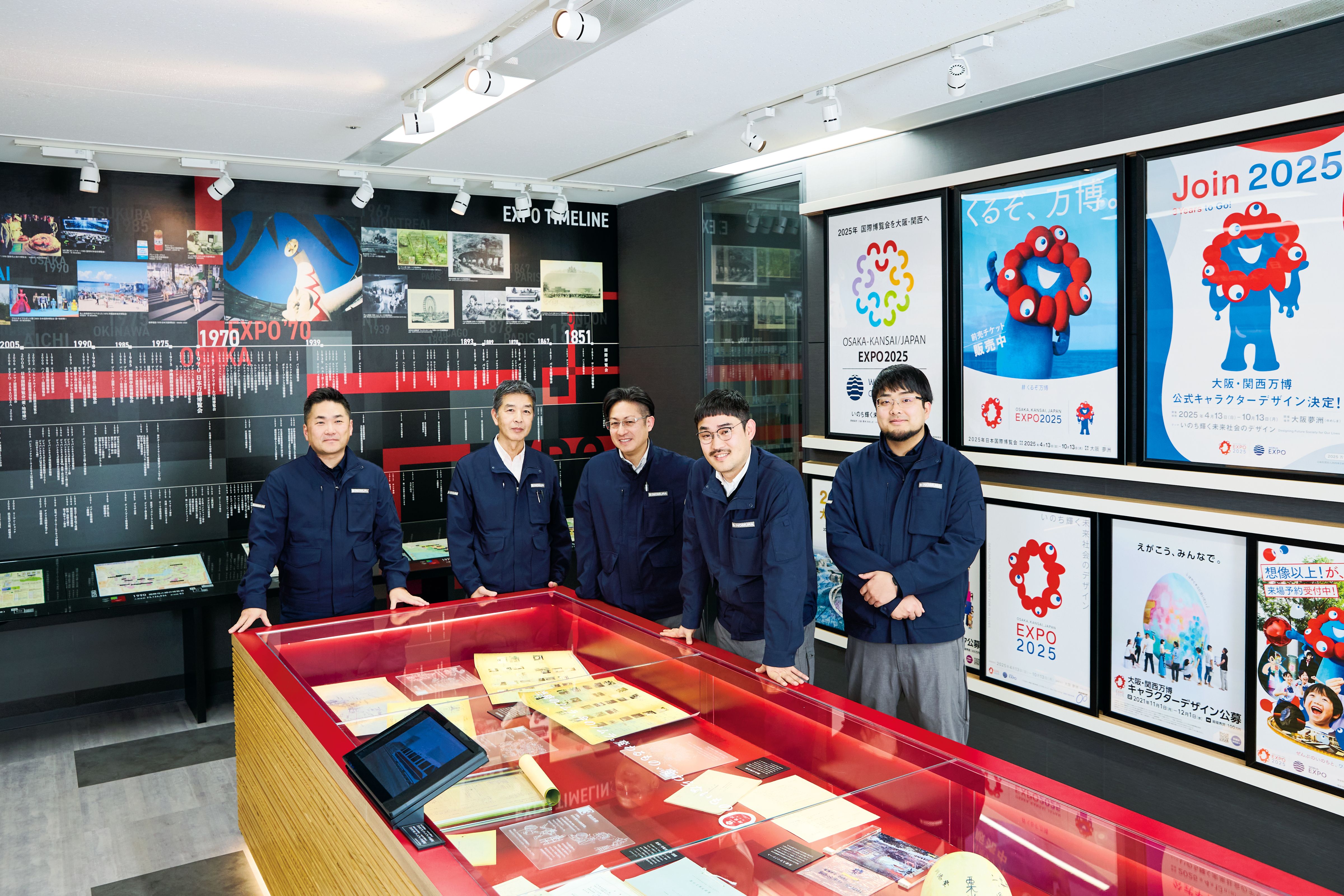
(Interview conducted inJanuary2026.Titles in the article are as of the time of the interview.)
Interview photos by Kazumi Kiuchi
profile
Eisuke Yokoshima,NOMURA Co.,Ltd.
Sales Promotion Division, Osaka-Kansai Expo Promotion Department, and Business Strategy Division, Production Function Strategy Department: General Manager/Manager
Jun EgamiNOMURA Co.,Ltd.
Sales Promotion Division, Osaka-Kansai Expo Promotion Department, Department Manager
Kunihiko HashimotoNOMURA Co.,Ltd.
Sales Promotion Division, Osaka-Kansai Expo Promotion Department, Chief
Naoki Nakazato,NOMURA Co.,Ltd.
Sales Promotion Division, Osaka-Kansai Expo Promotion Department, Chief
Hiroyuki Hirachi,NOMURA Co.,Ltd.
Sales Promotion Division, Osaka-Kansai Expo Promotion Headquarters
NOMURA's Media

- NOMURA Co.,Ltd.SCENES


![Drawing out children's passions through numerous experiences [Part 1]](/_next/image/?url=https%3A%2F%2Fnomura-kogeisha.g.kuroco-img.app%2Fv%3D1779774440%2Ffiles%2Fuser%2FSCENES%2FVol.05%2FPandD_JUNOPARK%2F477A3016b_jitsuga.jpg%3Fwidth%3D800&w=1920&q=75)


Please contact us using the button below if you have an inquiry, want to request a quote or request documents.
We have created a separate “FAQ page” that lists the most common questions we are asked.
Please take a look at this page if you have a question.