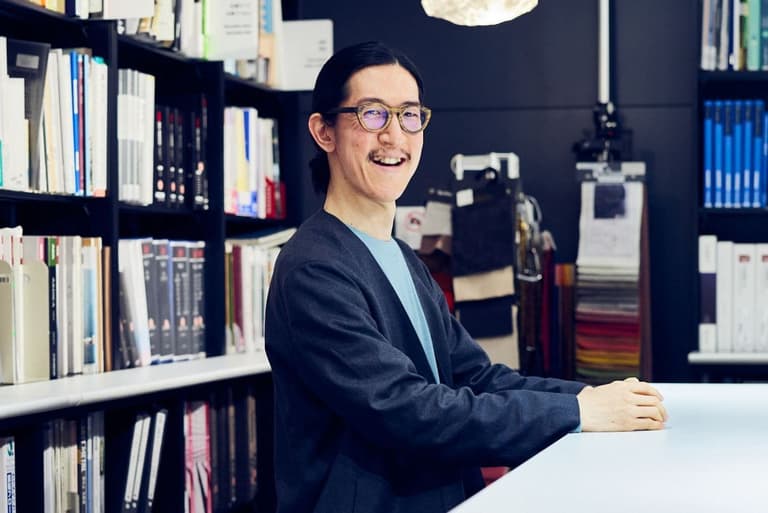
Since joining the company in 2009, Kyohei Kishida has been involved in planning projects for cultural facilities such as museums. He spends his days thinking about everything from concept creation, such as what kind of displays to put on the facility and how to concept design the space. Driven by the desire to create places where people can gather and to build local culture, Kishida works tirelessly to achieve this goal. This article delves into his dedication and efforts.
``How much can you become a fan of the region?'' Based on the fieldwork, plan
“Through my work, I was able to find my hometown in Japan.”
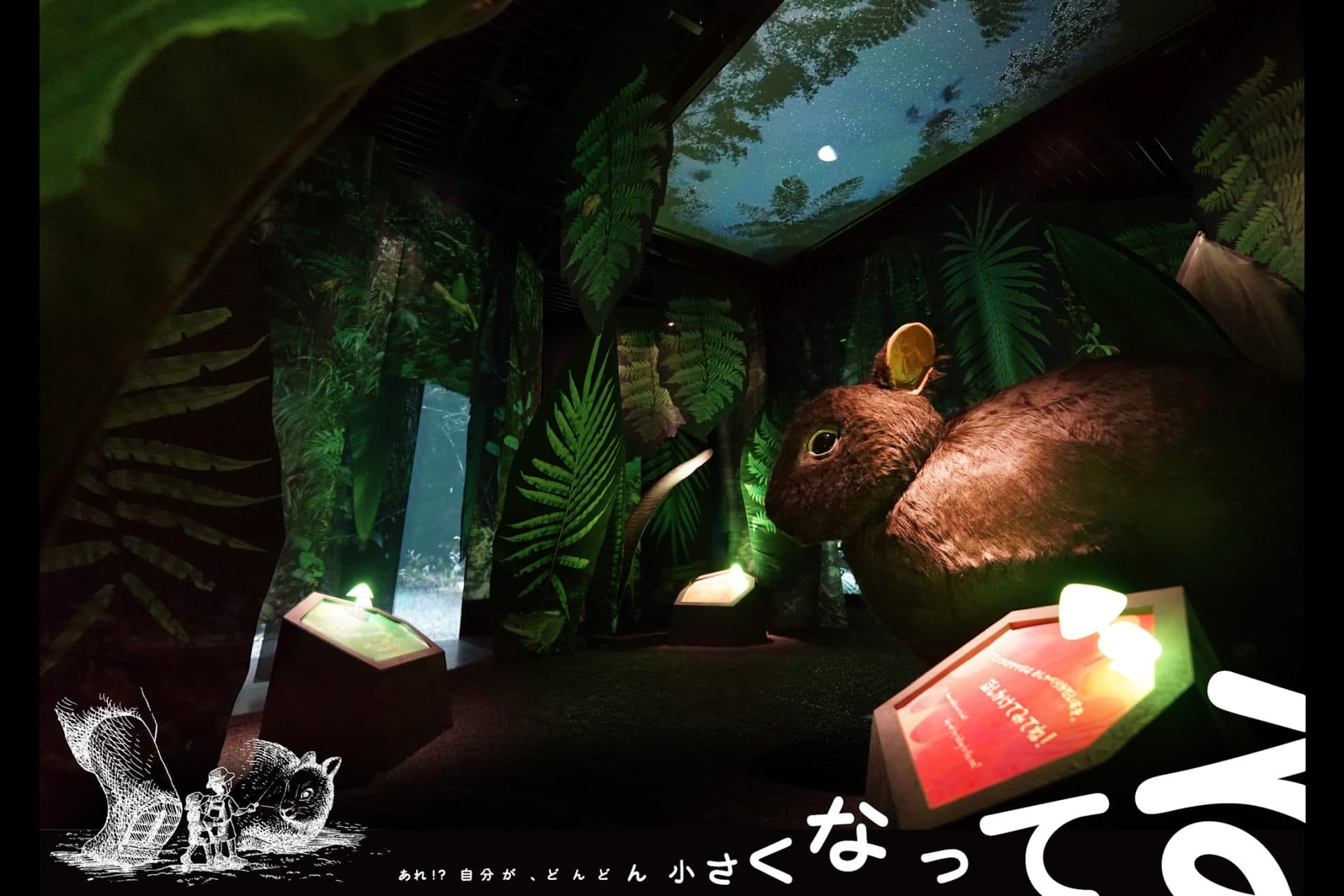
That's what Kishida from the Creative Headquarters Planning Center says. Kishida has planned numerous facilities such as "Noto Satoyama Satoumi Museum", "Fukui Prefectural Vein Museum", "Tokushima Prefectural Museum", and "Hyogo Prefectural Hyogo Tsu Museum". The themes dealt with are various, but they are all cultural facilities rooted in the region.
Kishida's work begins with experiencing the charm of the region. At one point, he boarded a boat with a fisherman, and at other times, entered a huge underground facility with a scholar... While working closely with the local people, we proceed with the planning of what kind of facilities should be created to convey the appeal of the facility.
Kishida: “The important thing is how much you become a fan of the region. That’s why I go to the site almost every month and have meetings. I'm going.
No matter where I go, there are many people who welcome me, and some of them treat me like a child. While falling in love with the area to the point that it feels like home, we scoop up the questions and surprises that lie in the area. That will be the basis of your plan.
Based on the charm that I sensed from the experience, I will work out a planning policy unique to that space. For example, when I was walking through Satoyama and Satoumi on the Noto Peninsula, the scenery from the mountains to the sea was so magnificent that I wanted to express this wonderful scenery in a museum. So, by combining the front and floor images, we created a dynamic space that makes you feel like you're walking in the air." (Noto Satoyama Satoumi Museum)
Kishida's method is to express such ideas by sketching them with his own hands. While involving the designers, team members, and customers, I gave a presentation on what the essential charm of this area was, and shared their opinions.
Kishida: I'm not an expert on the themes handled by museums. That's why I create facilities while listening to the stories of scholars and curators who are familiar with historical facts.
What we value most is how to convey the theme in an easy-to-understand way for children and the general public. We make full use of digital technology in displays and incorporate features that are accessible to children.
At the museum, which opened in November 2022, visitors wear glasses-shaped devices called Hololens, and the people of that time who appear in the space unfold in a theatrical drama. In addition, we will approach history in various ways, such as expressing history in a way that anyone can enjoy, such as a 'singing and dancing historical drama'." (Hyogo Prefectural Hyogo Tsu Museum)
In recent years, Kishida has been particularly focused on creating "socially good" facilities. He actively incorporates "inclusive concept design" that can be enjoyed by foreigners and people with disabilities, creating facilities that will make the world a better place.
"I want to do work that brings happiness to the community"—During my university days, I weighed agriculture against NOMURA Co.,Ltd.
▲When I was a student, I participated in rice harvesting with local elementary school students. Rare rice racks now
In college, Kishida majored in architecture. Although he was absorbed in working on it, he says that he suddenly realized something.
Kishida: "When I was thinking deeply about 'architecture,' I realized that I wasn't so much interested in building structures, but rather in concept design the culture and social aspects that are built after they are constructed, and the people who live in them. In terms of the kanji for 'architecture,' I was more interested in 'building' than 'constructing'."
My interest in building culture was evident in my university extracurricular activities. As part of his extracurricular activities, Kishida frequently visited farming villages about 25 kilometers away from the city where his university was located, and stayed at the homes of local grandfathers and grandmothers. What was there was the desire to liven up the area.
Kishida: I was indebted to an old-fashioned house with a Goemon bath and a wood-burning stove. While listening to the stories of the local people, I thought about how I could make this area better.
At that time, my motivation was not so much to create a community, but to entertain and make the people in the community happy. So, after graduating from university, I thought it might be a good idea to continue living in a farming village and make a living as a half-farmer, half-builder.”
Architectural concept design? Agriculture? Or both? Kishida was troubled by the question of what would make his life enjoyable. However, one day he came across a paper from the Institute for Cultural Environment, the think tank of NOMURA Co.,Ltd. Through the paper, he learned that NOMURA Co.,Ltd., Ltd. concept design and operates museums, and the very next day he went to the Nagasaki Museum of History and Culture, which NOMURA Co.,Ltd. Ltd. was working on.
Kishida: "I spoke with the overall manager and learned in detail about the intentions behind the museum's concept design. It was truly a job of creating culture. I remember being surprised that such an interesting company existed."
Kishida thought, "I can do agriculture even when I'm older." So he decided, "I'll start by joining NOMURA Co.,Ltd. and absorb ways to revitalize the region."
Kishida: I chose to become a planner rather than a designer because I wanted to be involved in the phase of thinking about the essence of a facility. I got a job offer without any problems, and I'm here now."
Aiming for displays that resonates with everyone, we strongly emphasized "inclusive concept design."
▲Fukui Prefectural Varve Museum. A 45-meter varve for 70,000 years is displayed in the gallery as it is
Kishida: "The Annual Layer Museum is a museum themed around 'striped soil' collected from a miraculous lake in Fukui Prefecture. The soil at the bottom of the lake has accumulated a history of each season in striped patterns: plankton remains from spring to autumn, yellow dust and iron from late autumn to winter, and so on. Amazingly, there are stripes that have lasted for 70,000 years. These striped patterns drawn by nature are called 'annual layers.' Other examples of annual layers include coral reefs, tree rings, and ice sheets in the Arctic and Antarctic, so we decided to displays at the Annual Layer Museum."
First, I went to meet researchers in each field and collected various materials. At first, it was a project without a curator, so I sorted out the information and worked with customers and researchers to create a facility.”
Looking back, this experience at the Veiled Museum solidified Kishida's style as a planner.
Kishida: "Every planner has their own style. Some planners create a concept, saying, 'This is the idea,' and then leave the rest to the designer. But in my case, I want to digest even the most niche details myself and create displays image while drawing pictures of it. I also comment on the specific concept design and work together with the designer, exchanging ideas. This project helped me discover the core of my work—enjoying the trial and error process and exchanging opinions with designers on a level playing field, regardless of age or position."
Kishida: "In this project, we actively incorporated so-called inclusive concept design, which takes into consideration people with disabilities and foreigners. When creating displays, it is generally carried out only by curators and displays companies. In this project, we held many inclusive concept design workshops in which we designed together with people with disabilities and foreigners. There, we made many discoveries that we would not have noticed on our own. We were serious about creating displays that everyone can enjoy, regardless of whether they have a disability or not."
For example, when we proposed a text-heavy explanatory text for people with hearing impairments, those affected responded that shorter texts, similar to messages used on social media, were more appropriate, so we adjusted the writing style. We also worked with people with visual impairments to consider effective ways to displays, communicating with them by having them actually touch displays.
When we create a facility, we design and plan it to be as user concept design friendly as possible for as many people as possible. However, there are aspects that we can't understand on our own, so we have various people experience it together and share their "actual feelings" to create displays that resonates with a wide audience."
I want to pursue the possibilities as a "place" that transcends the framework of the museum.
Kishida intends to continue focusing on the field of inclusive concept design.
Kishida: "For example, I think there are many new things we can do, such as collaborating with LGBTQ+ individuals, people with developmental disabilities, intellectual disabilities, and mental disabilities to plan displays. By incorporating inclusive concept design, we can arrive at displays that are easier to understand. I want to broaden the scope of displays and create attractive spaces."
I hope that we can incorporate inclusive concept design into every project. To that end, I would be happy to create facilities together with various people in the community. Creating a museum is a very enjoyable process from a learning perspective. I hope to involve many people in that process."
In recent years, the definition of a museum proposed by the International Council of Museums (ICOM) has changed. The definition added that museums should be “inclusive places” and “places where citizens can communicate and participate”. Kishida's vision is aligned with these two new definitions.
Kishida: I would like to actively adopt new methods without being bound by the conventional framework of museums. People are refraining from going out, and opportunities to meet people have decreased, but even in such times, museums convey the joy of interacting with people in real life. is providing value.
I believe that new and unknown things will continue to happen in the future. There will also be things that change culture and society completely. At such times, what kind of value can museums create in each era? With high expectations in mind, we will continue to work hard.”
Kishida pursues the possibilities of museums as a place. We will continue to build a new culture while conveying the charm of each region.
Kyohei Kishida
I am responsible for planning displays, from research to operational preparations for museums and other institutions. I propose, plan, design, and direct the content for regional museums with strong thematic focus, working with leading researchers to create displays. I also conduct research on new displays methods such as inclusive concept design and citizen participation in museums, as well as the evolution of displays at the Japan Pavilion of World Expo.
Planning cultural facilities such as museums. Build a new culture while staying close to the community
PAGE TOP
Contact us
Please contact us using the button below if you have an inquiry, want to request a quote or request documents. We have created a separate “FAQ page” that lists the most common questions we are asked. Please take a look at this page if you have a question.
This website uses cookies to improve customer convenience and also to maintain and improve the quality of our services. Click the “I Agree” button if you agree to the use of cookies. Refer to the Privacy Policy for details.

.png)
.png)
.png)
.png)
![Drawing out children's passions through numerous experiences [Part 1]](/_next/image/?url=https%3A%2F%2Fnomura-kogeisha.g.kuroco-img.app%2Fv%3D1779774440%2Ffiles%2Fuser%2FSCENES%2FVol.05%2FPandD_JUNOPARK%2F477A3016b_jitsuga.jpg%3Fwidth%3D800&w=1920&q=75)