
The logic of architecture permeates the interior, while the interiors philosophy of the interior seeps outwards—both are valid.


Yuko Nagayama,Architect

Harayama AsakoNOMURA Co.,Ltd.
Board Directors Senior Executive Officer
Insights ─Shaping the Future
INTERVIEW
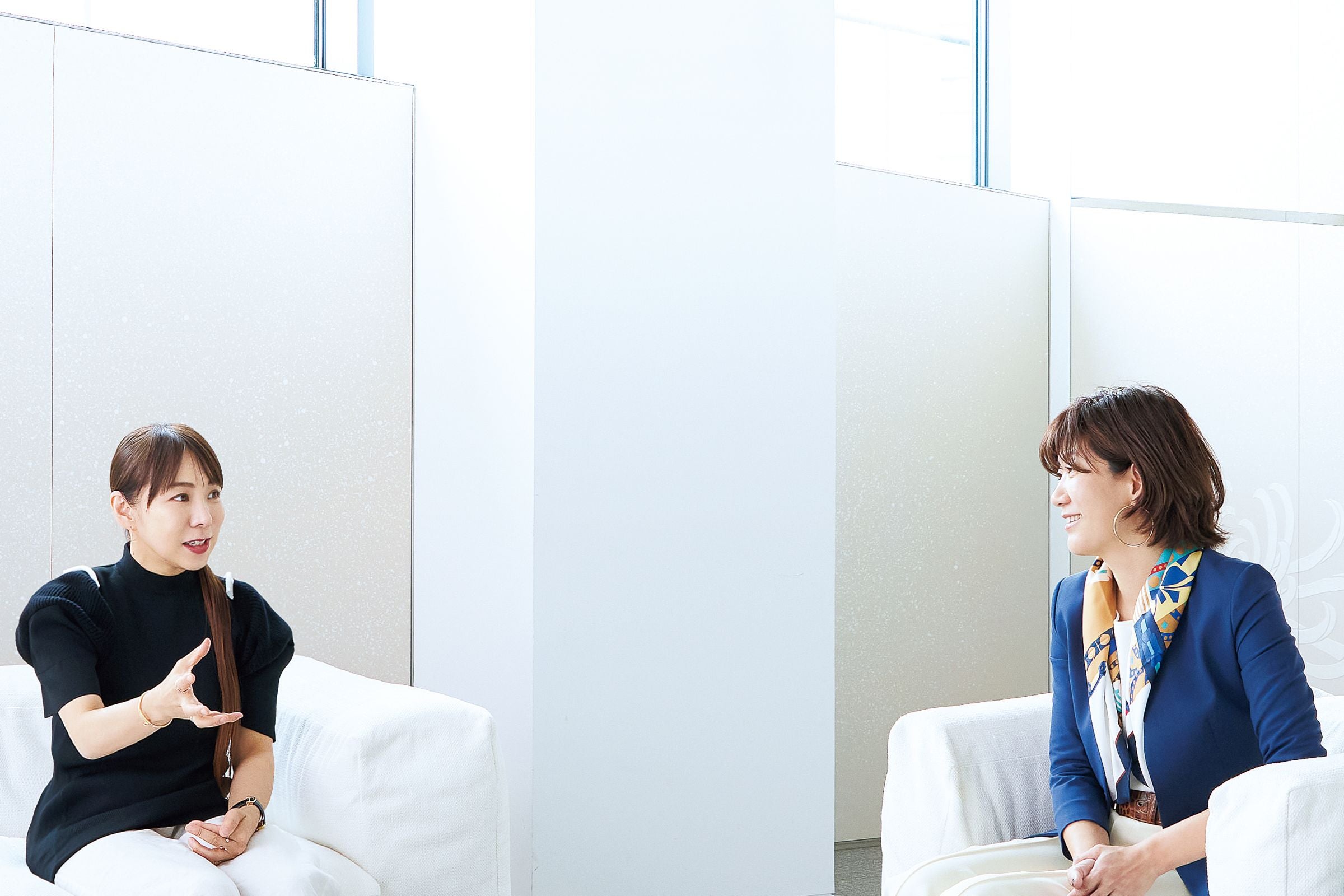
"Insights—The Shape of the Future" is a series exploring hints for the future. For the second installment, we invited architect Yuko Nagayama, known for her architectural concept design that encompasses not only the building itself but also the experience of being in that place, to discuss with Asako Harayama NOMURA Co.,Ltd. the new relationship between architecture and interiors, and sustainable architecture for the future.
Renovation requires expertise
Harayama NOMURA Co.,Ltd. has established a new department called the Architectural Production Department this March. There are two main reasons for this. Firstly, while new buildings are being constructed one after another in various urban development projects, there is a growing sustainable need to revitalize older buildings. We specialize in interiors and displays infill, which starts with human experience, and have been increasing the value of buildings, but with architectural knowledge, we can further enhance that value.
Another point is that we often handle projects from the initial planning and concept stage, such as utilizing idle land, but because we don't build the building itself, there's a gap between the initial stages and when we return to the site for the interiors work. I really want to be involved in the entire process of turning a concept into reality.
Mr. Nagayama is an architect, but he has a style of handling everything from start to finish, getting very close to the people involved, and seeing it through to the end.
Nagayama: That's right. In fact, we've been getting more and more renovation work. Because of legal regulations, clients probably find it difficult to ask an interior designer to do the work. They want to ask an architect, but old houses are very difficult. You have to consider how to reinforce and remodel the structure of the building, and then how to concept design interiors on top of that. If you don't have carpenters or structural engineers who are used to that kind of thing, it's quite difficult if you think about it in terms of the structural logic of the Building Standards Act as we normally would. Renovation isn't just about strengthening one part; it's about the overall balance, so you need the knowledge of someone who is used to it.
Furthermore, if we don't carefully address issues like neighborhood relations and consultations with the government, the possibilities of what we can create will be significantly different. I think it would be good to have a company that can oversee the whole picture.
At our company, we're seeing an increasing number of projects involving renovating old houses. It's a very rewarding job, adding new value to and revitalizing the rich local culture and assets.
They have also worked on projects such as "LOQUAT Nishi-Izu" and "LOQUAT Villa SUGURO," auberges converted from old houses in Nishi-Izu, "Kiraku Obi Goya-tei," a converted old house in Nichinan City, Miyazaki Prefecture, and "The Hotel Seiryu Kyoto Shimizu," a refurbished elementary school building in Kyoto that is over 90 years old.
When it comes to preserving a town's culture or important historical buildings, it's not something a local construction company can do, nor is it a job for a large general contractor. I think NOMURA Co.,Ltd. is just the right size for that. In addition to renovating buildings, we also plan content that enhances the appeal of those buildings and match them with businesses.
%E3%80%91002_loquat_KP_8830.jpg)
What can be created through architecture and what can be achieved through interiors are different things.
Harayama We're trying to get into architecture starting with interiors, but Mr. Nagayama, on the other hand, often starts with the architecture and then handles interiors as well, right?
Nagayama Yes. If we could handle everything ourselves, we would like to, but there are quite a few things we can't do due to our capacity. In that case, we would need to get collaborators, but I think the opposite is also true. After all, what can be created through architecture and what can be achieved through interiors are quite different.
However, in recent projects, we've stopped completely separating the exterior and interior. We create a world view for the building and then blend the exterior and interior together.
Previously, commercial facilities were box-shaped, offering almost no view of the outside, but now they try to incorporate greenery as much as possible and create terraces. Sometimes the logic of architecture is incorporated into the interior, and sometimes the ideas of interior design seep out into the exterior; I think both patterns exist.
Harayama I've recently come to feel an increasing need for overlap between architecture and interiors. In traditional architecture processes, it's rare to consider specific interiors plans from the outset; architecture and interiors are often separate processes.
Nagayama: What often makes me think, "What, what a waste," is that, as creators of the boxes, we had explained how we wanted them to be used, but that wasn't communicated well, and the other party ended up making up a completely different story for it and changing it in a direction completely different from our intentions.
Harayama: When I was in charge of a museum in the past, it was a museum located in a newly constructed building, but the flow of people inside the museum was just not practical, so even though the plan was still in progress, we had to request a change to the building's design.
It's not that architects are bad, but I think that if you don't communicate from the conceptual and planning stages and work together to finalize the image of how the space will be used and how people will move, you'll end up with a lot of wasted effort. In that sense, I feel that collaboration between architecture and interiors infill will become increasingly important in the future.
It's important to have a "connector" who can communicate the concept
Harayama: For example, JINS' "JINS PARK Maebashi" was designed by you. I think it's really wonderful because it seems that the facility was built with everything planned out in advance, not just the functionality of the shop, but also the experience of the space.
It's a Nagayama Eyewear store, but we don't just want to sell products; we also want to provide an experience. We wanted the open interior of the store to blend in with the garden, so that visitors can find their favorite spot to spend time there, just like having a picnic in the park.
We put in a bakery, but if we made it an eat-in area, we would have to separate the space into paid and non-paid areas, so we made it all take-out so that customers could eat wherever they wanted. We also considered the operation of providing bread, and created showcases and tags to go with it.
If you carefully create the space in this way, while adapting it to the contents, it will be able to operate smoothly in the way you envisioned after opening.
So you're not just designing Harayama Architecture, you're designing the entire project. Our architectural production department has the same idea, and rather than just "being involved in the design," it's important to act as a "connector."
From the architects to the operators, the whole process of creating a facility - if there is no function to manage the whole process, the concept will not be conveyed in a good way to every corner. That's exactly what we need to do. It's extremely important that someone clearly presents the vision and moves forward without wavering.
Nagayama:Exactly. If I don't do that, it will end up being half-baked. That's why I try to use words to make sure people understand, and I get people to help me.
It's important to treasure something that someone believes in and doesn't give up on. Don't throw it away halfway through, because you won't know until you give it a try.
The most sustainable approach is to make good products with care and use them for a long time.
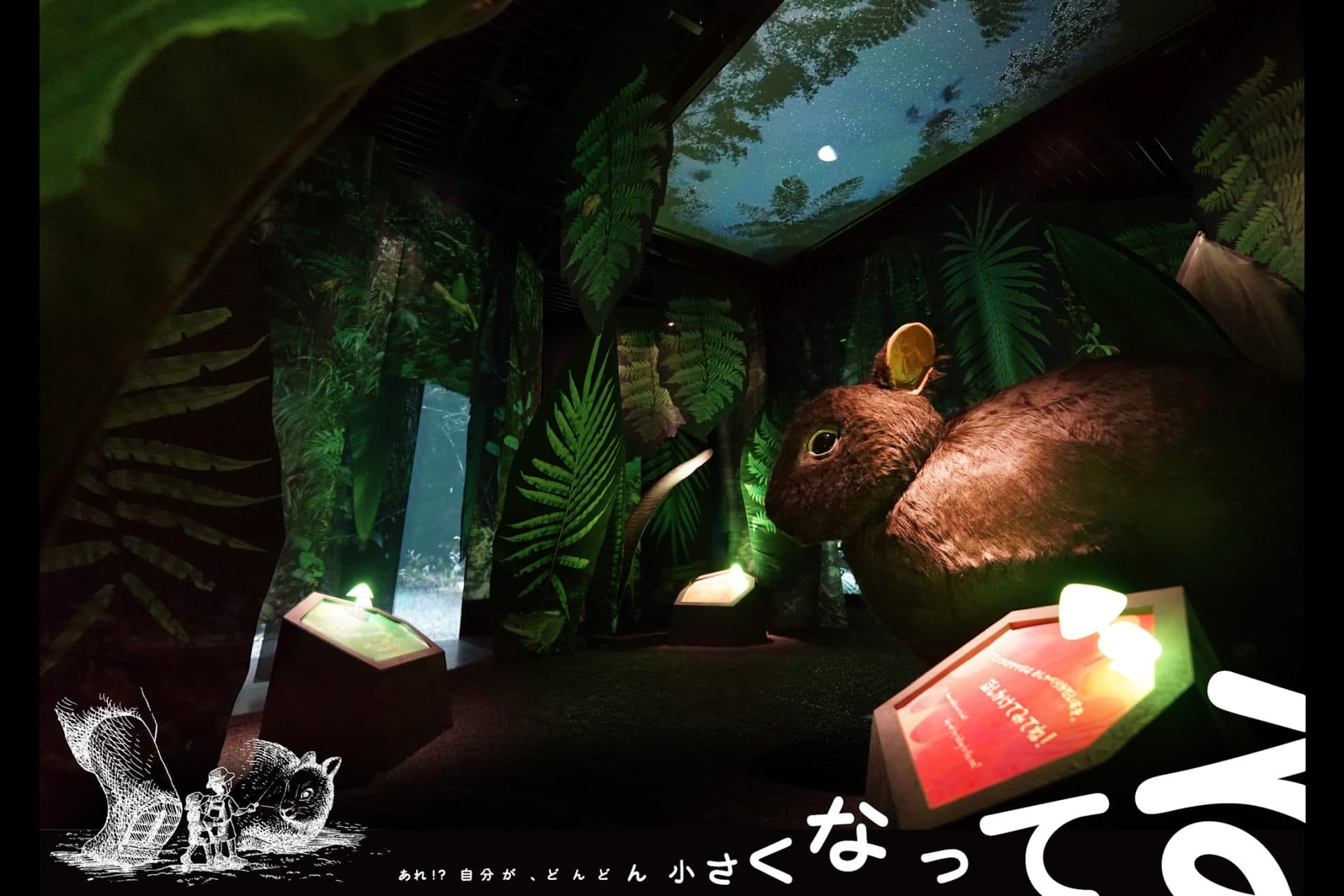
Harayama: For the 2025 Osaka-Kansai World Expo, Mr. Nagayama is in charge of the architecture and NOMURA Co.,Ltd. Ltd. is in charge of displays at Panasonic Group's pavilion, "Nomo Country." Looking at how the project is progressing, it's clear that the vision has remained consistent and unwavering.
Nagayama 's "Nomo Country" is a pavilion aimed at children, especially those of the alpha generation. The Japan Pavilion at the 2020 Dubai World Expo was a building with a strong system, with a façade that was also a structural element using geometry.
This time, we imagined a free-form shape that doesn't show much of a system. We imagined a shape that is not yet solidified, like children, and that can continue to change toward the future. So, just like the Dubai Expo, the façade itself is also a structure, but we made it so that the whole is made up of a collection of three-dimensionally curved motifs that evoke the theme of "infinite circulation." At first glance, it is an organic shape that is difficult to understand, but seems likely to continue to change toward the future.
HarayamaThe building looks like soap bubbles moving in the wind.
Nagayama: I wanted to create a space that would leave a lasting impression on the children when they first came here, something that would make them say, "Wow!"
The concept will be conveyed more thoroughly once we move on to displays, but first and foremost, I want to create a memorable experience within the architectural space. I myself often remember everything I saw at a time in conjunction with a striking spatial experience. The Expo itself is only for a limited period of six months, but I hope that the memories of that time will remain with the children forever.
NOMURA Co.,Ltd. team, who are in charge of displays, also expressed their desire to carry on the architectural themes and ideas, and we have been in constant communication, holding workshops together and discussing while showing each other models.
Harayama: This time, there's a pretty ideal relationship between the architecture and displays, isn't there? Even so, I truly believe that we, as creators of architecture and space, must seriously consider the future of children.
The construction industry is one of the largest emitters of CO2, so reducing it is a major issue, and as I mentioned at the beginning, making permanent use of existing buildings is one way to achieve this. We also need to reconsider the practice of "scrap and build" from a future-oriented perspective.
Nagayama:When I design a building, I think about what I would like the future to look like. But in reality, we don't know what the future will bring. So I try to leave some space and think about architecture that is flexible.
I myself have renovated buildings with various histories, and even if they were once factories, I reinterpret them to be used for something completely different. There are people who want to preserve attractive buildings, no matter what they are, and the next generation will reinterpret them for something completely new. I think that's very interesting, and in the end, the most sustainable thing is to create something good in earnest and have someone want to preserve it.
HarayamaWe create buildings and spaces by seriously considering not only how they will be used in the present, but also their future possibilities. Even if people in the future come up with something completely different, they will still think that the buildings and spaces are wonderful and will continue to use them as they are. That's the kind of craftsmanship I want to do. Thank you for today.
(Recorded in May 2024)
Photo = ©Kazumi kiuchi
profile
Yuko Nagayama,Architect
Harayama AsakoNOMURA Co.,Ltd.
Board Directors Senior Executive Officer
NOMURA's Media

- NOMURA Co.,Ltd.SCENES


![Drawing out children's passions through numerous experiences [Part 1]](/_next/image/?url=https%3A%2F%2Fnomura-kogeisha.g.kuroco-img.app%2Fv%3D1779774440%2Ffiles%2Fuser%2FSCENES%2FVol.05%2FPandD_JUNOPARK%2F477A3016b_jitsuga.jpg%3Fwidth%3D800&w=1920&q=75)


Please contact us using the button below if you have an inquiry, want to request a quote or request documents.
We have created a separate “FAQ page” that lists the most common questions we are asked.
Please take a look at this page if you have a question.