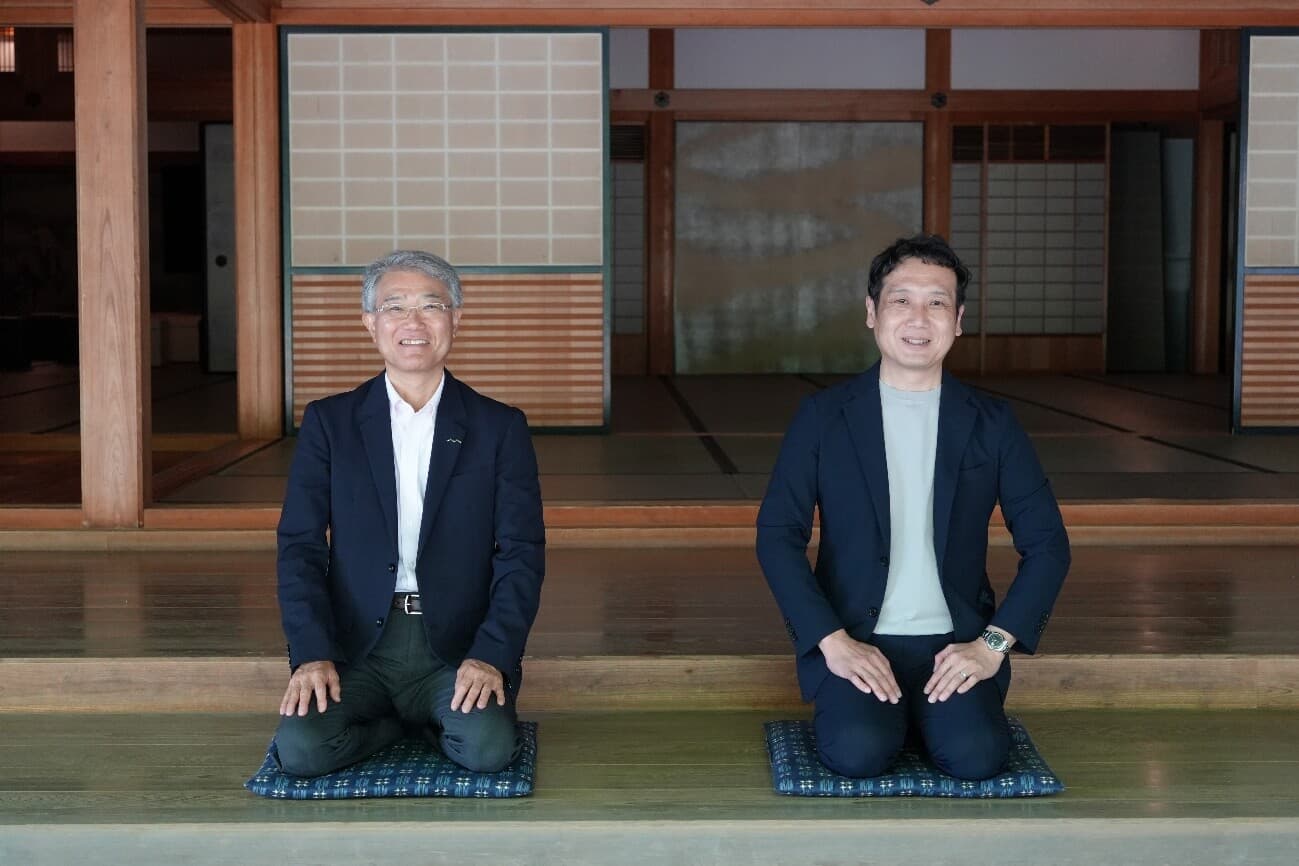
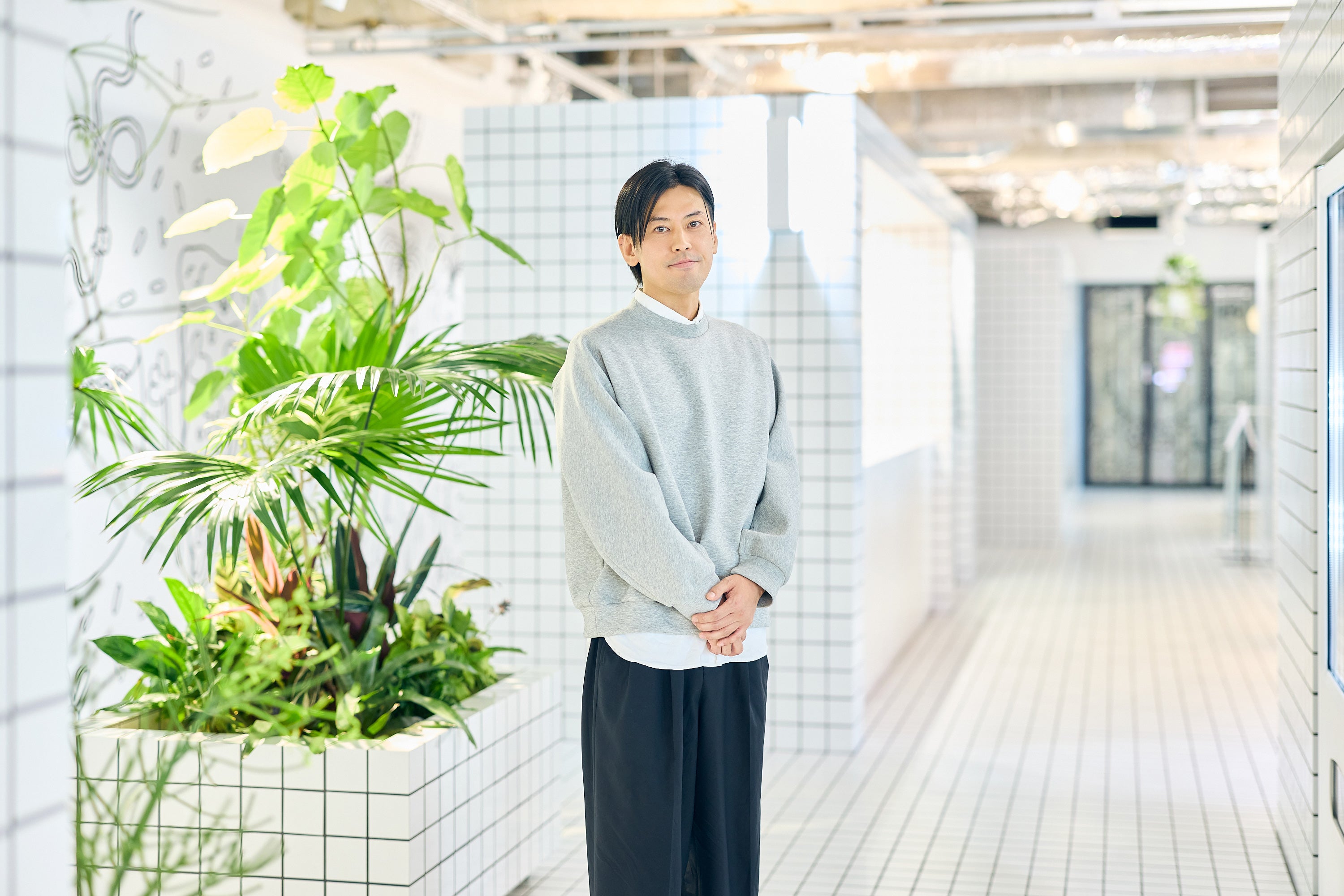
Shohei Suzuki, Room Chief at the Creative Design Headquarters Design Collective Center "no.10," is responsible for a wide range of spatial designs, including commercial facilities, specialty stores, residences, and offices. Suzuki, who consistently pursues quality and proposes solutions that exceed expectations, talks about the rewards and beliefs behind his work.
Aligning perspectives and fostering individual growth: The secrets to successful team management in leading large-scale projects.
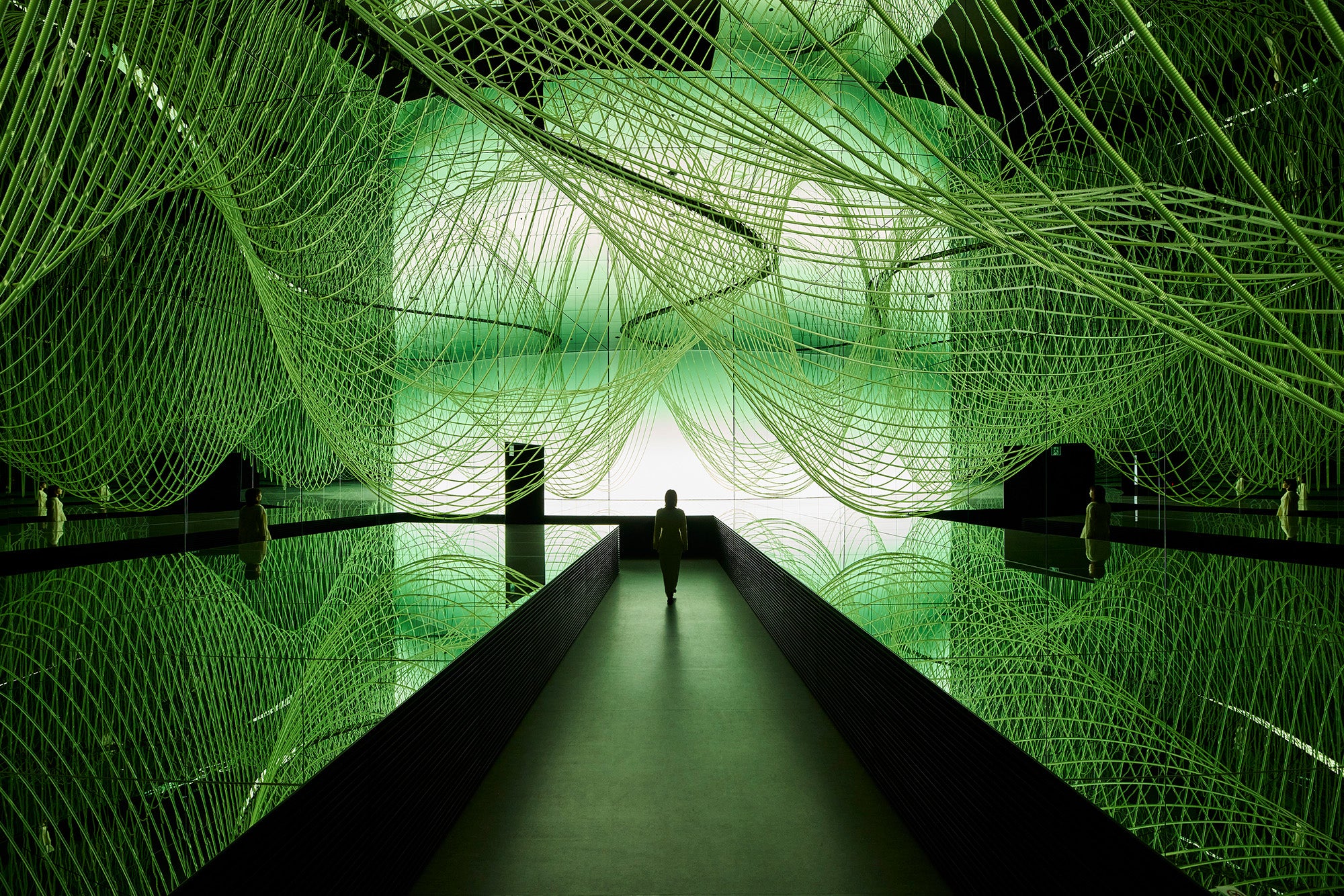
▲Japan Pavilion, Exposition 2025 Japan Scope of work: Exhibition design (basic design, detailed design), construction, operation / Clients: Ministry of Economy, Trade and Industry, Japan Association for the 2025 World Exposition * Promoted through a joint venture with Tanseisha.
Inside the beautiful arched architecture of the Japan Pavilion at the 2025 Osaka-Kansai World Expo, a consortium (joint venture) between Tanseisha and Nomura Kogeisha was working on the exhibition design. Suzuki was the one who led the creative direction on the Nomura Kogeisha side of this large-scale project.
Suzuki: "We were tasked with the mission of realizing the exhibition space based on the concept set forth by the general producer, Oki Sato. Tanseisha and Nomura Kogeisha, each with their own unique strengths, worked together in coordination to advance the design work. The key point was how to fine-tune each area in line with the concept and how to obtain approval from a wide range of stakeholders."
To implement the exhibition space, we identify concerns through regular meetings, and for aspects of design and presentation that are difficult to judge from words and drawings alone, we conduct "temporary construction" by building a nearly complete physical space, thereby building up thorough risk mitigation measures.
Suzuki: "We made it a priority to work closely with the clients and producers, confirming everything together and envisioning the same final product. We made sure we were on the same page. I believe we were able to move the project forward smoothly because we addressed each item one by one as needed."
While working on these large-scale projects, Suzuki is also constantly managing around 10 other projects simultaneously, both domestically and internationally, and across different industries. He says the key to smoothly managing this multitasking is close communication with all stakeholders.
Suzuki: "When there's a discrepancy in understanding among the people involved, it can take time to correct course and make adjustments. Whether it's an online meeting or just a phone call, it's crucial to constantly check that everyone is moving in the same direction and taking the shortest route, especially as the number of projects increases."
Currently, Suzuki is a member of Nomura Co., Ltd.'s design team "no.10" and leads the Suzuki Room. She manages the team to maximize overall performance while drawing out the individuality of members with diverse ages and career backgrounds.
Suzuki: "Each member has different areas of expertise, such as CG, drawings, and sketches. When assigning tasks and projects, we take these into consideration, but we also take into account the individual's wishes and direction of growth, and in some cases, we may have them try new areas. Sometimes we even intentionally put them into areas they are not good at to encourage their growth. We try to adjust schedules with ample leeway while assessing each individual's workload and pace, and we are careful to control schedules in a way that does not diminish their motivation."
The "belief" and "determination" that supported growth: The foundation of a designer honed in a tough work environment.
Although Suzuki now handles numerous spatial design projects simultaneously, during his university days he was enrolled in the business administration department, a field far removed from design. However, a sudden interest in the interior design of his own room became a turning point.
Suzuki: "I became interested in the world of interior design through a small trigger. From there, I learned that there are jobs related to space, and I wanted to pursue one of those professions."
After earning all my credits in my third year of university, I spent my fourth year working part-time before enrolling in a vocational school. Even though everyone around me was job hunting, I didn't hesitate. "I'm the kind of person who, once I've made up my mind, I move forward."
After graduating from vocational school, I joined a design firm specializing in store design in 2008. Although my major in vocational school was residential design, I deliberately chose the field of commercial spaces, where project cycles are faster, because I felt a strong sense of urgency.
Suzuki: "Looking back now, I realize that wasn't the case, but at the time, I think I was anxious because I was going to a vocational school after university. I thought I had to gain experience by doing as much as I could, so I deliberately sought out a fast-paced and demanding environment."
After joining the company, I was always juggling more than 10 projects simultaneously, leading a very intense and demanding life with a tight schedule. There were busy periods, but those five years of handling such a massive volume of work undoubtedly form the foundation of who I am today."
Every project he's been involved in has its own challenges, with troubles and obstacles. But Suzuki has always made the decisive choice to say, "If I don't do it, who will?" and overcome them. He says that after going through a grueling period of apprenticeship, he has developed an intuition for sensing and anticipating risks in project management.
In 2013, Suzuki took the next step. To acquire the language skills he felt were "necessary for his future work," he set his sights on going abroad, combining it with a five-year intensive vacation.
Suzuki: "I spent six months studying English in Cebu, Philippines, and then did an internship at an architectural design firm in Colorado, USA. I think the experience itself was important—sending myself alone to a foreign country with a different language and culture, and trying to grasp new things. It broadened my perspective, and I felt like I was breaking free from my previous limitations and opening up to new possibilities."
After returning to Japan, I worked as a freelancer before joining Nomura Co., Ltd., and I had no hesitation in jumping into a completely new and unfamiliar environment, precisely because of my overseas experience."
Going one step beyond expectations. A design process that continuously elevates quality without compromise.
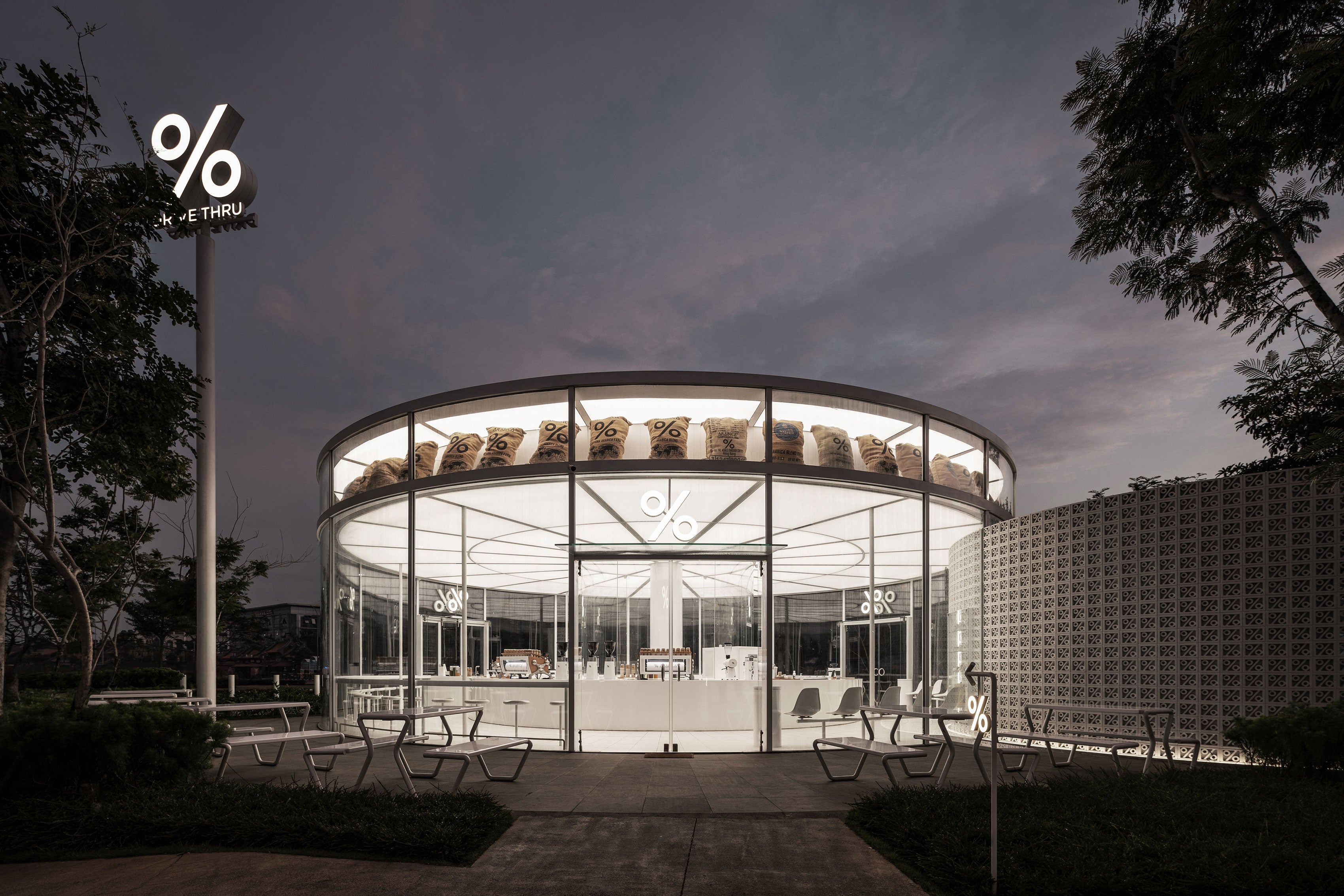
After joining Nomura Co., Ltd., the project that became symbolic of Suzuki's career was the global coffee brand "% Arabica." While "no.10" currently handles more than 130 stores across the brand, Suzuki himself is in charge of the design of nearly 50 stores, including ongoing projects. Based on a beautiful brand image that is common to all countries around the world, he shapes localization to suit each country and store. The process of bringing designs to life in cities all over the world is a continuous series of challenges.
Suzuki: "We will carefully develop a concept for what kind of store we want to create in each country and area, and then proceed with the design. We feel that this project will be challenging and full of new discoveries, as it allows us to embody conceptual designs and spaces that are unique to each store in each country around the world."
When we receive requests from our clients, we first organize them into a plan that aligns with their needs, and then we also propose options that go one step further than their requirements. I believe that repeatedly meeting expectations will ultimately lead to further requests and large-scale projects, such as those involving us from the construction stage onwards."
At the heart of this earnest work lies Suzuki's unwavering belief in thoroughly engaging with every single project he creates.
Suzuki: "I don't just finish the drawings and designs once; I look at them over and over again. Even if I worked hard to finish something the night before, if I look at it again in the morning and think, 'No, that's not quite right,' I'll redraw it. I refine what I've created until it's ready to submit in order to make it a better design. I believe that this accumulation of processes is directly linked to high quality."
"The same level of quality, anywhere in the world." Inspired by outstanding colleagues.
Having accumulated numerous achievements both domestically and internationally as a professional, Suzuki has also been actively pursuing awards in recent years. Through applying for and winning various prestigious design awards, he not only enhances the social recognition of himself and his company, but also provides valuable input for refining his own creativity.
Suzuki: "The application process gives you many opportunities to get a deep understanding of the trends and developments in design, seeing what kind of designs other people are working on and what kind of projects are winning awards. Inevitably, your eye becomes more discerning, and it's a good opportunity to objectively re-examine your own designs. It's an essential challenge for continuing to focus on improving quality as well as quantity."
Currently, Suzuki's work easily transcends the boundaries of commercial spaces. He handles a diverse range of spaces, from residences to offices, including domestic homes for people associated with overseas brands and headquarters relocation projects for well-known companies. When asked why he has been able to continue working at this level for over 10 years since joining the company, Suzuki says:
Suzuki: "I feel that there are plenty of opportunities to be involved in projects of diverse scales, and that there is an environment where I can collaborate with talented members who have specialized skills. Even though we are all in the same company, when I take a peek at the work of the people around me, there are many moments when I am overwhelmed and think, 'Wow!'"
I believe that the more someone grows, the more they learn by looking at other people's designs, and I think Nomura Co., Ltd. is a place where talented colleagues who can inspire each other in a positive way are vying for attention."
Suzuki has forged his own career through his decisiveness and accumulated experience. He shares the potential of Nomura Co., Ltd., an environment with a rich and expansive field of work, with aspiring creators in the design field.
Suzuki: "I wouldn't say it's easy to jump in from another field, but the diverse opportunities that Nomura Kogeisha offers will show new paths to those who do take the plunge and provide a place where they can shine."
Currently, I'm involved in an equal number of projects both domestically and internationally. While I'm challenging myself in new genres, I also want to steadily advance the projects in front of me each day and continue to work honestly with the spaces and people involved, so that I can achieve the same level of quality in any region of the world as I do domestically.
* The information provided is current as of June 2026.
Shohei Suzuki
After graduating from university, she studied interior design at a vocational school, then worked at a private studio, followed by language study abroad and an overseas internship before joining Nomura Co., Ltd. She is a designer who promotes domestic and international projects in a wide range of fields, including commercial facilities, specialty stores, residences, and offices. She believes that meticulous attention to detail is essential in the spaces she creates, the people she interacts with, and everything she does.
A path forged through conviction and determination. The style of a creator who pursues uncompromising design work.
PAGE TOP
Contact us
Please contact us using the button below if you have an inquiry, want to request a quote or request documents. We have created a separate “FAQ page” that lists the most common questions we are asked. Please take a look at this page if you have a question.
This website uses cookies to improve customer convenience and also to maintain and improve the quality of our services. Click the “I Agree” button if you agree to the use of cookies. Refer to the Privacy Policy for details.




![Drawing out children's passions through numerous experiences [Part 1]](/_next/image/?url=https%3A%2F%2Fnomura-kogeisha.g.kuroco-img.app%2Fv%3D1779774440%2Ffiles%2Fuser%2FSCENES%2FVol.05%2FPandD_JUNOPARK%2F477A3016b_jitsuga.jpg%3Fwidth%3D800&w=1920&q=75)