Hikaru Sato has led numerous projects at the forefront of space creation. Currently, as the section chief of the Cultural Environment Business Division, he is demonstrating his skills in a new field with government clients. How did he establish his unique style of engaging those around him after painful failures in his younger days? We delve into the trajectory of his never-give-up challenges and his passionate feelings towards creating spaces.
Aligning the team's direction starting from imagination. Our current position in creating a space with no single right answer.
Since joining the company in 2014, Sato has consistently been in charge of PR facilities such as corporate showrooms and displays. From 2026, she will be transferred to a department that handles cultural facilities such as museums and science centers, putting her in an environment that requires a different approach than what she has done for private companies.
Sato: "I was assigned to my current department this year, and I'm serving as section chief despite having little experience with cultural facilities. Our clients are mainly government officials, so unlike private sector projects where we can receive ongoing requests as an extension of established trust, we need to acquire projects from a neutral starting point each time, through fair proposals and other processes."
Therefore, it requires a perspective that looks ahead to societal trends several years into the future, conducting broad research on social issues and subsidy trends, formulating hypotheses, and finding potential business opportunities. Because the approach is significantly different from before, there are new discoveries every day."
In a department with many experienced veteran employees, Sato sees his role as "bringing an outside perspective and broadening the organization," and he explains it as follows:
Sato: "While inheriting the best practices unique to cultural facilities, we also want to explore new markets that we haven't been able to fully pursue until now."
My new department has many experienced members who have been involved in cultural facilities for many years. I hope to combine their expertise with the new perspective I've gained from my experience in the private sector. To that end, I want to actively communicate with other departments and involve everyone to expand the scope of our projects."
Sato, who takes on the role of job leader, bringing together diverse experts both inside and outside the company and driving project progress, says there are underlying values that guide his daily work.
Sato: "When we create spaces, there isn't a clear right answer from the start. That's why, even from a sales perspective, I value imagining how we can solve problems and proposing those ideas to the creative team."
We deeply consider the intentions behind concept design that come in and work together as a team to align how they connect to solving the client's challenges. To that end, I always strive to be the one who understands the project more deeply than anyone else and provides guidance on the direction."
I earned my job through my proactive approach. I learned about professional responsibility from a painful mistake.
Sato explains that during his student days, he took a leave of absence to travel the world as a backpacker. Behind that decision was a strong feeling he had at the time.
Sato: "I was troubled by the gap between the university life I had initially envisioned and the reality, and I felt anxious and frustrated with those around me. In that situation, I worked backward from the fact that I needed to be able to compete by the time I started working, and I decided to grow by having experiences that others weren't doing. I saved up money on my own, took a leave of absence from university, and went on a backpacking trip around various countries, starting with South America."
After returning to Japan, when Sato began his job search, he reflects on a particular encounter.
Sato: "Seeing me backpacking around everywhere, my professor at the seminar I belonged to at the time introduced me to an alumnus who was working in the display industry. I was strongly drawn to how he spoke about his work with such enthusiasm and pride, and that's when I decided to pursue a career in this industry."
During his job search, Sato became interested in NOMURA Co.,Ltd., and even without any connections through alumni visits, he proactively sought out opportunities and took action to deepen his understanding of the company by interacting with people.
Sato: "I had a strong desire to work at NOMURA Co.,Ltd., so I explored various ways to find opportunities to talk with employees. Looking back now, it was a lot of trial and error, but as a result I was able to meet with several employees, and they sincerely taught me about the rewards and appeal of their work. I was deeply moved by their warm response and generosity, and I became absolutely determined to join the company."
After joining the company, Sato was assigned to Osaka, and while busy with his daily tasks, he experienced an event that made him realize the true nature of responsibility in his work. This happened when he was in his fifth year at the company and was in charge of an important project: the 100th-anniversary event for a leading Japanese integrated electronics manufacturer.
Sato: "At the time, I was in charge of a part of a large-scale event. I successfully completed the site work, and the morning of the opening day finally arrived, but at that crucial moment, I failed to fulfill my responsibilities, and I was severely reprimanded by my superior. Furthermore, at subsequent overseas displays, I made a series of mistakes that made me painfully aware of my lax approach to the most important moments for our customers."
At the time, I felt that I had fulfilled my role, but my superior pointed out that "the job isn't just about finishing the work on site, but also about taking responsibility for handing it over to the customer and seeing it through," which made me realize how naive my understanding was.
I realized that I hadn't been able to empathize with our customers and work from the same perspective, and I deeply regret that."
This experience prompted Sato to reflect on his own attitude and change his approach to work.
Sato: "Until then, my focus had been on 'completing the task,' but I've come to realize that the essence of sales work is not that."
Building trust through work is crucial, and it's essential to always have a bird's-eye view of the project, not leave any gray areas you don't understand unresolved, and gradually increase the resolution of each detail until you can fully explain it in your own words. This attitude of taking responsibility for all aspects as a leader is something I learned from this failure, which made me acutely aware of my own inexperience."
Drawing his own pictures and joining the discussion circle: A straightforward direction that led the JV project.
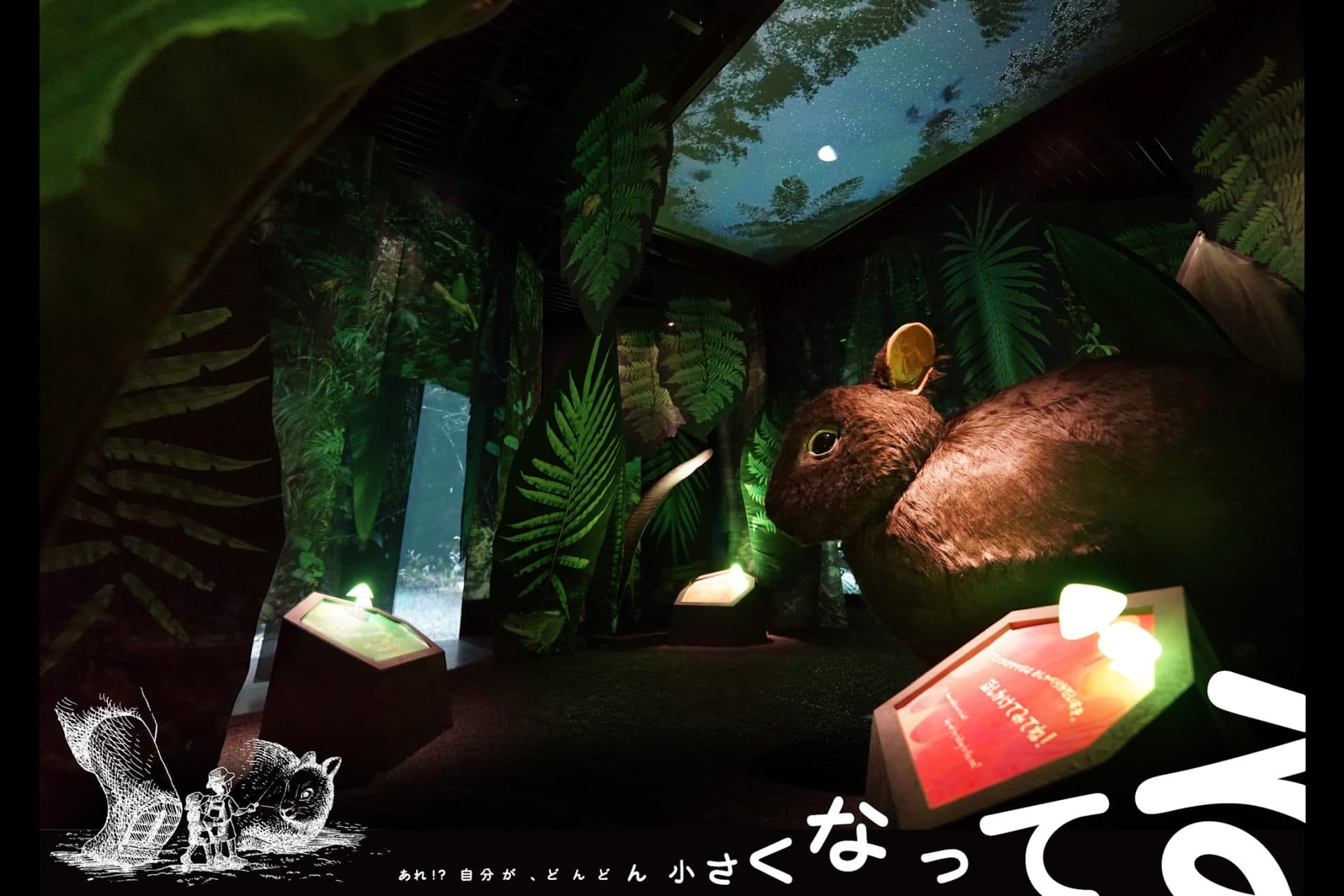
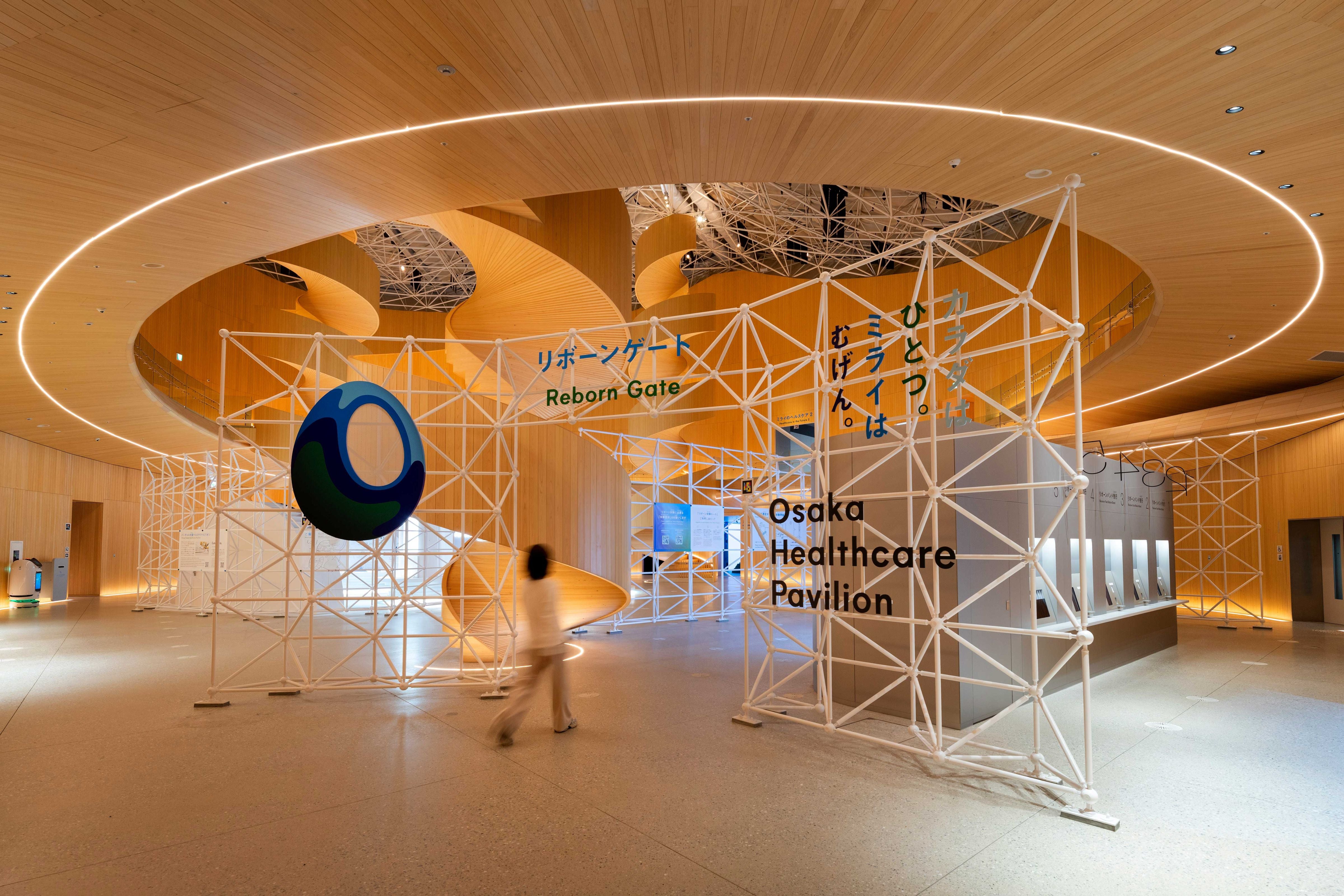
▲2025 Japan International Exposition Osaka Healthcare Pavilion Nest for Reborn Provided by: Osaka Pavilion (Public Interest Incorporated Association) / Scope of Responsibilities: displays design, construction, and maintenance of the entire pavilion, as well as displays design and construction of the 10 exhibitor booths. Client: Osaka Pavilion Promotion Committee for the 2025 Japan International Exposition, Public Interest Incorporated Association Osaka Pavilion for the 2025 Japan International Exposition
Sato: "I joined an already-running project midway through, and started with a severe lack of information. Despite my lack of understanding, I took the initiative to organize the information, visualized each piece of information I was able to grasp, and aligned my understanding with members both inside and outside the company."
By honestly admitting when I didn't know something and then leading the discussion by building upon what I did know, I gradually built trust, and those around me began to listen to my suggestions."
Sato's strength lies in his ability to deeply engage in creative discussions despite being in sales, and in his style of visualizing ideas by drawing pictures himself.
Sato: "I believe that having a shared understanding is paramount for members with diverse backgrounds to move in the same direction. To look at vague information from the same perspective, I led discussions using pictures, diagrams, and analogies. In meetings, both inside and outside the company, whenever I felt that the conversation was going off track, I would draw a picture and say, 'For example, it's like this, right?' to try and align our understanding in detail. Sometimes the response would be, 'That's right,' and sometimes, 'No, no, I was thinking it like this,' but I think it's an important process because it allows us to find discrepancies early and build the discussion from there."
I would join the creative team as they discussed late into the night, and together we would align on the direction we believed our company should take. This collaborative style, cultivated through past projects, became a major driving force in advancing this complex project."
After overcoming numerous difficulties, when the project finally took shape, an overwhelming sense of awe awaited us—a feeling unique to creating a physical space.
Sato: "When the Expo opened and visitors actually entered the pavilions we had created, and I saw the flow of experiences we had always imagined, and how much they were enjoying themselves, I was overcome with emotion. It had been a continuous series of tough adjustments and gritty tasks, but it was a moment when I felt that all our hard work had paid off, and I thought, 'Ah, we worked so hard to see these smiles.'"
Sato says that the greatest appeal of working at NOMURA Co.,Ltd. is the people and the joy of creating things as a team.
Sato: "This job absolutely cannot be done alone. I'm surrounded by many passionate members who not only teach me the challenges of the job but also genuinely enjoy it. Being able to stand at the heart of the manufacturing process and create spaces together with such warm and professional people is what I find most rewarding about working in sales at NOMURA Co.,Ltd."
Accumulating failures makes you stronger. An insatiable desire to create things that transcend the boundaries of space.
Having gained experience in numerous fields, Sato now leads the organization in his newly assigned department. Looking ahead to his future career, he speaks as follows, with an eye on creating new value that transcends the boundaries of space:
Sato: "At the core of everything I do is the desire to keep challenging myself with things I've never done before. Our work isn't just about creating spaces; it's about designing the 'thoughts,' 'behavior,' and 'relationships' of the people that emerge within those spaces."
Going forward, I want to expand the ways in which we solve our clients' problems by not only creating spaces themselves, but also by combining that with a perspective on creating experiences and communication that arise within those spaces. To that end, I myself want to eagerly absorb new markets and knowledge and continue to take on challenges."
Furthermore, Sato sends a passionate message based on his own experiences:
Sato: "The biggest source of energy when it comes to work is a strong desire to do something. At NOMURA Co.,Ltd., there are many colleagues who embrace that enthusiasm and work alongside you to make it a reality. If you have even the slightest desire to do something, I hope you will cherish that feeling and take that first step."
And finally, he added a message of encouragement based on his own experience for everyone who is about to embark on a new environment.
Sato: "When you look at the people around you who are successful, it might seem like they're all excellent and never make mistakes. But in reality, everyone struggles behind the scenes and experiences a lot of failures. I also went through a period where nothing went right and I was really worried. The truth I learned during this failure-filled working life is the obvious: growth only comes through challenges!"
If you face your challenges head-on and carefully build up your actions one step at a time, you will surely be able to do more. That's why you should jump in without fear of failure."
Starting his career with unwavering enthusiasm, Sato has grown into a leader who collaborates with others to drive projects, using numerous failures and self-reflection as fuel for growth. His sincere attitude and unwavering commitment to challenges will continue to open up new possibilities for space while working alongside diverse professionals.
* The information provided is current as of April 2026.
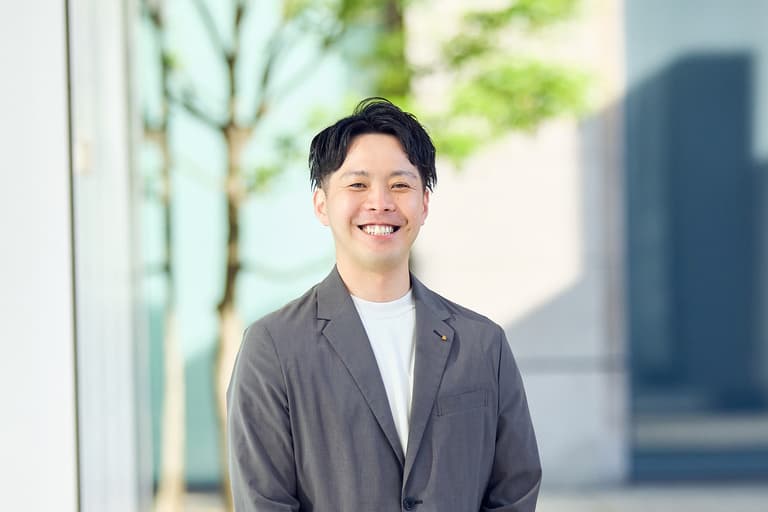
Hikaru Sato
During his student years, he studied economics and traveled extensively abroad, including a backpacking trip around South America. Seeking to grow through unique experiences, he encountered Nomura Co., Ltd. and joined the company. After joining, he was assigned to the Osaka office, where he led projects primarily for corporate clients. In March 2026, he transferred to the department in charge of cultural facilities and serves as section chief.
Numerous failures increase what we can do. The essence of spatial design: uniting a team through proactive action.
PAGE TOP
Contact us
Please contact us using the button below if you have an inquiry, want to request a quote or request documents. We have created a separate “FAQ page” that lists the most common questions we are asked. Please take a look at this page if you have a question.
This website uses cookies to improve customer convenience and also to maintain and improve the quality of our services. Click the “I Agree” button if you agree to the use of cookies. Refer to the Privacy Policy for details.





![Drawing out children's passions through numerous experiences [Part 1]](/_next/image/?url=https%3A%2F%2Fnomura-kogeisha.g.kuroco-img.app%2Fv%3D1779774440%2Ffiles%2Fuser%2FSCENES%2FVol.05%2FPandD_JUNOPARK%2F477A3016b_jitsuga.jpg%3Fwidth%3D800&w=1920&q=75)