
Bringing unique, one-of-a-kind pieces to life—the joy of production management that supports the creation of spaces.
"Creating one-of-a-kind items has a different kind of appeal than construction work." Drawn in by these words, Kensuke Yamamoto joined Nomura Co., Ltd. in 2020. Utilizing his experience from his previous job at a general contractor, he is now active in production management. Yamamoto says, "It's fun to keep tackling challenges with no easy answers." What does he find so appealing about his role in production management?
We realize the intentions of our clients and designers while managing quality, safety, processes, and costs.
Yamamoto belongs to the Cultural Environment Product Division of the Culture Communication Promotion Headquarters, which handles cultural facilities such as museums, aquariums, and art galleries. As a production manager, he works in cooperation with various parties to create these spaces.
"As production managers, our responsibilities include managing four aspects: quality, safety, schedule, and cost. While we may be assigned to a single project exclusively on large-scale projects, we generally handle multiple projects concurrently, facing a variety of challenges and tasks on a daily basis."
I am currently working on two projects. One is a renovation project for a prefectural aviation museum, where I am moving large exhibits and updating the exhibit content. The other is a new aquarium construction project, where I am in charge of the exhibit construction in cooperation with a major general contractor. I am managing the production and installation of exhibits that enhance the visitor experience, such as artificial rocks to be placed inside the tanks, signs explaining the creatures, video content, and explanatory fixtures.
The job of production management involves driving a project forward while making various adjustments. Yamamoto describes his role as "connecting architecture and exhibitions and making them work as a single space."
"What I focus on is 'connecting architecture and exhibitions to create a beautiful, cohesive space.' Exhibition spaces are created through a complex interplay of architectural and exhibition work. Therefore, while clarifying the responsibilities of each, I repeatedly check every detail, such as the fitting of fixtures and walls, the reproduction of curved surfaces, construction precision, and strength. In order to bring the intentions of the client and designer to life, I don't just build according to the drawings, but I value pursuing until the very end the creation of a space that is more beautiful and of higher quality."
Because many people are involved in a project, different requests can arise from each person's position. Yamamoto says that what he values most as a coordinator is communication.
"I try to avoid saying 'no' as much as possible. However, projects have constraints such as budget and schedule, so it's sometimes difficult to fulfill all requests. In those cases, instead of imposing my own ideas, I prioritize listening to what the other party has to say on-site and understanding their intentions. Even if it's still difficult, I don't just refuse; I try to find the best solution by proposing alternatives."
There isn't just one right answer. Let's bring together diverse insights and find our own solution.
Yamamoto's career began at a mid-sized general contractor in his hometown of Kyushu. After working as a site supervisor on new school construction projects for several years, he transferred to Tokyo at his own request. His involvement as a site supervisor on a new hotel construction project became the catalyst for him to consider his next career move.
"When I was involved in the construction of a new hotel, I had the opportunity to collaborate with a company that handles the interior work for the entrance hall and restaurant, and that's when I first encountered the display industry. After that, I became interested in it after hearing about the work from a friend who works at Nomura Co., Ltd."
What particularly stuck with me was a friend's comment: "Creating one-of-a-kind pieces has a different kind of appeal compared to architectural construction." Furthermore, Nomura Kogeisha offers an environment where you can be involved in everything from conception, research, and planning to design, production, construction, and operation, and even take on large-scale projects. I was attracted to the breadth and scale of the work, and that's why I decided to join the company.
After joining the company, I spent about five years mainly in charge of childcare facilities. I was involved in multiple projects, from tenant-type facilities to new construction, and I recall that I was able to carry out my work smoothly by utilizing my experience from my previous job.
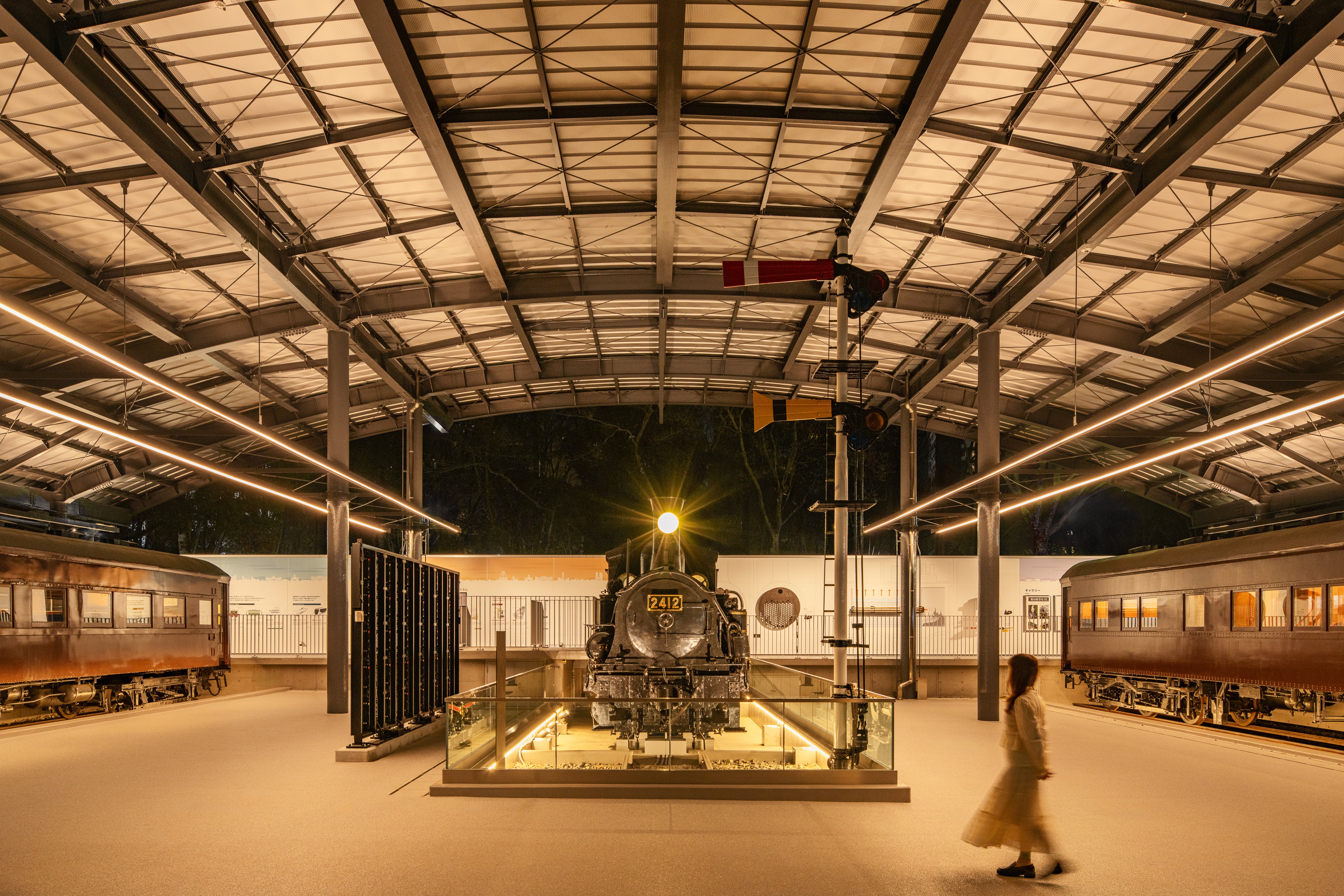
However, he later experienced a project that made him realize that "the display industry is 180 degrees different from general contractors." That project was the development of the "Railway Plaza" at the FUJI Nagoya Science Museum (Nagoya City Science Museum). It was a project that involved everything from the architectural design of the outdoor exhibition facilities to the dynamic exhibits using transparent LED panels, the restoration of steam locomotives, and the transportation of large vehicles.
"We encountered many new tasks, including the creation of graphic content such as videos and illustrations. In particular, with the steam locomotive, we handled everything from disassembling and running tests of the vehicle, to repair and restoration, and long-distance transportation and lifting operations, making it a project that went beyond the scope of typical exhibition construction."
The most challenging aspect was that there wasn't just one right answer. With few precedents or reference examples, it was sometimes difficult even to judge the reasonableness of the estimated cost. Through constantly considering how to realize the visions of our clients and designers while ensuring the project was technically feasible, I truly realized the depth and complexity of working in the display industry.
He says that what he realized when overcoming that challenge was the unique strength of Nomura Co., Ltd.
"Whenever I didn't understand something, I would consult with my superiors or senior colleagues. Nomura Co., Ltd. has many experienced employees, and also a well-established network of highly specialized partner companies. Even with unprecedented challenges, if you consult with them, various ideas and solutions will emerge. I felt that this depth of knowledge was a unique strength of Nomura Co., Ltd. I myself researched and thought about things, and by combining that knowledge, I overcame each challenge one by one."
From conception to cost management, the rewarding experience of being involved in every phase of space creation.
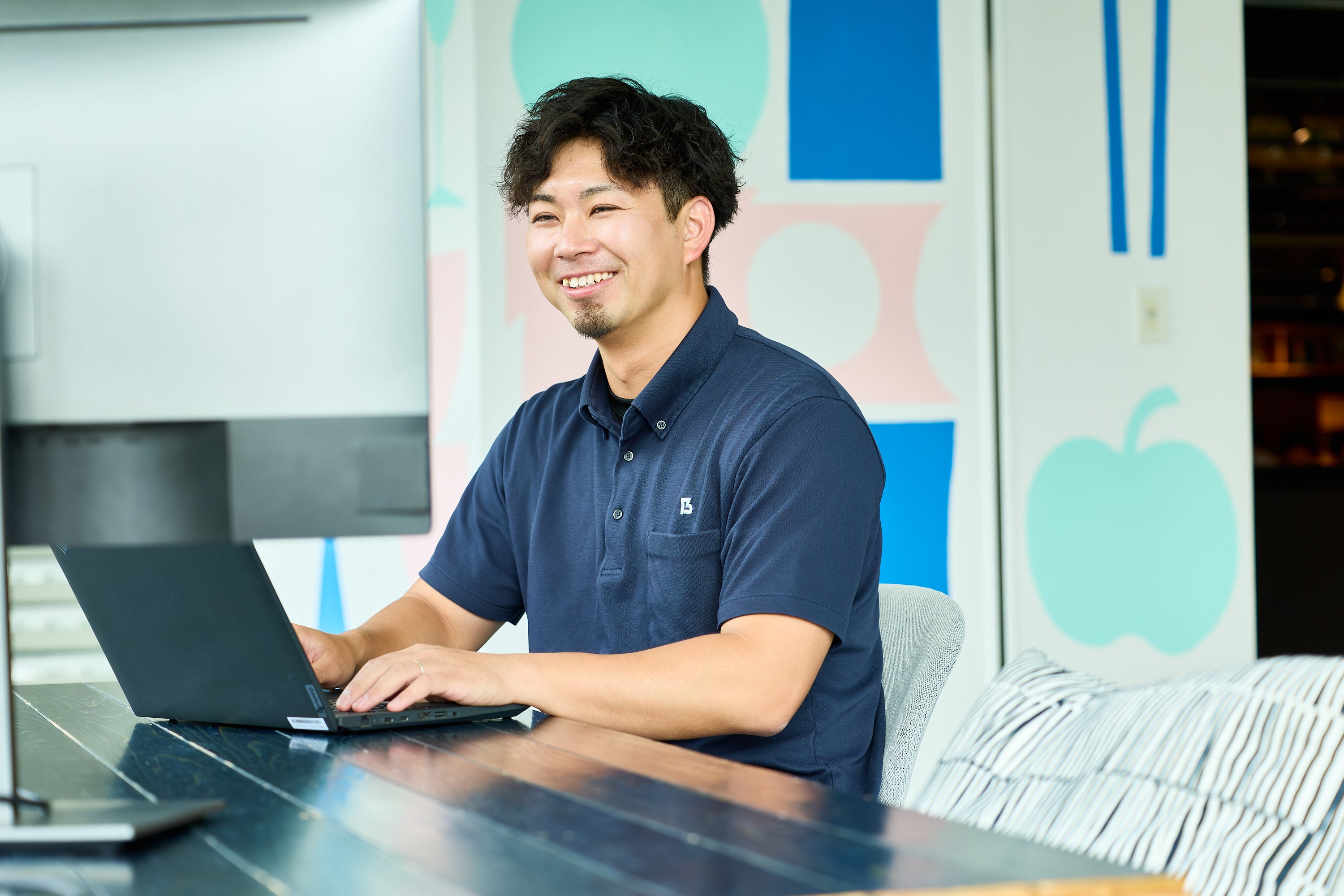
Of course, even in a completely different job, past experience can still be useful. He says that he was particularly able to utilize his knowledge from his time at a general contractor when it came to coordinating construction projects.
"During exhibition construction, various adjustments are necessary, such as the timing of heavy material delivery and the timing of halting construction work to accommodate our work. If you don't understand the progress and circumstances of the construction work, it will come across as a one-sided request, and smooth coordination will not be possible. Because I myself had experience as a general contractor, I was able to determine the optimal timing for starting interior and exhibition work while considering the overall flow of the construction work, and create a smooth construction plan."
"Creating one-of-a-kind pieces means there are many unprecedented challenges, but that's what makes it interesting," Yamamoto says with a smile.
"Every project has its own set of challenges. Sometimes we have to start by figuring out the solutions ourselves. It's hard work, but the fact that what I've thought up and adjusted ultimately takes shape as part of the exhibition space is one of the unique appeals of this job."
While production management primarily handles the production and construction phases, depending on the project, we may also be involved from the initial conceptual stages. It's interesting to be comprehensively involved in creating a space, from considering whether what the designer envisioned can be realized, to production and construction, and even cost management to ensure the project as a whole generates profit."
She also added that she enjoys being involved in cultural facility projects because it allows her to experience new worlds.
"One of the appealing aspects of working on cultural facility projects is the opportunity to interact with curators and advisors and gain access to their unique expertise. For example, in the aquarium project I'm currently working on, alkaline components can leach from the mortar used for artificial rocks, affecting the water quality in the tanks. Therefore, we have to plan carefully, taking into account the ecology of the organisms, such as calculating backward from when the fish will be introduced to determine when the construction needs to be completed."
We don't just learn from our customers; we also combine our knowledge of construction and manufacturing to create the exhibits together. That process is one of the most interesting aspects of the project."
Our next goal is a major project that represents the company. We will take on the challenge with a positive and proactive attitude.
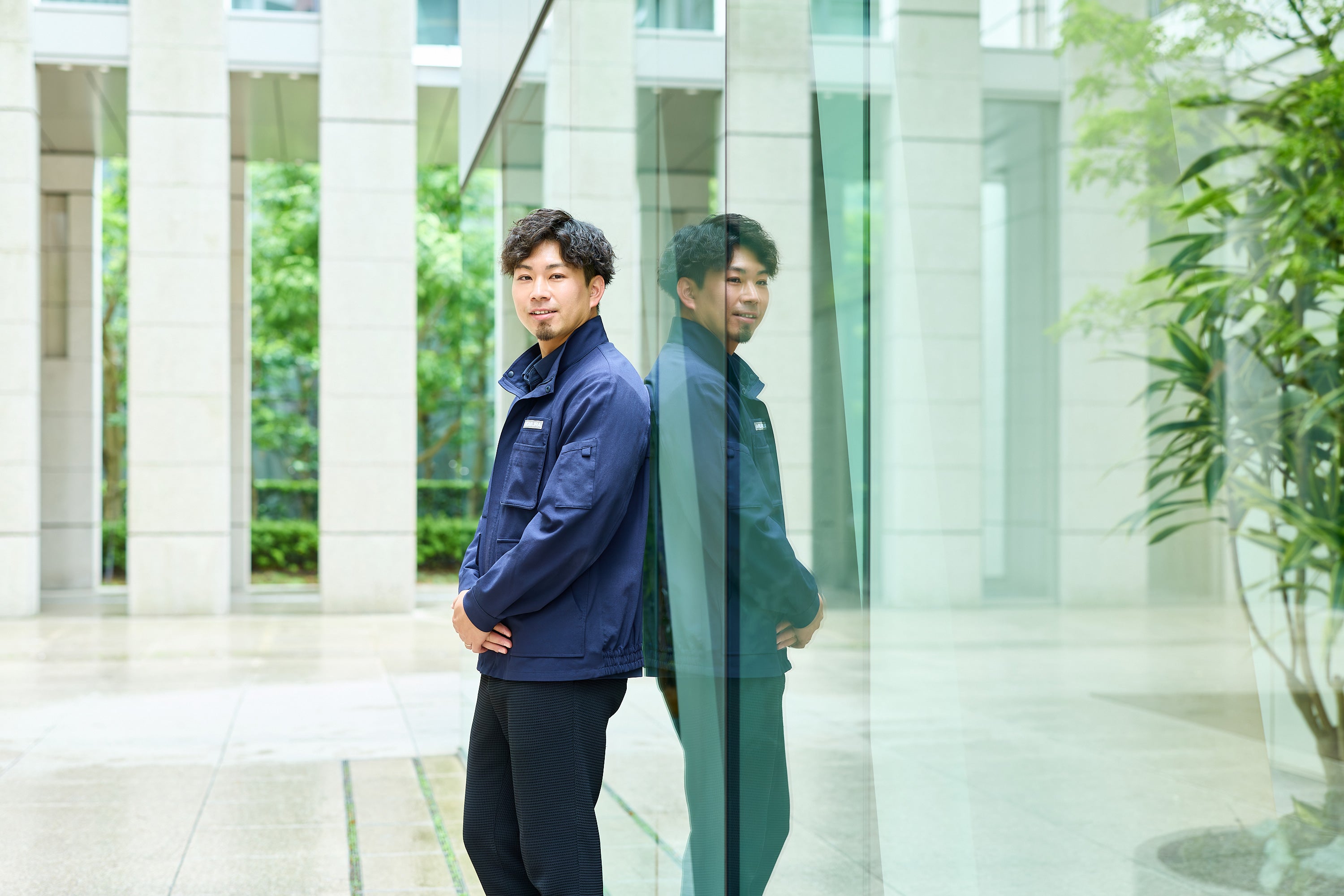
Yamamoto's strength lies in his consistent involvement in production and construction planning and coordination, even after transitioning from a general contractor to the display industry. He is eager to leverage this experience to become deeply involved in even more projects.
"I'd like to be involved from the very early stages of planning, even before planners and designers have a clear image in mind, when I think, 'Maybe we can do a project like this.'"
No matter how attractive a proposal may be, if it cannot be realized, it cannot meet the client's expectations. That's why having production management staff involved from an early stage allows us to plan while considering the balance of costs, schedules, and construction conditions. I would like to be more deeply involved in projects in this way going forward."
Yamamoto reveals that he has always loved fish, and one of his dreams was to be involved in the construction of an aquarium. Now that he has achieved that dream, his next goal is to take on a large-scale project that involves the entire company.
"I would be delighted to be involved in large-scale projects such as international sporting events or world expos. The opportunity to create spaces with a significant social impact is incredibly rewarding, and I believe that being blessed with such opportunities is one of the attractions of Nomura Co., Ltd."
In a situation where there is no single right answer, Yamamoto says that it is important to keep moving forward no matter what the circumstances, because you have to work together with various people to find your own answer.
"In production management, reaching agreements with many stakeholders is essential. In addition, the display industry is a world full of uncertainties, as it involves many more elements that make up a space and covers a wide range of fields than even construction work. That's why I think it's a good fit for someone who values communication, thinks positively, and can see things through to the end."
And in order to arrive at our own answer, we need to keep thinking. We want to take on this challenge with people who are curious about 'how this is made' and 'why it takes this shape,' and who can thoroughly pursue the art of manufacturing."
*The information provided is current as of June 2026.
Related Links


SearchCategorysearch
Back Numberpast interview articles


- TOP
- WE ARE NOMURA
- Bringing unique, one-of-a-kind pieces to life—the joy of production management that supports the creation of spaces.
Please contact us using the button below if you have an inquiry, want to request a quote or request documents.
We have created a separate “FAQ page” that lists the most common questions we are asked.
Please take a look at this page if you have a question.