
A dilapidated heated swimming pool becomes a place for interaction that fosters children's creativity.
- #Chubu
- #Renewal
- #Architecture/Conversion
- #Sustainability
- #2025

Kei SumimotoKakegawa City
Lifelong Learning and Community Development Department, Culture and Sports Promotion Division, Sports Promotion Section, Section Chief
Atsushi ShibataKakegawa City
Urban Development Department, Maintenance and Management Division, Parks and Greenery Section, Section Chief
Junpei OishiCertified NPO Tokinoju no Mori Club
Secretary General
Junichiro YoshidaNomura Kogeisha
Business Produce Division, Business Development Management Department, Business Development Produce Department, Section 2, Section Chief
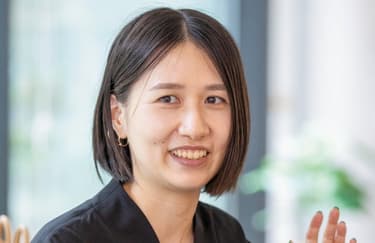
Mayu ToyodaNomura Kogeisha
Creative Design Division, Design Collective Center, IVD Designer

Rika NagaiNomura Kogeisha
Business Produce Division, Business Development Management Department, Business Development Produce Department, Section 2
Sustainability – Renewing public facilities through DBO Plus independent projects
mirocco (Indoor Playground Mirokko)
Kakegawa City, Shizuoka Prefecture
As times change, the demands placed on public facilities are evolving significantly. With many facilities managed by local governments reaching the end of their lifespan, the challenge for society as a whole is how to capture the new needs of residents and transform them into attractive new forms.
There are projects that have launched new spaces for interaction through public-private partnerships, without being bound by existing business schemes or the existing models of public facilities, and with a strong emphasis on operation.
I want an all-weather indoor playground.
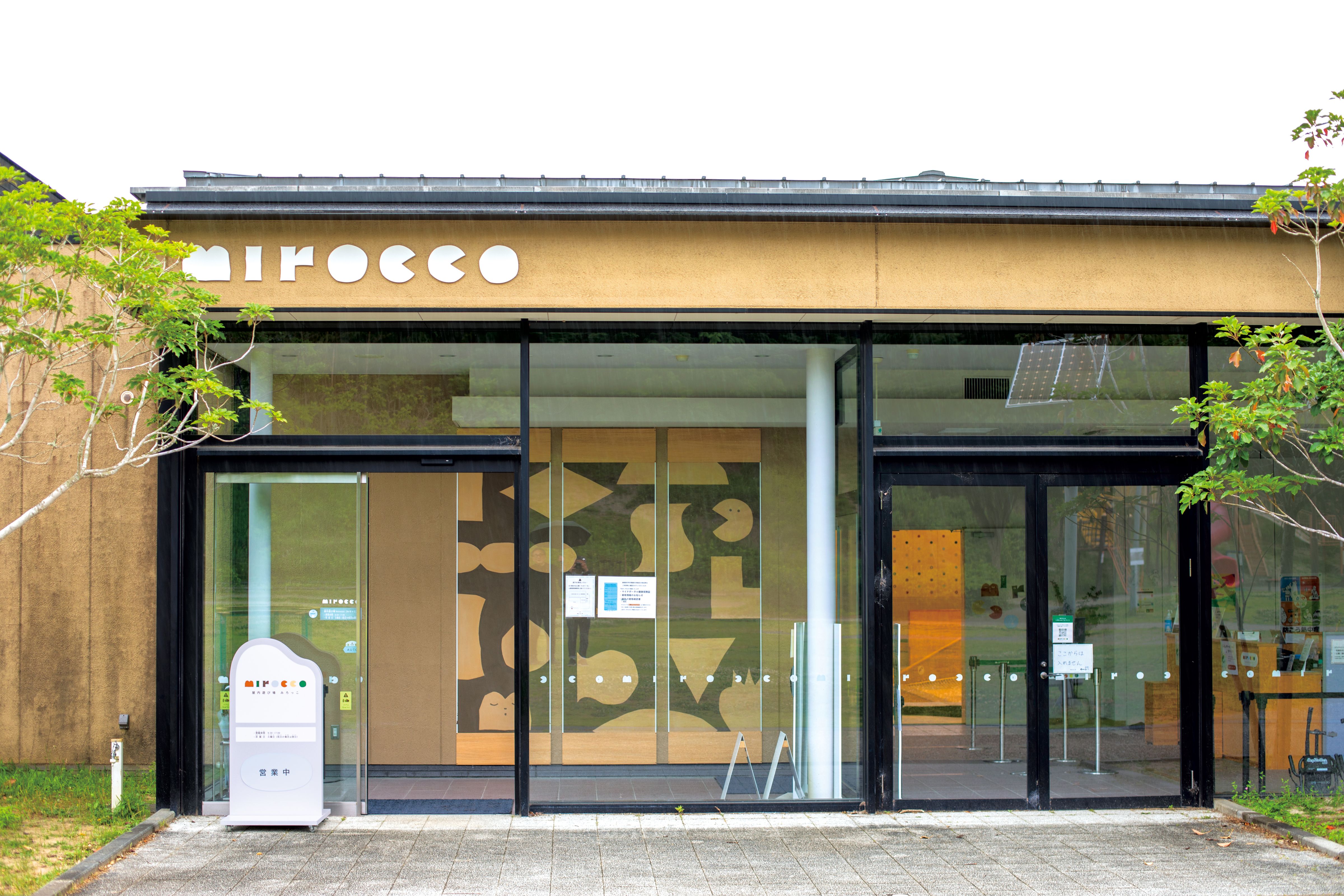
Located in the eastern part of Kakegawa City, Shizuoka Prefecture, "22nd Century Hill Park" is a vast park spanning 20.8 hectares (8.7 hectares open to the public) covered in forest. The park features a playground with large play equipment, a multi-purpose plaza, and areas where visitors can experience farming, forestry, and charcoal making. It is a popular park among locals as a place to easily refresh themselves in nature.
In one corner of the area, a facility that attracted the attention of local governments across the country opened in July 2025: mirocco, an indoor playground.
Kei Sumimoto of the Lifelong Learning and Community Development Department in Kakegawa City says that the mirocco project originally started with the question of how to make use of the aging facilities in the park.
"This building was an indoor facility called [Tamarina] that opened in 2007. It contained a large training room, an indoor swimming pool, and a hot spring facility, but around 2021, nearly 15 years after its opening, discussions began about what to do with the facility. It's the same in every municipality across the country, but it was around the time when discussions began about what to do with the many public facilities that were approaching the end of their lifespan and needed to be rebuilt. In Kakegawa City, we issued a policy for the relocation of public facilities in 2019 and had just begun discussions."
Because we have a heated swimming pool and bathing facilities, our daily running costs are high, and we have to replace the boiler every 15 years or so. In 2021, we had about 19,000 users annually, so it was a difficult decision whether to continue operating even if it meant upgrading the equipment."
To determine the direction of the renovation, Kakegawa City will conduct interviews and workshops with residents, as well as surveys of park users. The survey results showed that the top reason for visiting the park was "to let children or grandchildren play" at 66.0%, more than double the second-place reason of "to use the heated swimming pool" at 31.6%. The facilities that people would like to replace the heated swimming pool and bathing facilities were "indoor play equipment for toddlers" at 56.3% and "learning facilities for children" at 27.6%, with over 80% of respondents requesting indoor facilities for children. Sumimoto continues.
"This park is used quite a lot by families with young children in the city, but we have always received requests for a place where children can play even during extreme heat or heavy rain."
Having a place to play regardless of the environment, season, or weather enhances the value of this park, which is why the city decided to renovate it into an indoor playground. Incidentally, there is another heated swimming pool in the city, and we ask those who wish to swim to use that one instead."
An unprecedented business scheme involving investment from both the public and private sectors.
However, initially, Kakegawa City did not have a clear vision of what kind of scheme or playground it would create.
"So, we created a redevelopment plan in fiscal year 2022, and in the process of considering the possibilities of the facility, we conducted extensive interviews not only with citizens but also with various businesses."
Typically, when a city builds a facility, they commission someone to design it, another to do the construction, and yet another to manage it. During this process, the city's personnel may change, and the initial vision isn't carried on, resulting in vague and undefined operations. At the time, I felt that this was a regrettable situation for the facility, and I recognized it as a significant problem.
Therefore, if possible, I wanted to involve those responsible for operation from the design and development stages, like in PPP (Public-Private Partnership) or PFI (Public-Private Finance Initiative), so that the concept would be consistent from start to finish.
However, this time it's not a new construction project, but rather a small-scale development. I thought there might not be any companies willing to participate in PPP or PFI, but after talking to various businesses, I realized that a DBO (Design-Build-Operate, using public funds and outsourcing the design, construction, and operation to the private sector) would likely work. So we put out a public tender in fiscal year 2023 using the DBO scheme," (Sumimoto).
During the initial hearing stage, one of the companies that Kakegawa City contacted was Nomura Co., Ltd. Junichiro Yoshida of the company's Business Development Division remembers their first meeting very well.
"They contacted us out of the blue through our inquiry form. When we met, their enthusiasm was incredible. So we decided to consider internally what kind of proposal we could offer them."
Yoshida says that the biggest obstacle they encountered during the planning process was the budget.
"Kakegawa City has a budget that's mostly set, but things like playground equipment that utilizes the shape of existing facilities, or creative designs that incorporate local characteristics, are difficult to achieve within that budget."
On the other hand, on the Kakegawa City side,
"The budget we had planned was based on the cost of replacing the boiler for the heated swimming pool. We reached an agreement with everyone that it would be better for the citizens if that money were used to build an indoor playground, so that became the upper limit," (Sumimoto).
Ultimately, when the public bidding process began, Nomura Co., Ltd. submitted an application using a scheme that was quite unique in Japan.
"We proposed a scheme that combined DBO (Design-Build-Operate) with independent projects. In other words, we proposed that Nomura Co., Ltd. would also invest, doubling the budget, and then we would like to take on the project as a DBO. At the time, a department for public-private partnership projects had just been established within the company, and we were eager to quickly create a business participation model as a new challenge. So I think the company was very supportive," (Yoshida).
The details of the scheme were finalized through numerous negotiations between Kakegawa City and Nomura Kogeisha. The city agreed to bear the cost of facility renovations, and ultimately, Kakegawa City would contribute approximately 80 million yen and Nomura Kogeisha approximately 70 million yen for the playground equipment. Participating in a children's playground project and creating a business model in which both the public and private sectors invest were both first-time challenges for Nomura Kogeisha.
Develop with a VI-first approach.
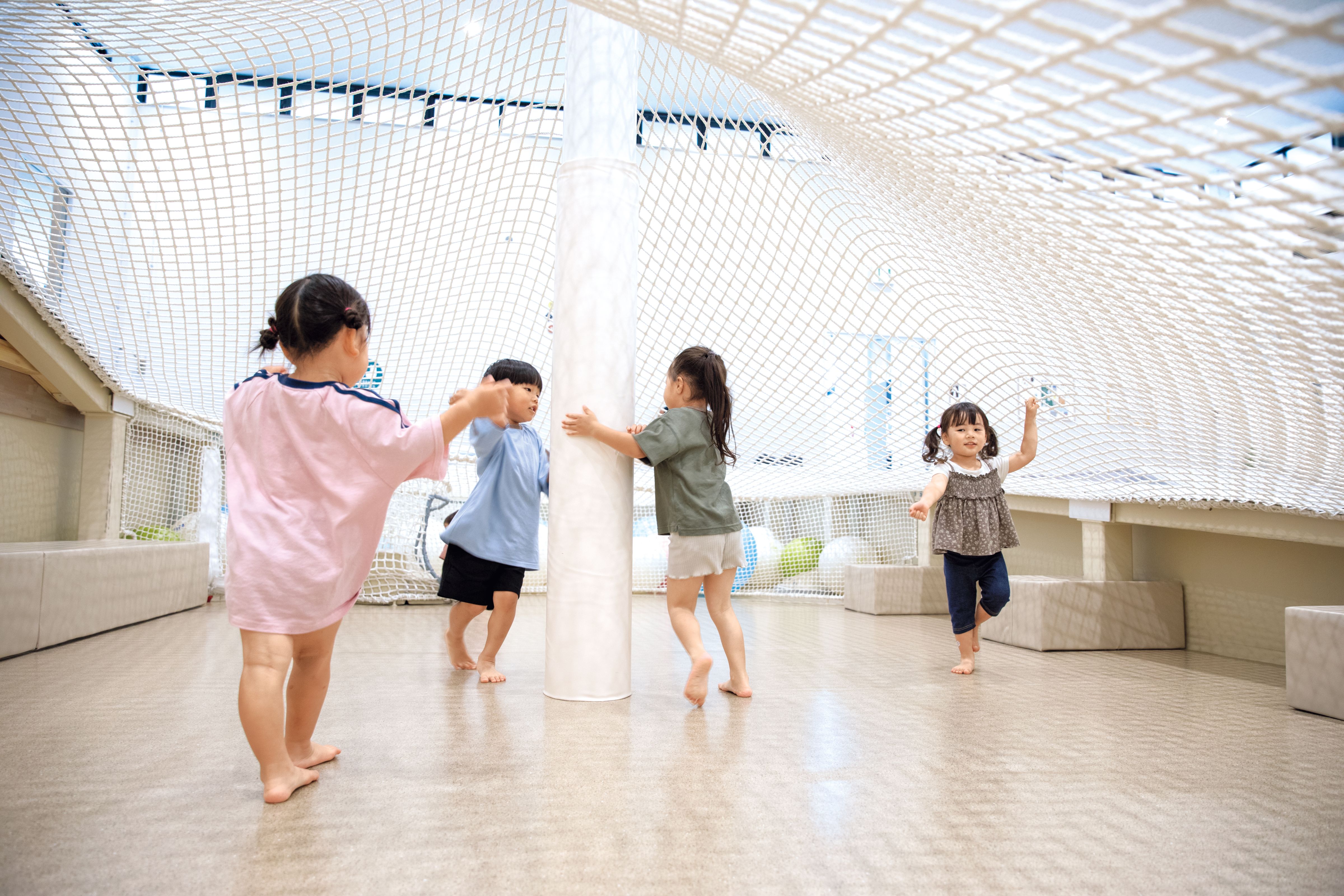
For Nomura Co., Ltd., their first "children's playground project" under the DBO (Design-Build-Operate) model began with them studying and learning first.
"As a DBO (Design-Build-Operate), we have an opportunity to showcase our creative and design skills, but at the same time, we have to build the operation as a unified whole. The design team and the operations team went on site visits to various facilities across the country, and at one facility, we even conducted a two-day, one-night operations training session for the team members."
"In our internal meetings, we set up an operations subcommittee and a creative branding subcommittee to deepen their discussions, ensuring that the collaboration between the two teams was reflected in the facility's concept development and specific design. Through the site visits and discussions, everyone's direction gradually converged in the same direction," (Yoshida).
The final concept for the facility was decided upon, and it consisted of the following four points:
- It should be a comfortable place that you want to visit regularly.
- It is a creative playground that fosters sensitivity and creativity.
- It should be a playground that serves as a hub for intergenerational interaction.
- A hub that fosters growth together with the local community.
To realize these goals, various ideas were generated, and ingenuity was put into creating the space. What is distinctive is that the four concepts are consistently developed as a Visual Identity (VI) across various media and spaces, and this takes precedence in shaping the image of the facility. Mayu Toyoda of Nomura Co., Ltd., who was in charge of graphic design, said that she did not want it to be like a typical children's facility.
"For example, when it comes to colors, children's facilities tend to be bright and pop spaces that use a lot of primary colors. But what we're aiming for is a space that's comfortable for both children and adults, a space that people of all ages will want to visit regularly, so a slightly more sophisticated color scheme allows for a calmer atmosphere and also gives the facility its own unique character. Furthermore, since it's a space that fosters children's creativity, we wanted to retain a variety of hues, but to avoid it becoming too dark, we based our visual identity on five calm colors inspired by local products, such as the muted green of tea fields and the bright yellow of melons."
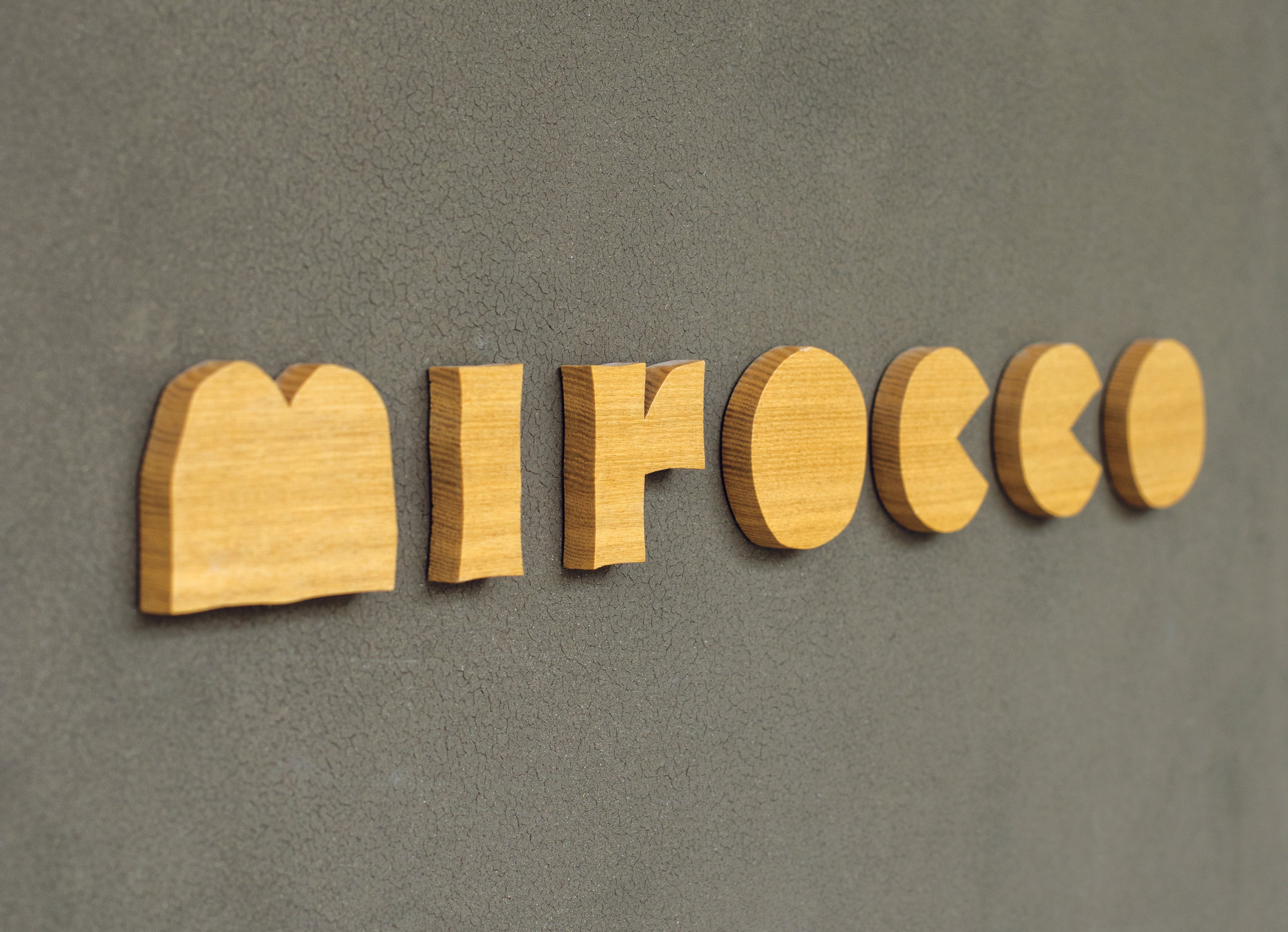
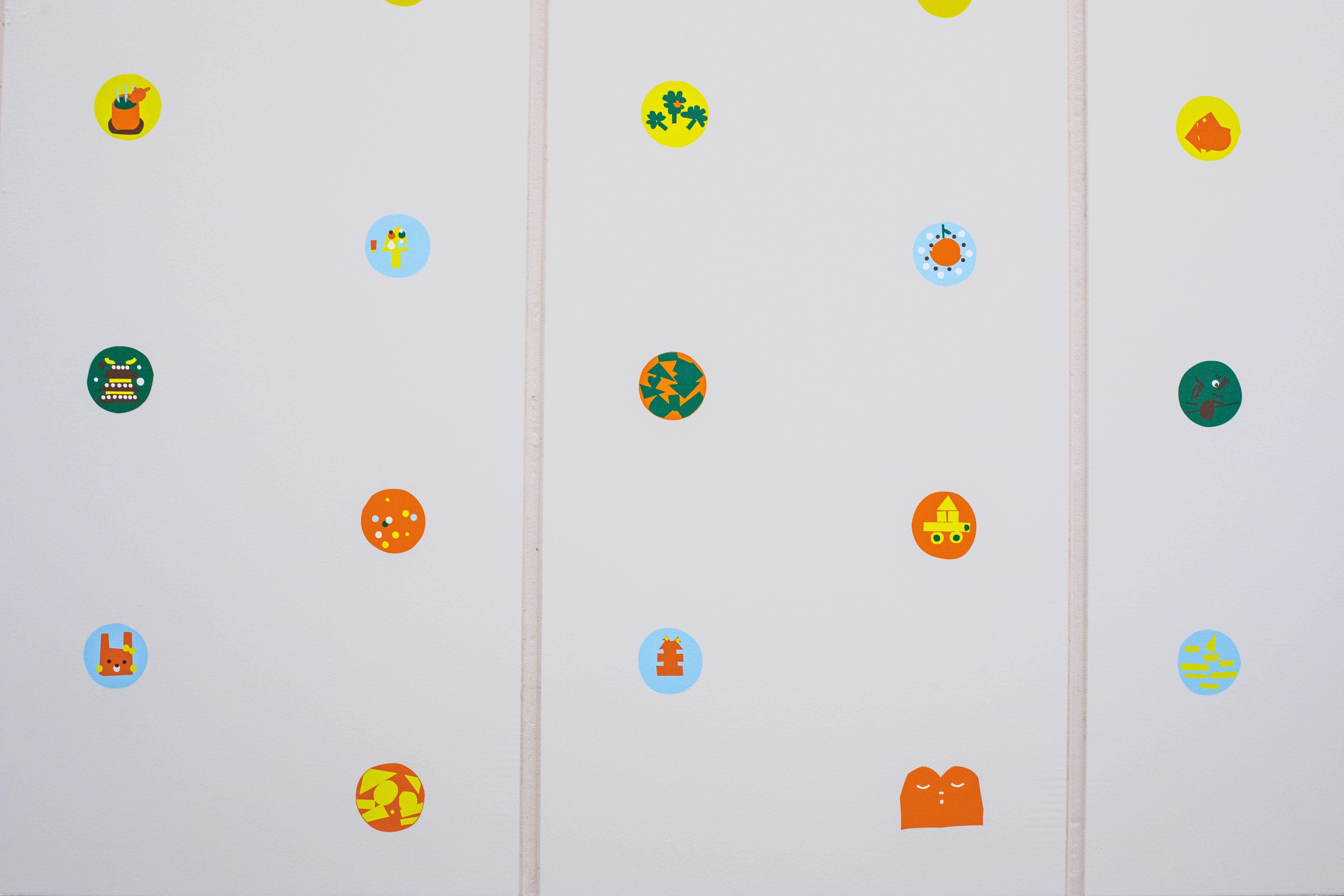
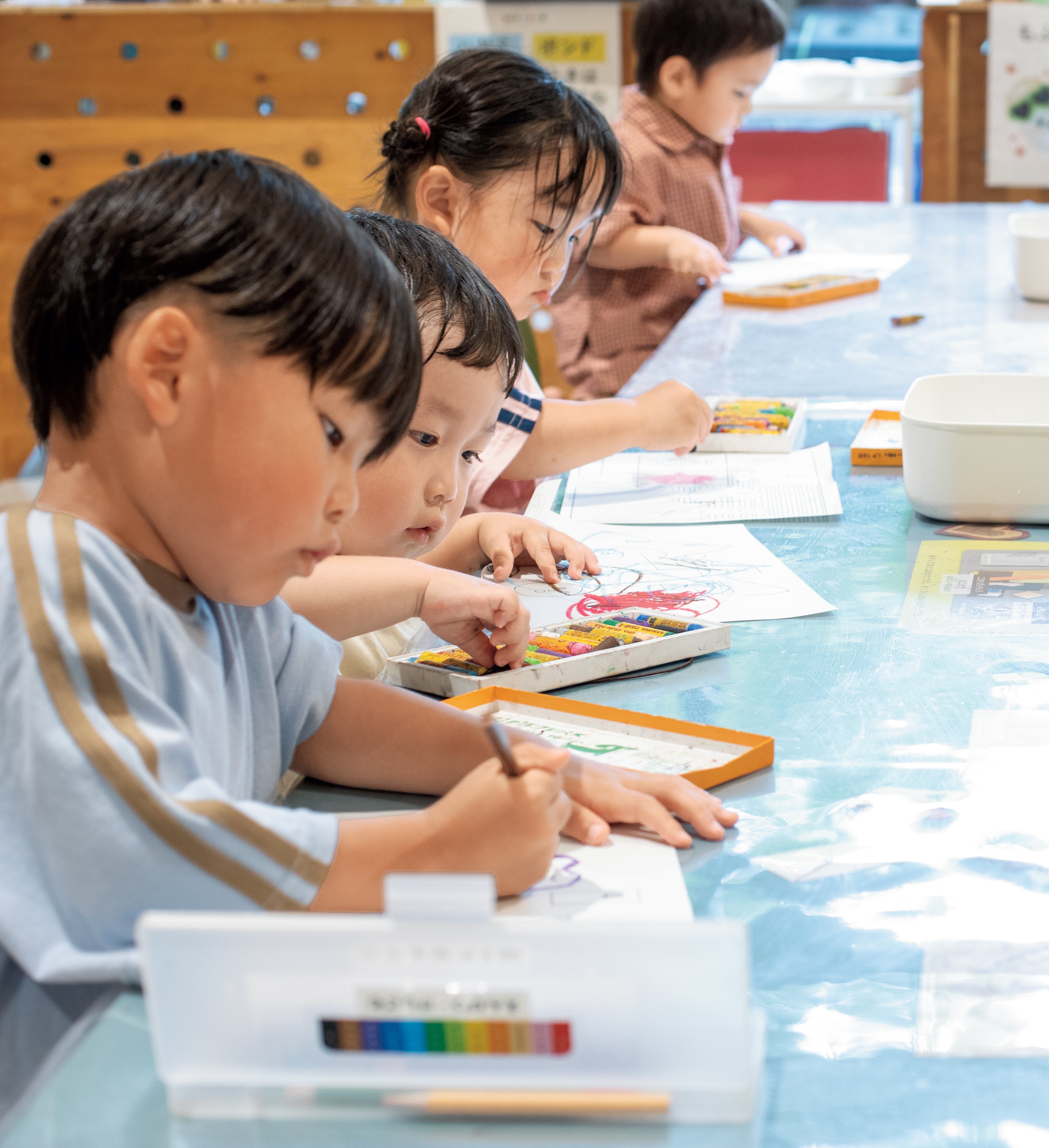
The mirocco logo and all the signs and illustrations throughout the building are unified in a paper-cut style. The image is like something children made by roughly cutting colored paper during a craft activity. The large white wall in the "Swirling Mountain Area" is covered with circular paper cutouts, which were made by children in a workshop held before the building opened, based on the theme of "things they like in Kakegawa." By thoroughly incorporating a paper-cut style throughout the building, we created a space that feels like it's overflowing with artwork.
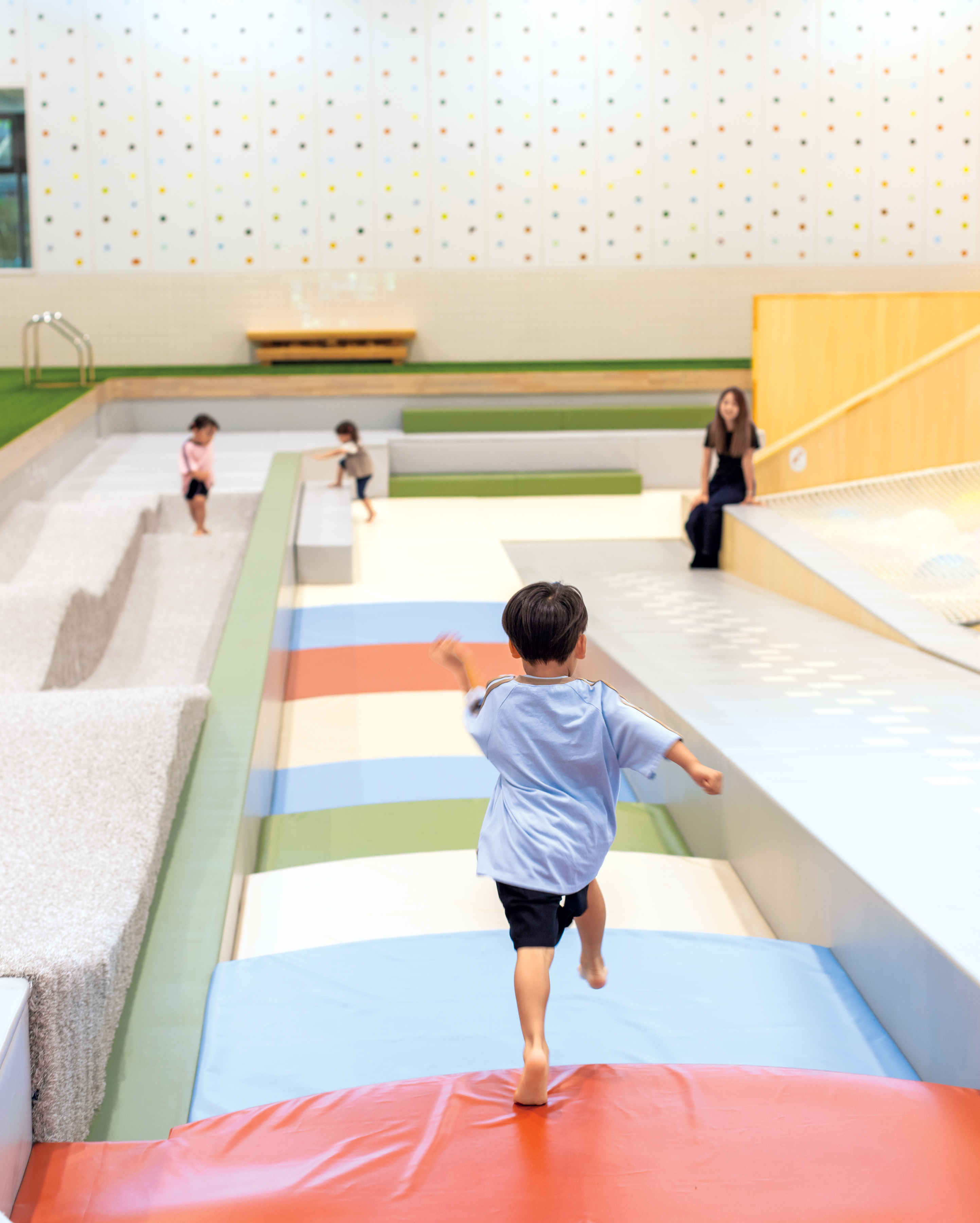
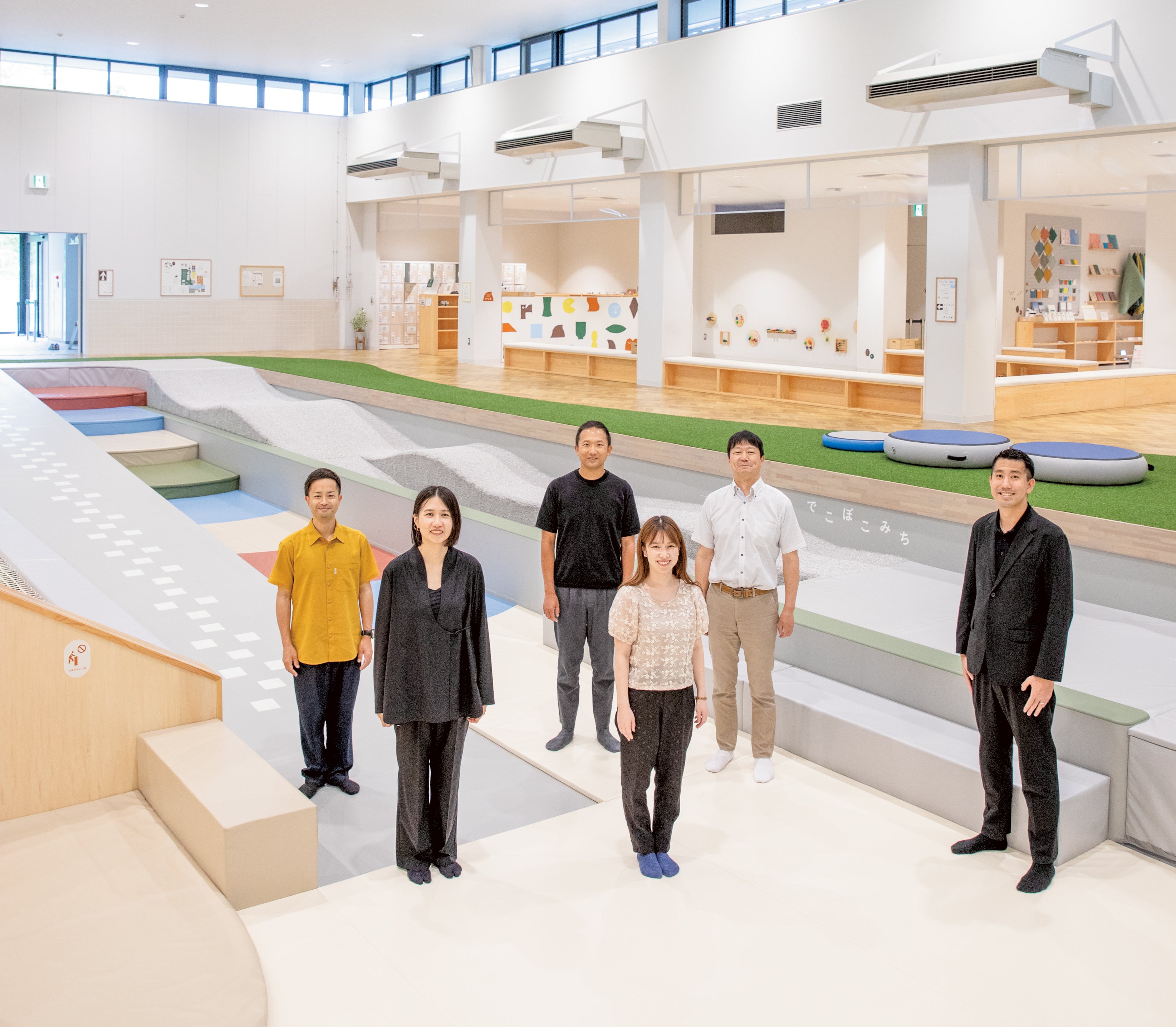
The design and construction of the playground equipment were also carefully considered. Taking advantage of its original shape as a swimming pool, variations in elevation were incorporated to delight children. Even the handrails leading down from the poolside into the water were incorporated as a playful design element of "inheritance."
Experience the forest together with a local NPO.
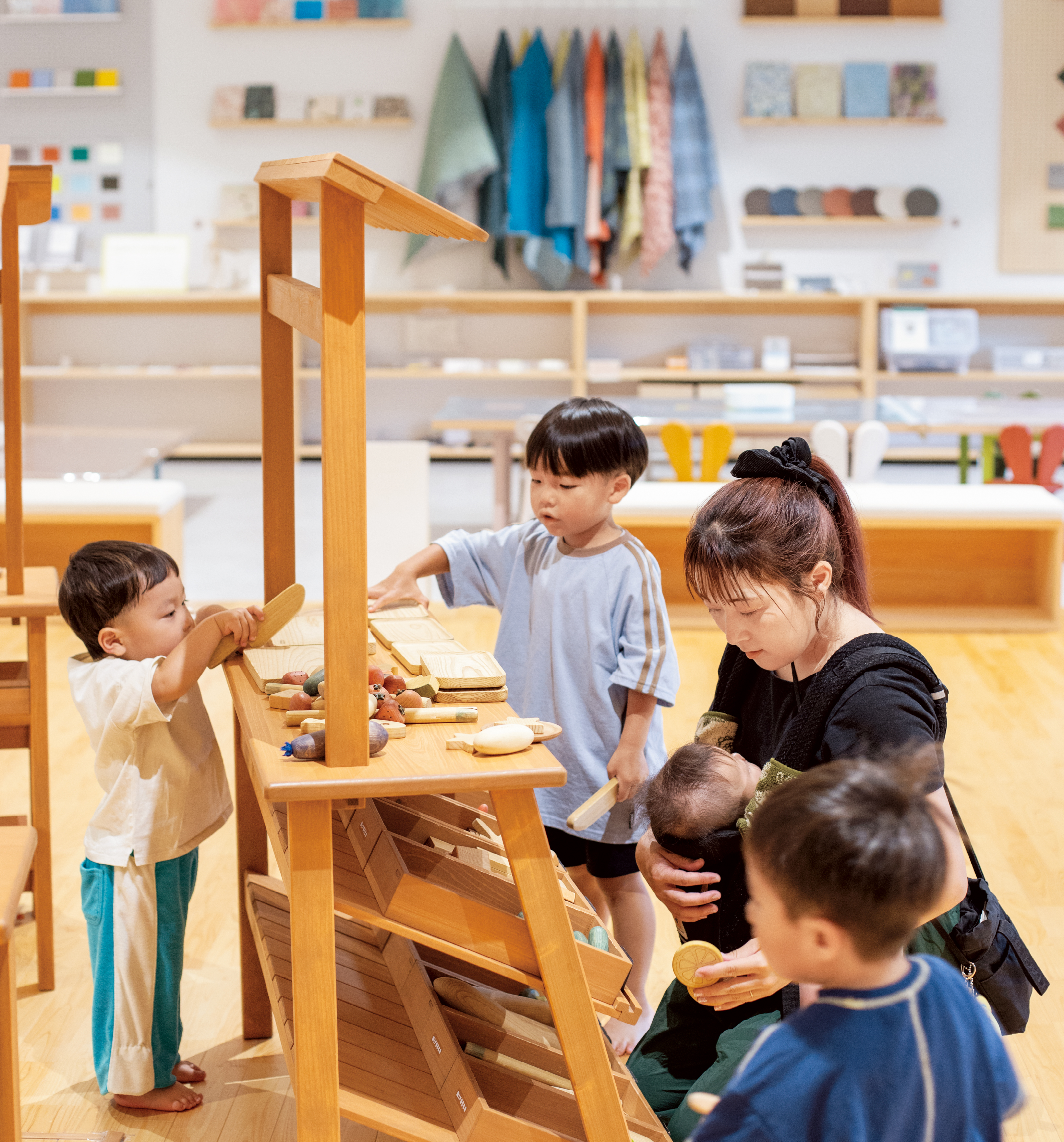
While the playground area was decided relatively smoothly, the challenge that required the most thought was to create a space that would foster children's creativity and facilitate intergenerational interaction. We wanted to incorporate elements that reflect the character of Kakegawa City and Nomura Kogeisha.
After much discussion until everyone was satisfied, the idea of a "creative lab" finally emerged. With the cooperation of local businesses, it will be a space where children can freely create things and draw using scraps and waste materials. It will also function as a place for networking with local businesses and for events that promote intergenerational exchange.
Rika Nagai of Nomura Co., Ltd., who is in charge of operating mirocco, has been building a network with companies, mainly through requests for workshops, even before the company opened.
"Our goal is to hold events at mirocco about once or twice a month. We have an existing network with Nomura Kogeisha, but if there's a company that interests us, we try to contact them and talk to them directly."
Many people are unfamiliar with local businesses and their work, and many leave their hometowns for work and never return. So, we reach out to them, suggesting that they create memories and connections with local businesses from a young age through events and other experiences. Everyone is very enthusiastic, and we often get a "yes" in response. Recently, mirocco's name recognition has been increasing, and we're really seeing our network expand. So far, we've had the cooperation of about 20 companies."
Relationships are expanding not only with companies but also with local organizations. According to Junpei Oishi, secretary-general of Tokinosunomori Club, a certified NPO in the city, they had been paying attention to mirocco from the very beginning.
"We have been engaged in conservation activities for the 'headwaters forest' in the Kuruma district of the city since 2006. We also run a 'forest kindergarten' to utilize the forest as a place for children to grow up. Last year, we started a nature experience program for infants and their guardians at 22nd Century Hill Park."
So, I was asked if I'd like to do something at the Creative Lab, and I brought in materials I'd gathered from Tokinokotobuki Forest, like nuts, branches, and leaves, and we made mini Christmas trees with the children. That was the beginning of our collaboration."
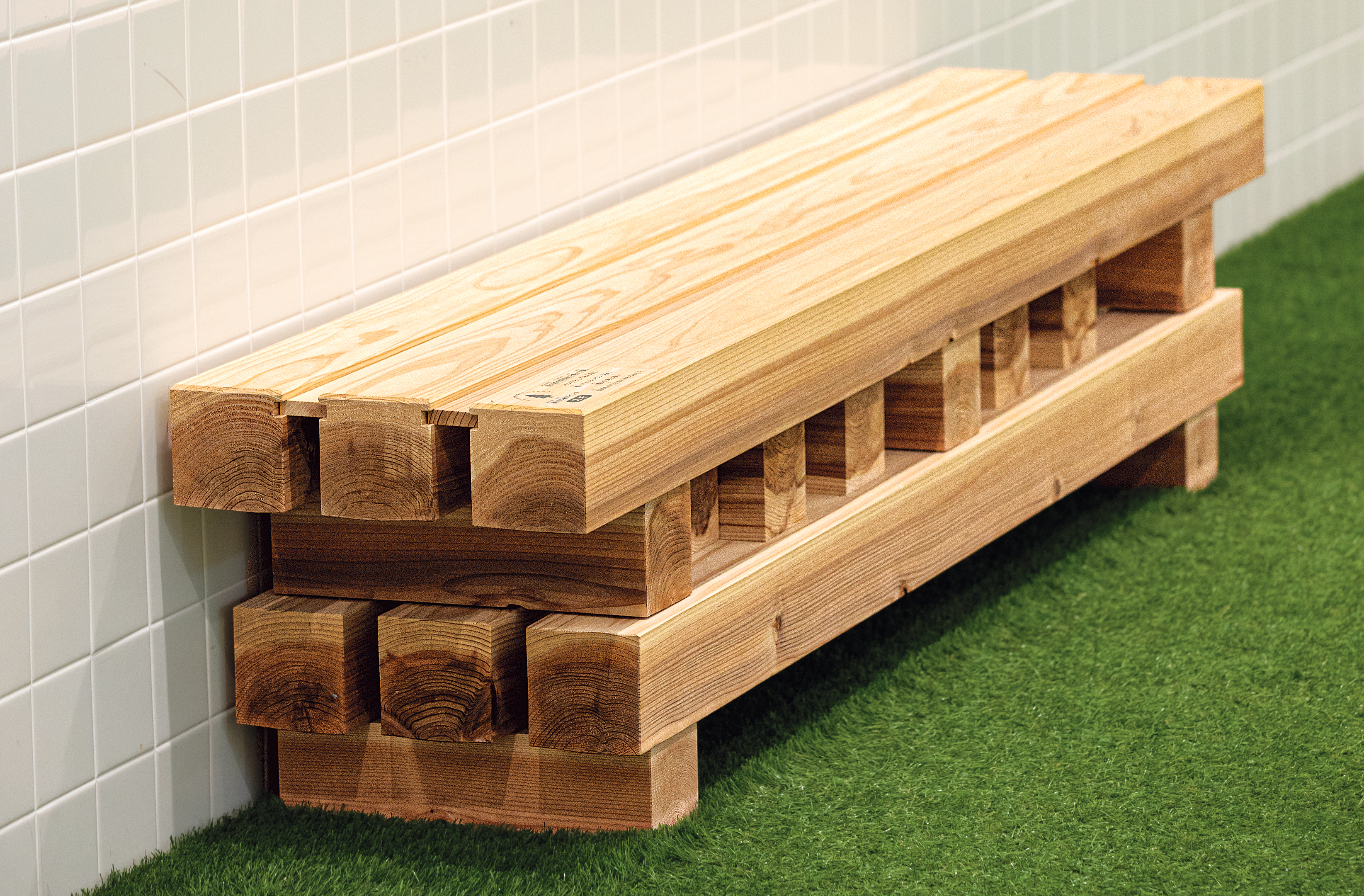
The six benches inside the building were also made by the club. They process thinned timber harvested from Tokinokotobuki Forest, bundle it together, and shape it into benches. The thinned timber is used to make benches while it dries, and once it's ready to be used as lumber, it's replaced with new benches. This is an effort to help people feel closer to the workings of the forest and how wood is used.
"We want to cherish children's real-world experiences. We want them to learn with their five senses, not just through information, by touching plants and insects in nature. However, we don't want to limit this to just the forest; we also want to create opportunities for them to think about the forest indoors through crafts and other activities. That's the kind of thing we're thinking about as we work together," says Oishi.
Due to overwhelming demand, the number of users has increased by more than five times.
Mirocco opened in July 2025. According to Atsushi Shibata of the Urban Development Department of Kakegawa City, it quickly became a popular facility among citizens after it opened.
"At first, it was so popular that it was impossible to get a reservation, and we even received complaints. This continued for several months, and the city hall received a lot of complaint calls. We were getting 200 to 250 reservations every day."
Regardless of the weather, children can take off their shoes and run around freely. Adults can watch them with peace of mind. There are no other places like this in the city, so it was a refreshing facility for the residents.
We estimate that there were about 100,000 users in the first year, which is more than five times the number of users when it was a heated pool. There are also many repeat customers, with some people coming three, four, or even five or more times in less than a year."
What was surprising was the large number of users not only from within Kakegawa City, but also from surrounding areas. Mr. Shibata continues:
"Actually, 75% of our users come from outside the city. Since it's a densely populated area, many people use various childcare facilities. For the first year after opening, our priority was getting people to know about the facility and getting used to running it, but from now on, we want to think about measures to promote community interaction and intergenerational exchange."
It's wonderful that we've been able to realize and open a facility here that exceeds our expectations, but this is just the beginning, and in a sense, the real start is yet to come. How we operate and nurture this facility is the most important thing, and I believe it depends on how hard the city, Nomura Kogeisha, and all the other stakeholders can work together towards the same goal."
(Interview conducted in June 2026. Titles in the article are as of the time of the interview.)
Interview and text by Tsuyoshi Nose (former editor-in-chief of Nikkei Trendy)
Photo by Abe Ryo
profile
Kei SumimotoKakegawa City
Lifelong Learning and Community Development Department, Culture and Sports Promotion Division, Sports Promotion Section, Section Chief
Atsushi ShibataKakegawa City
Urban Development Department, Maintenance and Management Division, Parks and Greenery Section, Section Chief
Junpei OishiCertified NPO Tokinoju no Mori Club
Secretary General
Junichiro YoshidaNomura Kogeisha
Business Produce Division, Business Development Management Department, Business Development Produce Department, Section 2, Section Chief
Mayu ToyodaNomura Kogeisha
Creative Design Division, Design Collective Center, IVD Designer
Rika NagaiNomura Kogeisha
Business Produce Division, Business Development Management Department, Business Development Produce Department, Section 2
NOMURA's Media

- NOMURA Co.,Ltd.SCENES


Please contact us using the button below if you have an inquiry, want to request a quote or request documents.
We have created a separate “FAQ page” that lists the most common questions we are asked.
Please take a look at this page if you have a question.