
Expanding the creative power of creators and producing "concept design that go beyond human capabilities"


Keisuke Yoshida,NOMURA Co.,Ltd. Co., Ltd.
Creative Division, Content Integration Center, Creative Direction Department, Room 2, BIM concept design Team, Future Creation Institute NOMLAB, Designer/ concept design Engineer
technology & engineering
Expanding the creative power of creators and producing "concept design that go beyond human capabilities"
Computational concept design
For NOMURA Co.,Ltd., computational concept design is one of the most important tools for expanding the possibilities of creativity. Rather than using computer capabilities primarily for efficiency and labor saving, they utilize computers to enhance the creative power of creators. This opens up new possibilities for "spatial concept design" and "spatial experiences."
What exactly does computational concept design entail? We asked Keisuke Yoshida, a designer who has been involved in computational concept design at NOMURA Co.,Ltd. since its early stages, to talk about the practical aspects of concept design production.
Creating a moment-by-moment spatial experience of rows of cherry blossom trees
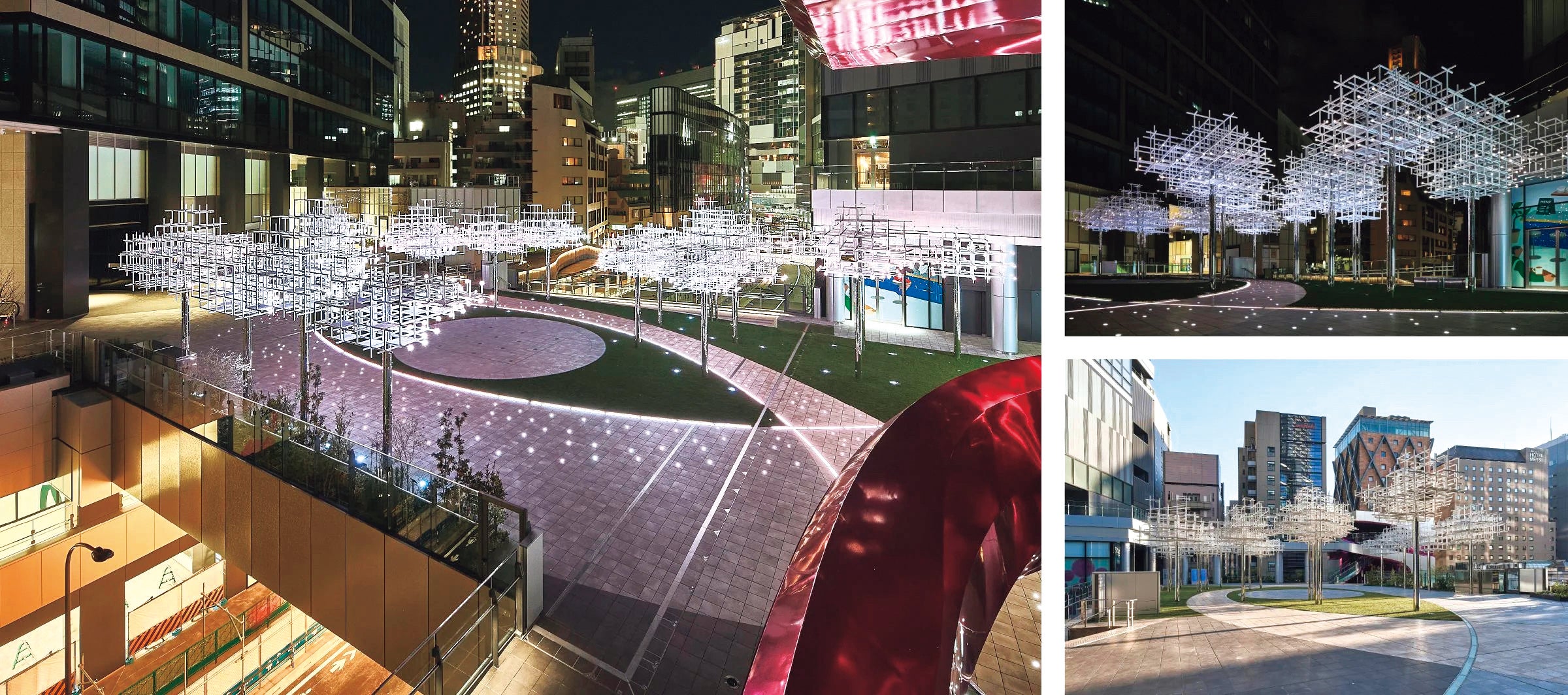
The plaza is illuminated by over 1,000 original LEDs, resembling a row of cherry trees in full bloom. Just as natural cherry trees change their appearance moment by moment depending on the sunlight, wind, season, and time of day, the LED lights also change their appearance as if they were alive, with the light flowing in the wind, gradually fading like falling cherry blossoms, and then returning to full bloom once they are all out. A water basin sits beneath the lights, and three-dimensional sound plays around them. Many people sit on the benches nearby and enjoy the space of light and sound.
Opened in July 2024, "Shibuya Sakura Stage" is directly connected to JR Shibuya Station. "Sakura Chorus," located on the "Nigiwai Stage," has become a relaxing space for visitors. Keisuke Yoshida was in charge of the spatial concept design for this project in collaboration with partner companies.
"We concept design this as a permanent environmental installation that would become an integral part of the city for a long time, while respecting Shibuya's culture and the history of the Sakuragaoka area. The computer senses not only weather changes such as temperature, humidity, rain, and wind, but also the flow of people in the plaza and the arrival and departure of trains on the adjacent station platform, and generates light and sound effects moment by moment. Because it changes every instant, the same actions are never repeated."
Computers and concept design. Computers have already become an indispensable tool in the concept design industry. From simply replacing paper and pencils to simulating 3D models on a computer, there are many ways to utilize computers. Among these, computational concept design is when designers use computers as an extension of their brains as a creative tool.
Recently, Building Information Modeling (BIM), which utilizes computers in the design of buildings and spaces, has been attracting attention. However, Yoshida says that while BIM and computational concept design are in related fields, they use computers in different ways.
"It's a common misconception, but the two are completely different. BIM is a system that links all kinds of information to modeling information, enabling work to proceed more efficiently, conveniently, without errors, and with greater accuracy. Everyone involved in the project uses BIM as a common platform. It's essentially a direction toward the 'democratization of information'."
In contrast, computational concept design involves individual designers using computers to create concept design that surpass human capabilities. For example, when developing concept design concept, a designer might want something like a waterfall or the sky. While a designer could draw an image by hand, they could instead write a program to visualize the waterfall or the sky. For a waterfall, how the water flow and spray are represented depends on how the program is written, so the resulting work will be completely different depending on the designer.
While you can't draw water droplets one by one by hand, you can have a computer draw them by describing the rules of their shape. That's how we first determine concept design path, and then concept design the system that allows the computer to express it. The computer isn't concept design automatically, so the designer's sensibility and individuality are reflected to a great extent. The code that runs the computer can only be deciphered by the person who wrote it, and the finished concept design is a work that is uniquely the designer's own."
"concept design" and "experience" should be considered together.
Yoshida, who loved computers since high school, immersed himself in program development while majoring in architecture at university and graduate school. While working part-time at a major design administration firm, he participated in a competition for the new National Stadium and wrote a program to incorporate a truss structure into the large, undulating roof concept design proposed by the architect. During his student days, he met a professor who had come from the United States to teach computational concept design and was drawn to its fascinating aspects.
The first computational concept design project Yoshida worked on after joining NOMURA Co.,Ltd. was artwork for a shop.
"I wanted to create concept design where it looked like flower petals were fluttering down from the ceiling of the shop. Not just a chandelier that looked like flower petals, but something that really looked like petals were blowing in from the ceiling. So I set the ceiling louvers in the same position as real ones and wrote a simulation program to show the petals flowing down through the gaps in the wind."
Then, we programmed the movement of the petals, captured the moment when they looked most beautiful, and created the actual object. We extracted the XYZ coordinates of each individual petal to determine its position and hung it from the ceiling. Petals blown by the wind look different depending on their direction and tilt. It was impossible to reproduce all of those shapes, so we wrote a program to replace them with approximate patterns. In the end, we created 20 different types of acrylic petals."
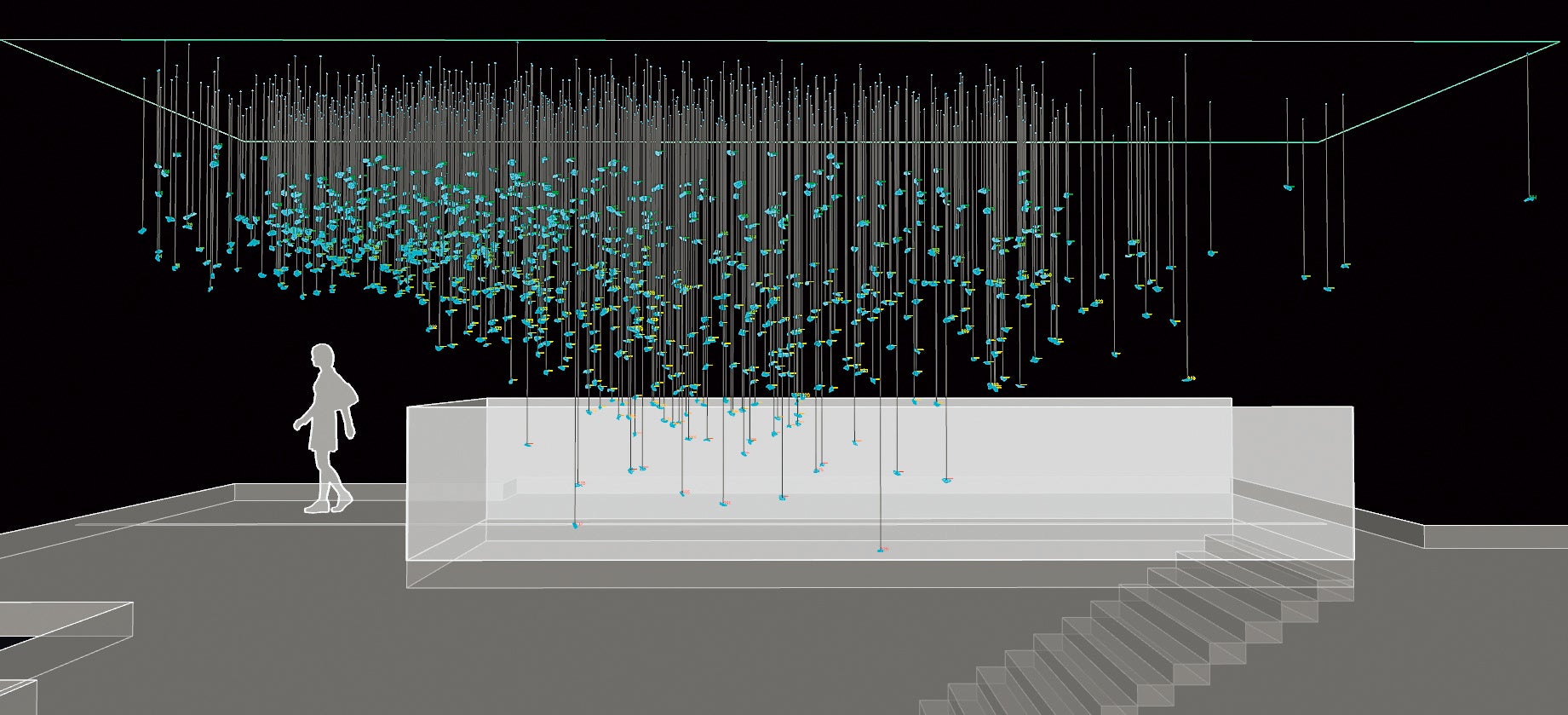
Yoshida took on this project about seven years ago. At that time, computational concept design was hardly used in his circle. Since then, through working on various projects and interacting with external creators, he has expanded the scope of applications for computational concept design.
"Originally, NOMURA Co.,Ltd. 's work involves not only the creation of space, but also a combination of elements of presentation and experience. When we incorporate computational concept design into that, it works quite well. Even seemingly difficult challenges can often be solved with programming, and we can offer solutions. That's how we've gradually expanded what we can do."
To create something truly great, it's crucial to consider "spatial concept design" and "spatial experience" as a set. That's why, when concept design a space, I want to consider the staging and presentation at the same time. Moreover, being able to write programs makes it easier to consider the staging. Things like how to move the light within the space or how the images will look can be explored relatively easily by creating a simulator on a computer."
Creating an "extraordinary experience that aims for heights"
Recently, there has been an increase in projects that incorporate computational concept design into spatial concept design and experiences. One such example is "SHIBUYA SKY," the observation facility at "Shibuya Scramble Square," which opened in 2019. Yoshida, in collaboration with a partner company, was in charge of the spatial concept design from the entrance on the 14th floor to the 45th and 46th floors, and the rooftop observation deck, SKY STAGE.
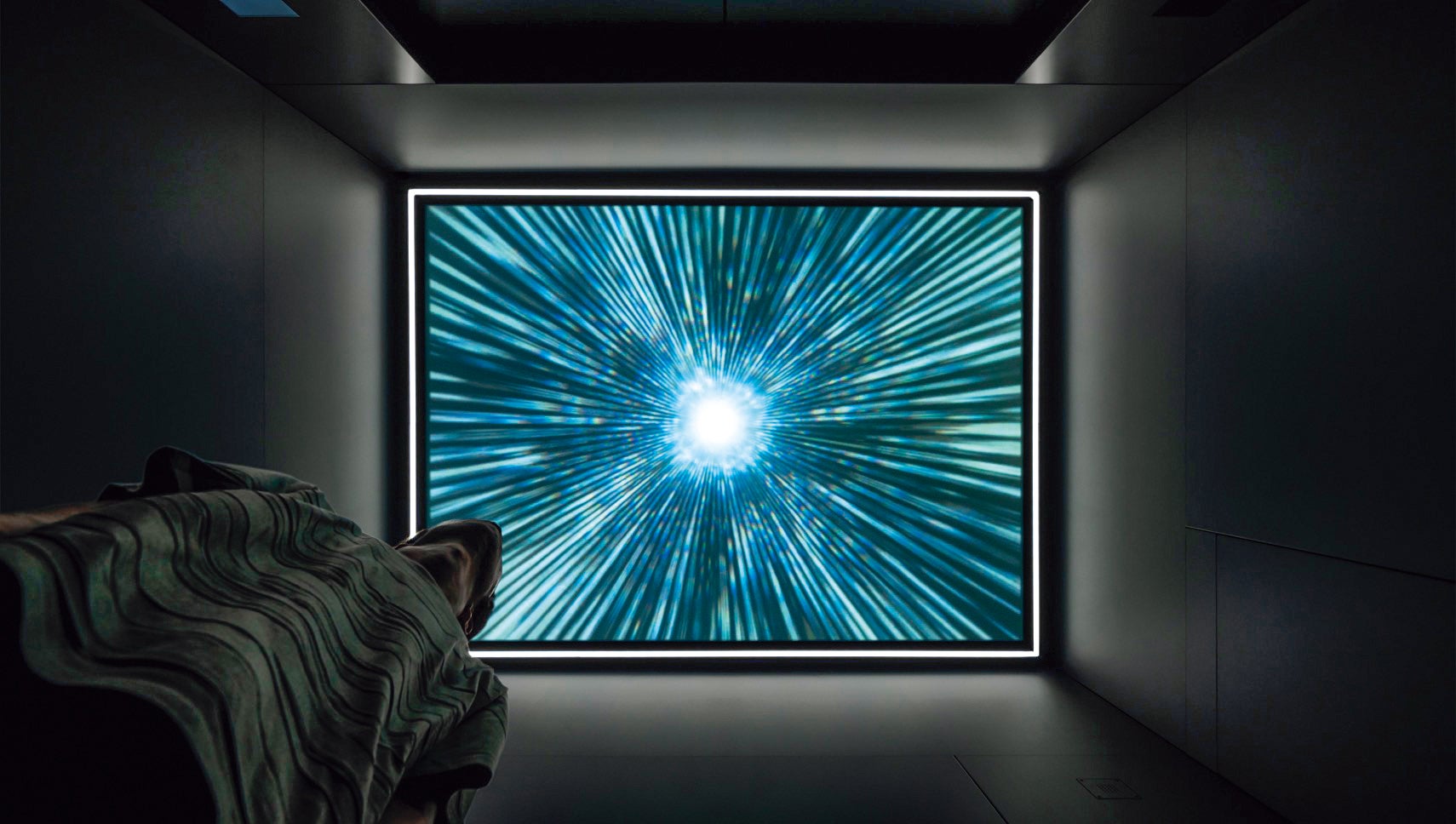
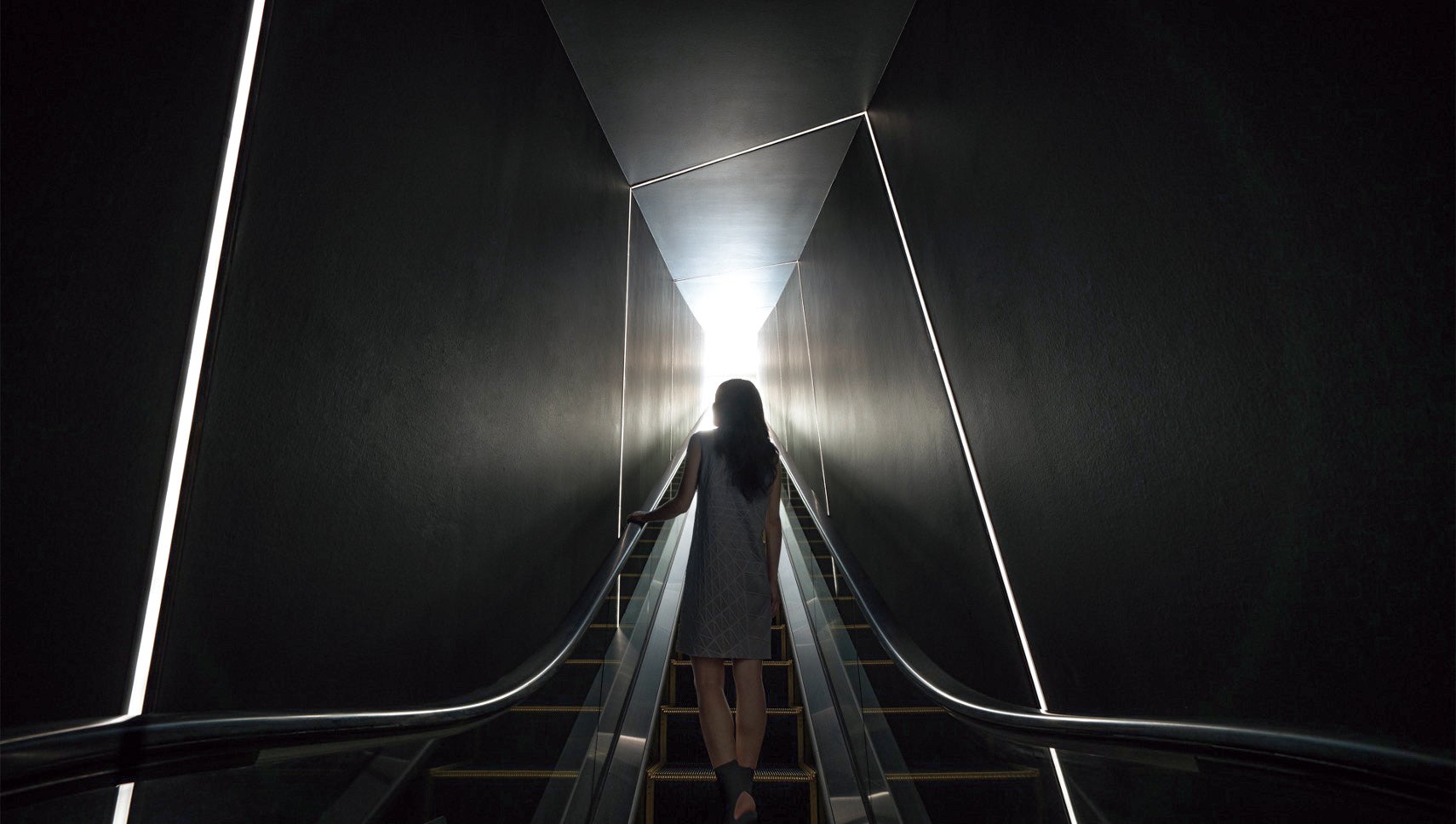
"The concept was to explain the significance of this observation deck being built in Shibuya, and to create an experience that could only be had in Shibuya. As a project team, we came up with the idea that when people climb to high places, like Mount Misen on Miyajima in Hiroshima, they walk up steep paths and pile up stones along the way in an attempt to leave their own traces. The rooftop SKY STAGE has an overwhelming sense of openness, so we created a space that allowed people to experience many different stories on the way up, such as making the path to it a little dark and oppressive, or deliberately passing through cramped areas like a mountain path. We also visualized various data about the city of Shibuya in real time and contrasted it with the view outside the window.
Yoshida says that he actually envisioned a spatial experience of striving to reach the top through hard work, and incorporated it into the design using computational concept design.
"First, in the SENSING HALL on the 14th floor, lines of light that evoke an extraordinary atmosphere and interactive ceiling video that follows people naturally draw attention upwards. When you get on the elevator, images and sounds that rise in sync with the speed play on the ceiling, giving you a sense of transitioning into something extraordinary. Furthermore, the corridor going up from the 45th floor is completely dark, with a thin line of light running as if guiding you upwards. The senses that are suppressed in this dark space are suddenly released on the rooftop SKY STAGE. The building is 250 meters tall, but we launched a 250-meter laser beam from the rooftop, creating a spectacle where people look up at the sky from the highest stage. These spatial concept design and experiences were unraveled by utilizing programming to determine how the light flows, how the video is incorporated, and how the gallery displays are arranged. How can we enrich the spatial experience? I think this project could only have been realized through computational concept design."
I want to combine handcraft and digital
While some uses are geared towards theatrical production, others involve creating forms through computational concept design. Recently, Yoshida has worked on tile production. He collaborated with manufacturers in China and Japan to create tiles that would be difficult for craftsmen to make by hand.
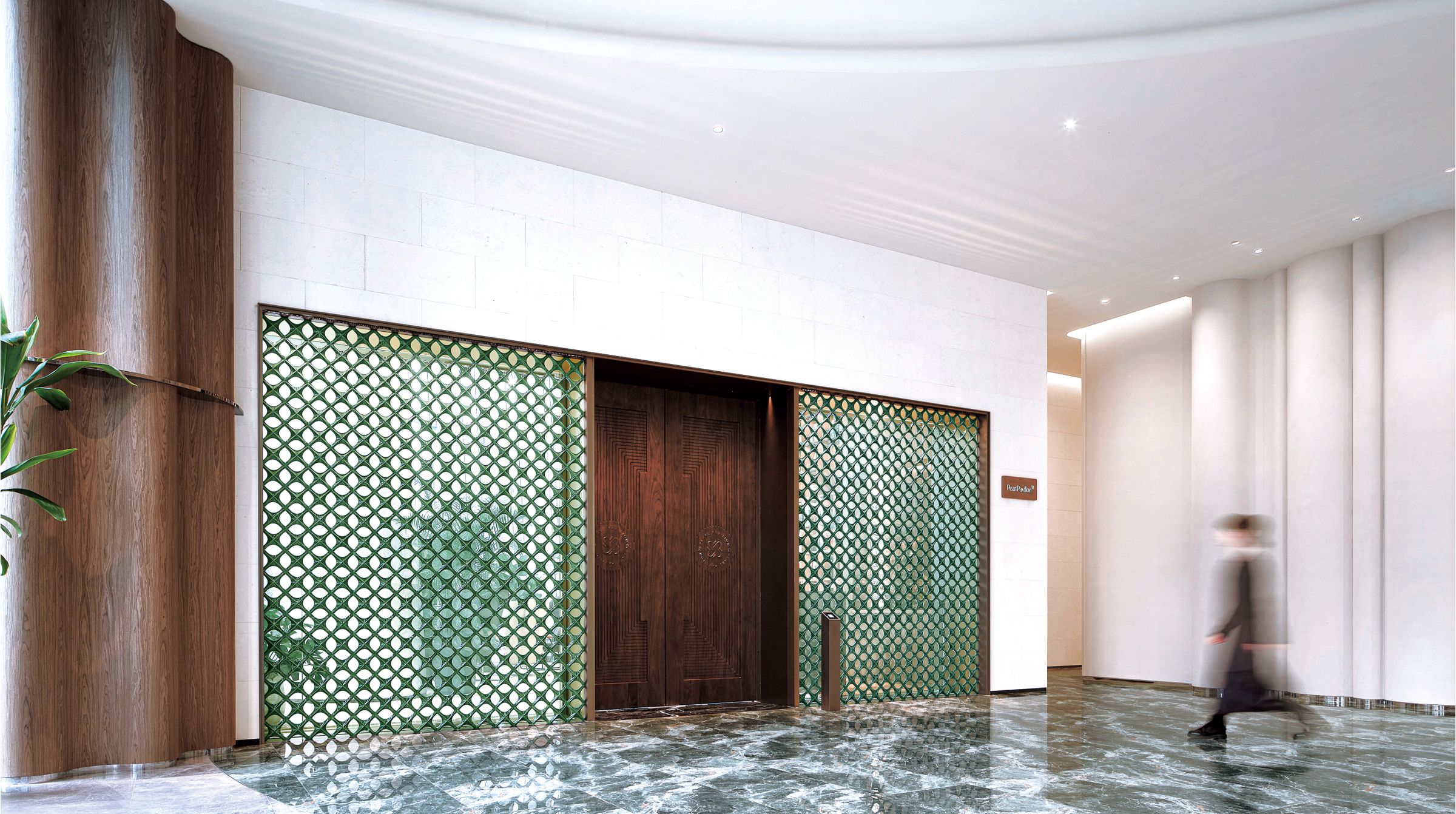
"This is the facade of a VIP innovation facility in China, and we made it using 3D ceramic tiles. China has a long history of pattern culture, dating back to ancient times, so we thought that digitally reinterpreting that culture would be meaningful for an innovation facility."
Patterns are made up of two-dimensional geometric shapes, but by continuously changing a single shape using a program, it is possible to create incredibly complex patterns. By changing the parameters, it is possible to generate almost infinite variations. In this case, 15 different patterns were drawn on the surface of each tile and printed using a 3D printer capable of handling ceramics. Since they were glazed and fired, the texture and feel are just like pottery. The patterns, transformed from two-dimensional to three-dimensional, demonstrate new possibilities for patterns.
The tiles were a huge hit with our Chinese customers, so we got another request, asking us concept design freely. This time, we decided to give meaning to the patterns, creating auspicious tiles featuring cranes and turtles. We envisioned the beautiful curves of the crane's wings and the ridges of the turtle's shell, and used programming concept design organic, three-dimensional silhouettes. There are 20 different crane patterns, but concept design work no matter how they are arranged or combined. I believe that the thick, curved cranes and the turtles with their intricate, sculptural lines could only have been created through a combination of computational concept design and 3D printing."
.jpg)
And now, what Yoshida is trying to do is to use computational concept design to fuse handcraft and digital fabrication.
"For example, we could have a craftsman carve the surface of a stone, then 3D scan it and use a program to create concept design. Or, we could extract the skeleton of a wooden object made by a craftsman, and while concept design, we could make it grow randomly, just like a tree growing. If we use this on a facade or something, I think it would create the impression that the traces of the craftsman's hand remain."
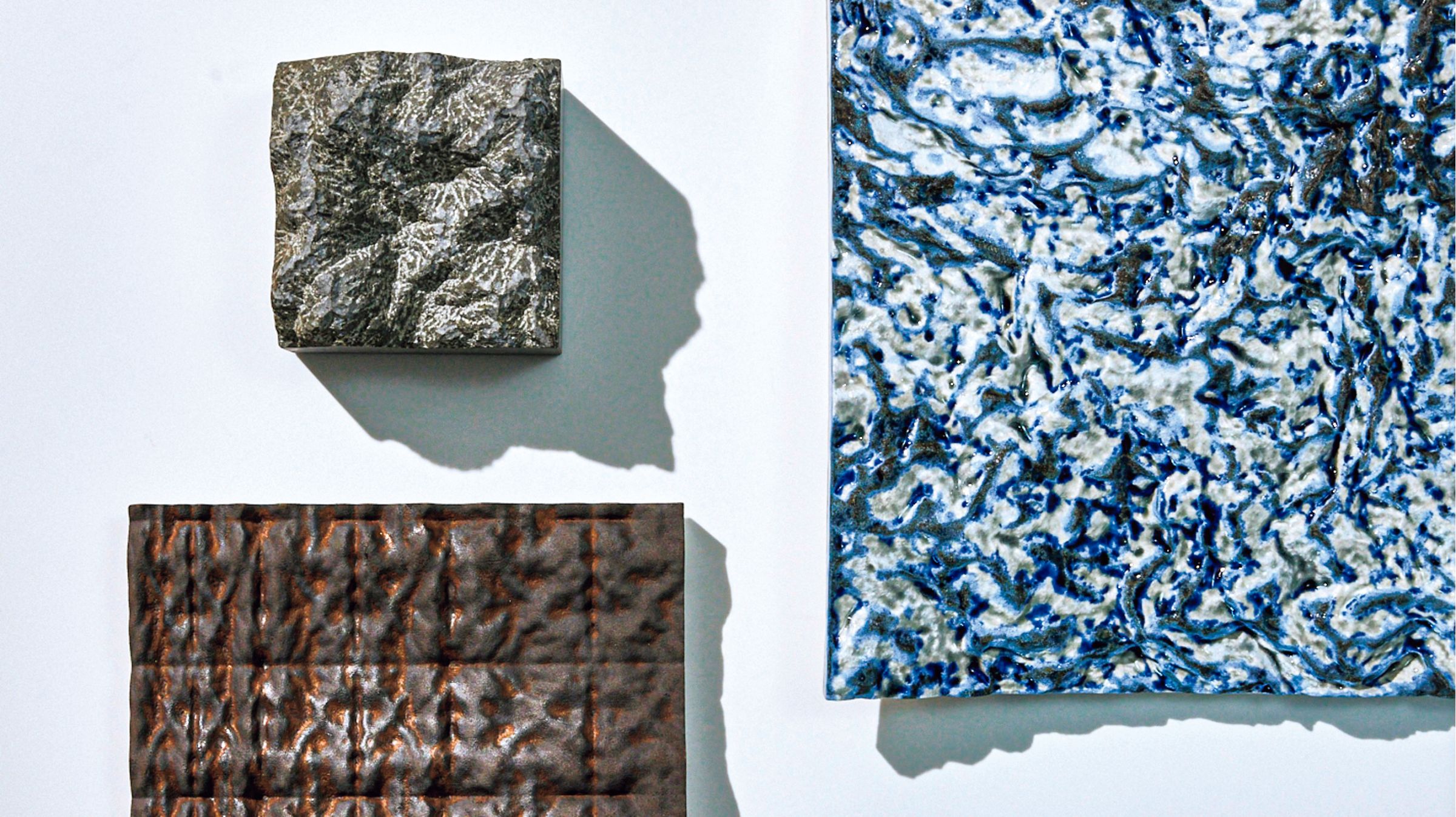
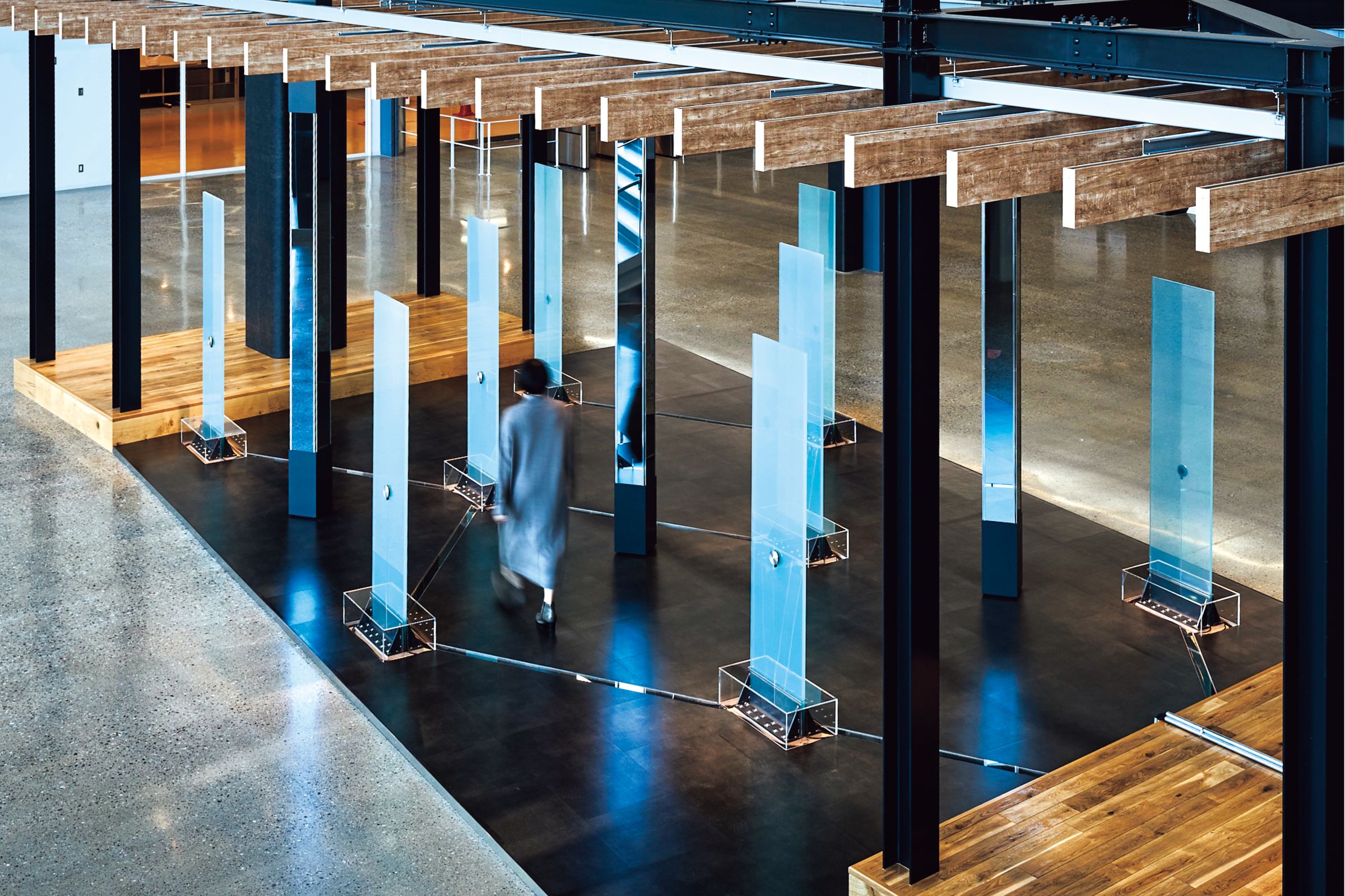
In addition, Yoshida is pursuing a wide variety of experimental themes for the future, including attempts to convey information and create spatial effects using materials such as metal and glass, without using light-emitting displays such as LCDs or LEDs.
"Compared to other countries, computational concept design in Japan is very far behind. That's why I want to persistently tackle challenging themes and spread it to society, even if only a little."
(Interviewed in November 2024. Titles in the article are those at the time of the interview.)
Keisuke Yoshida Photo = © Kazumi Kiuchi
profile
Keisuke Yoshida,NOMURA Co.,Ltd. Co., Ltd.
Creative Division, Content Integration Center, Creative Direction Department, Room 2, BIM concept design Team, Future Creation Institute NOMLAB, Designer/ concept design Engineer
NOMURA's Media

- NOMURA Co.,Ltd.SCENES


![Drawing out children's passions through numerous experiences [Part 1]](/_next/image/?url=https%3A%2F%2Fnomura-kogeisha.g.kuroco-img.app%2Fv%3D1779774440%2Ffiles%2Fuser%2FSCENES%2FVol.05%2FPandD_JUNOPARK%2F477A3016b_jitsuga.jpg%3Fwidth%3D800&w=1920&q=75)


Please contact us using the button below if you have an inquiry, want to request a quote or request documents.
We have created a separate “FAQ page” that lists the most common questions we are asked.
Please take a look at this page if you have a question.