
Photo: Masato Kono, Nacasa and Partners
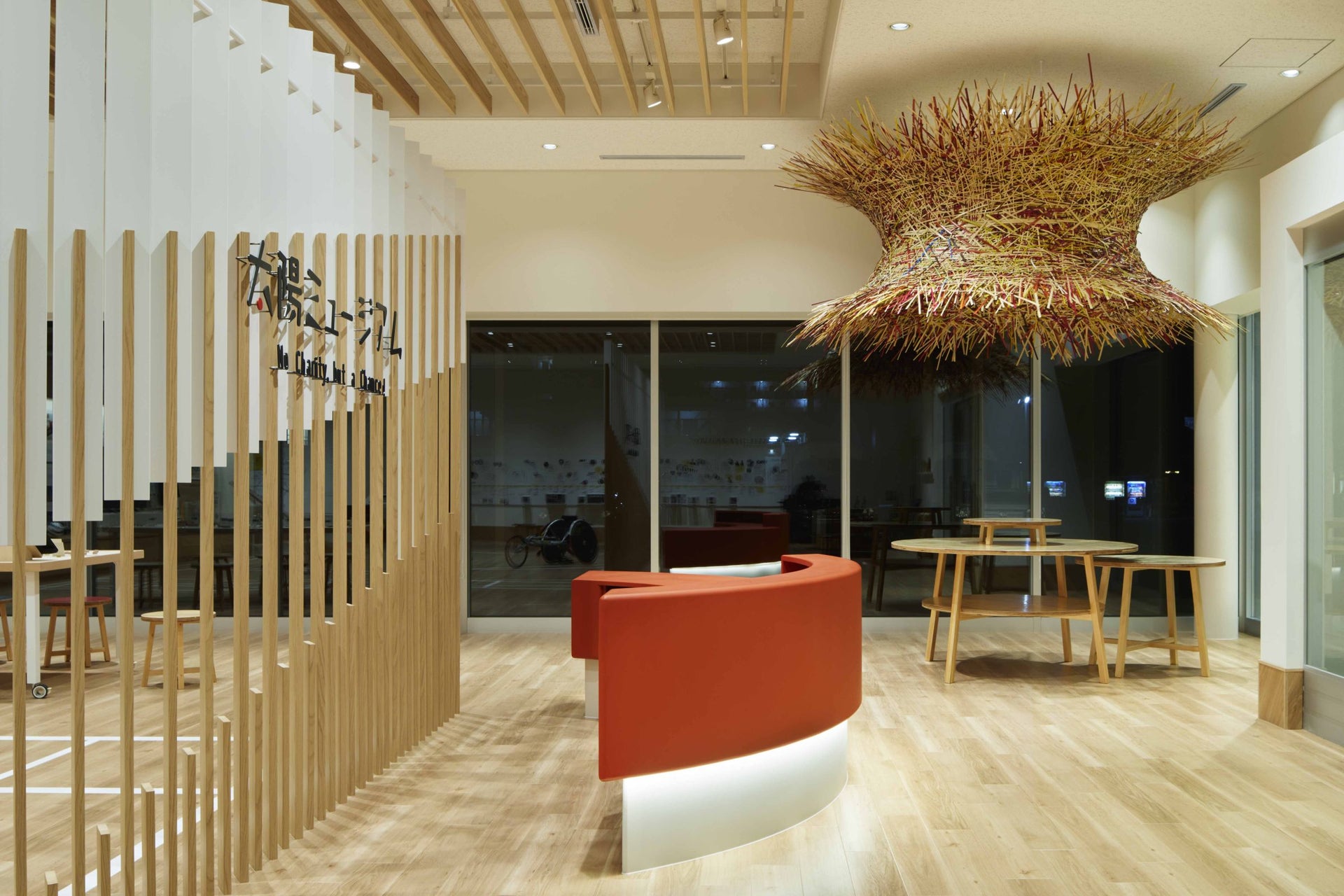
Photo: Masato Kono, Nacasa and Partners
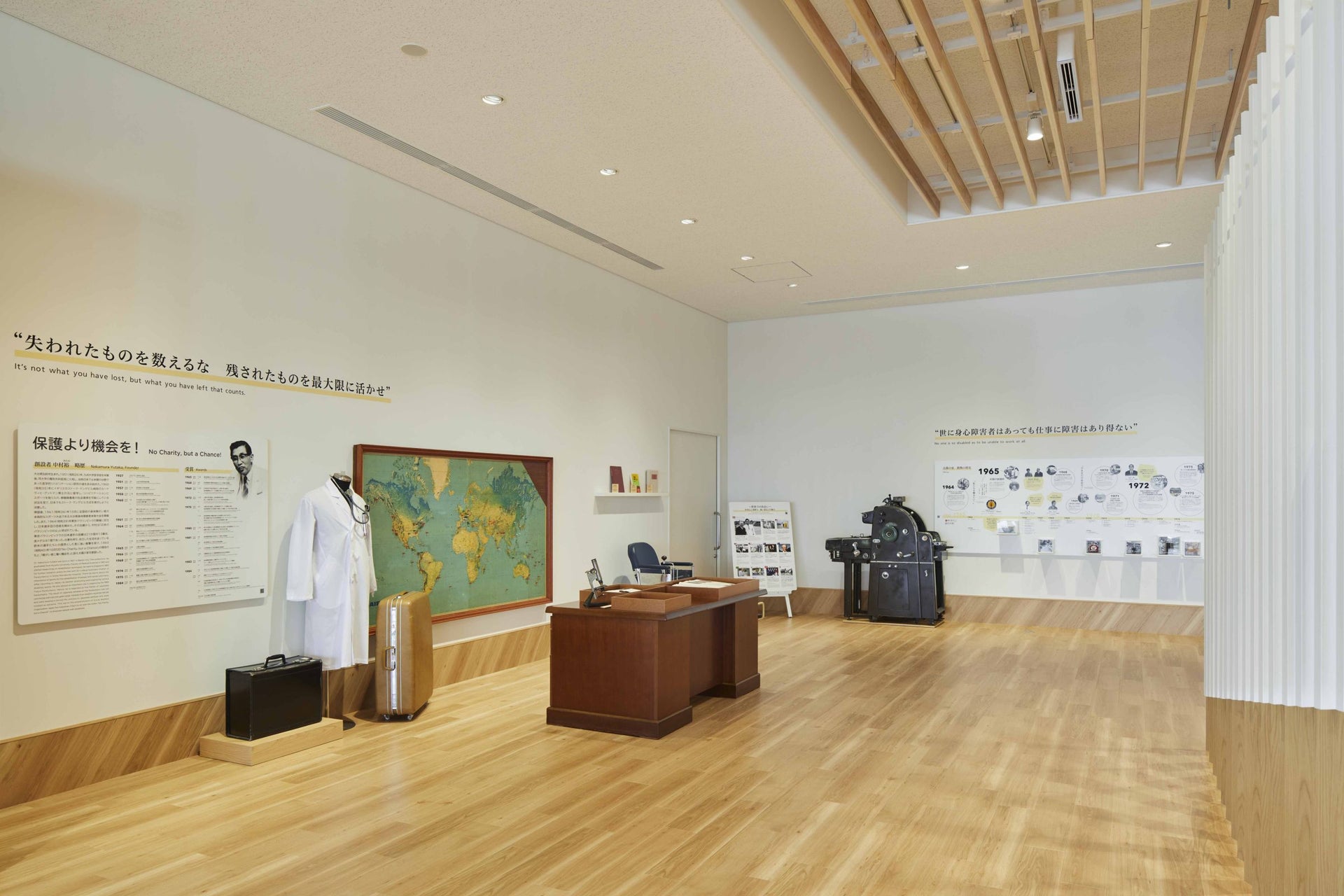
Photo: Masato Kono, Nacasa and Partners
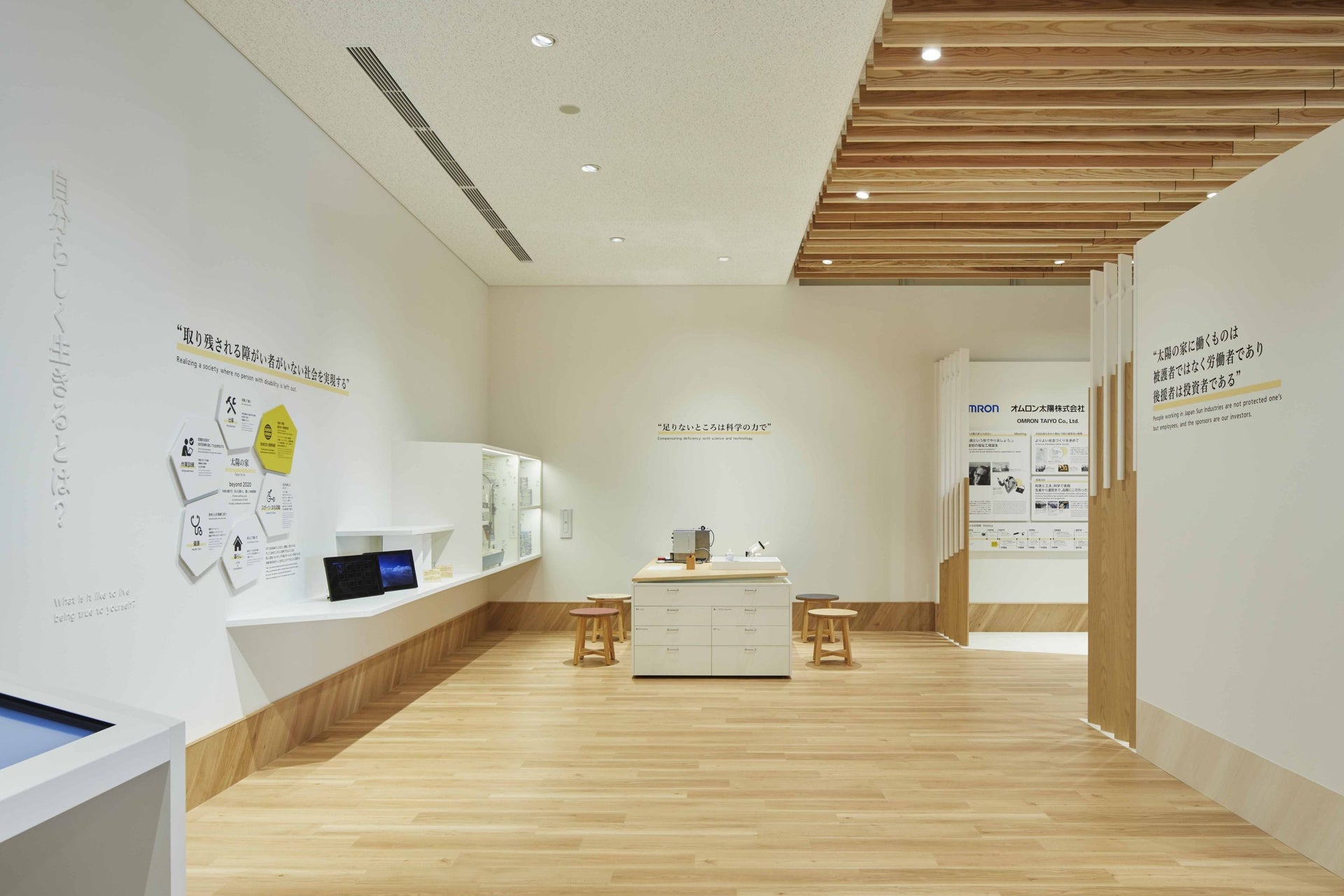
Photo: Masato Kono, Nacasa and Partners
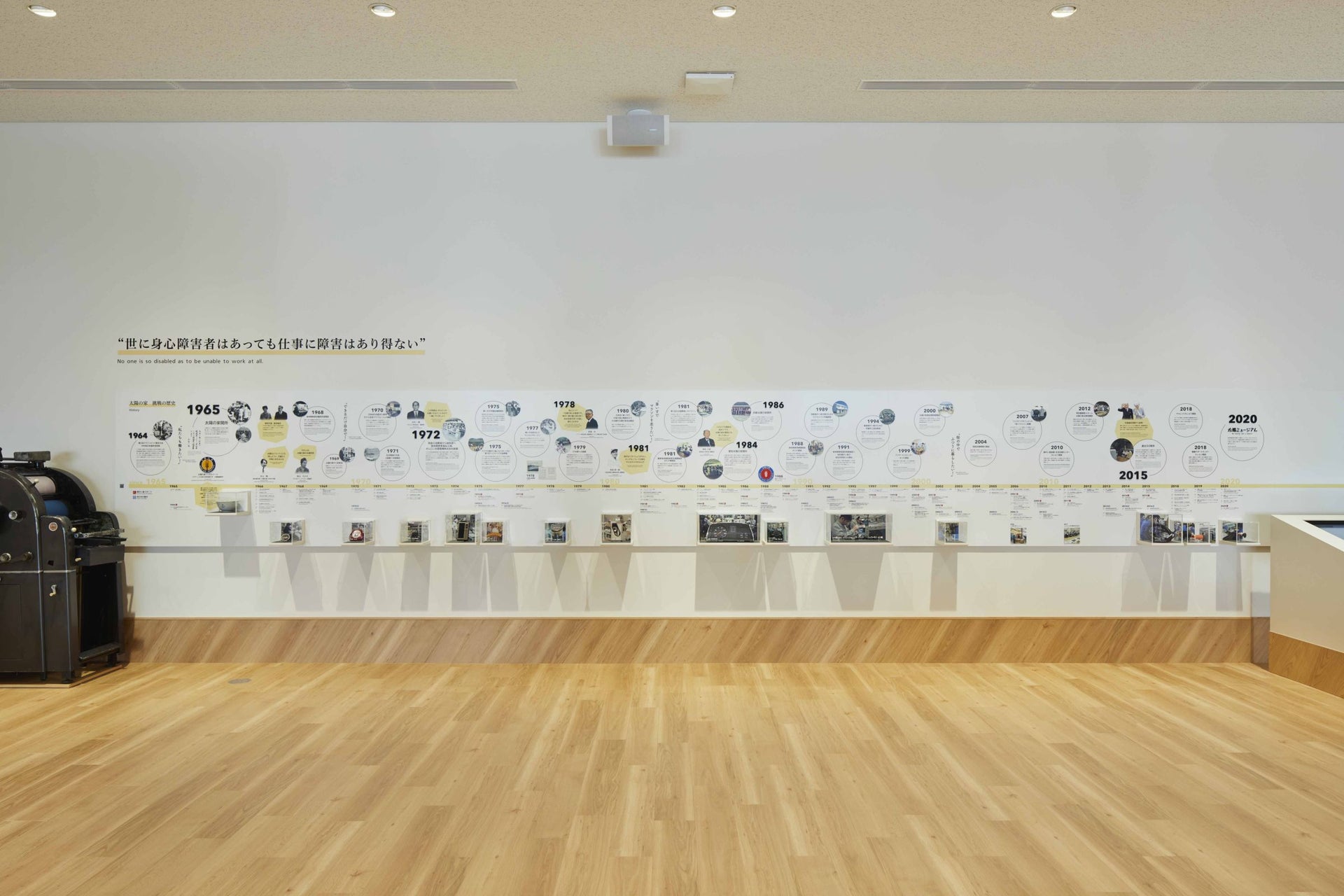
Photo: Masato Kono, Nacasa and Partners
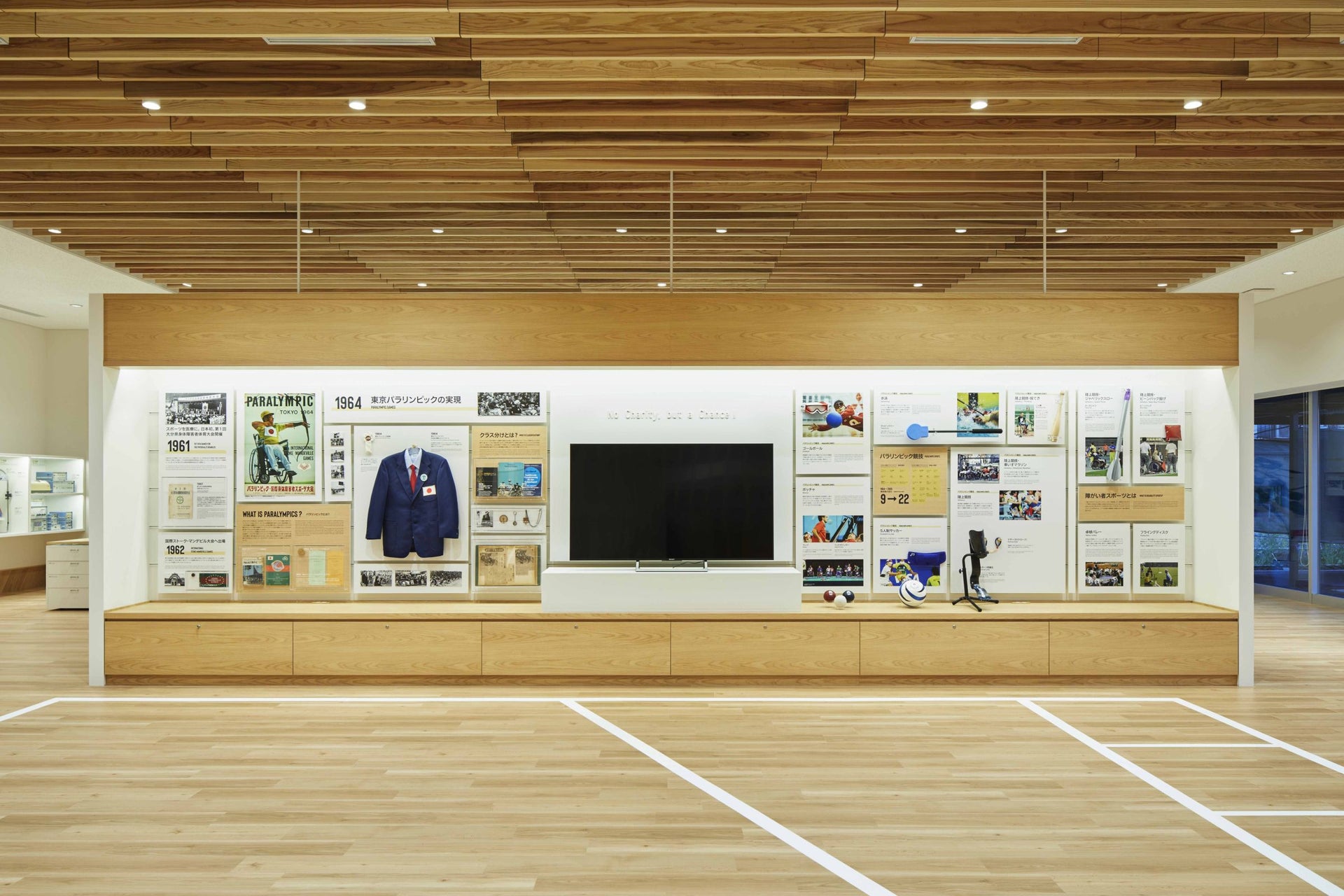
Photo: Masato Kono, Nacasa and Partners
Photo: Masato Kono, Nacasa and Partners
Photo: Masato Kono, Nacasa and Partners
overview
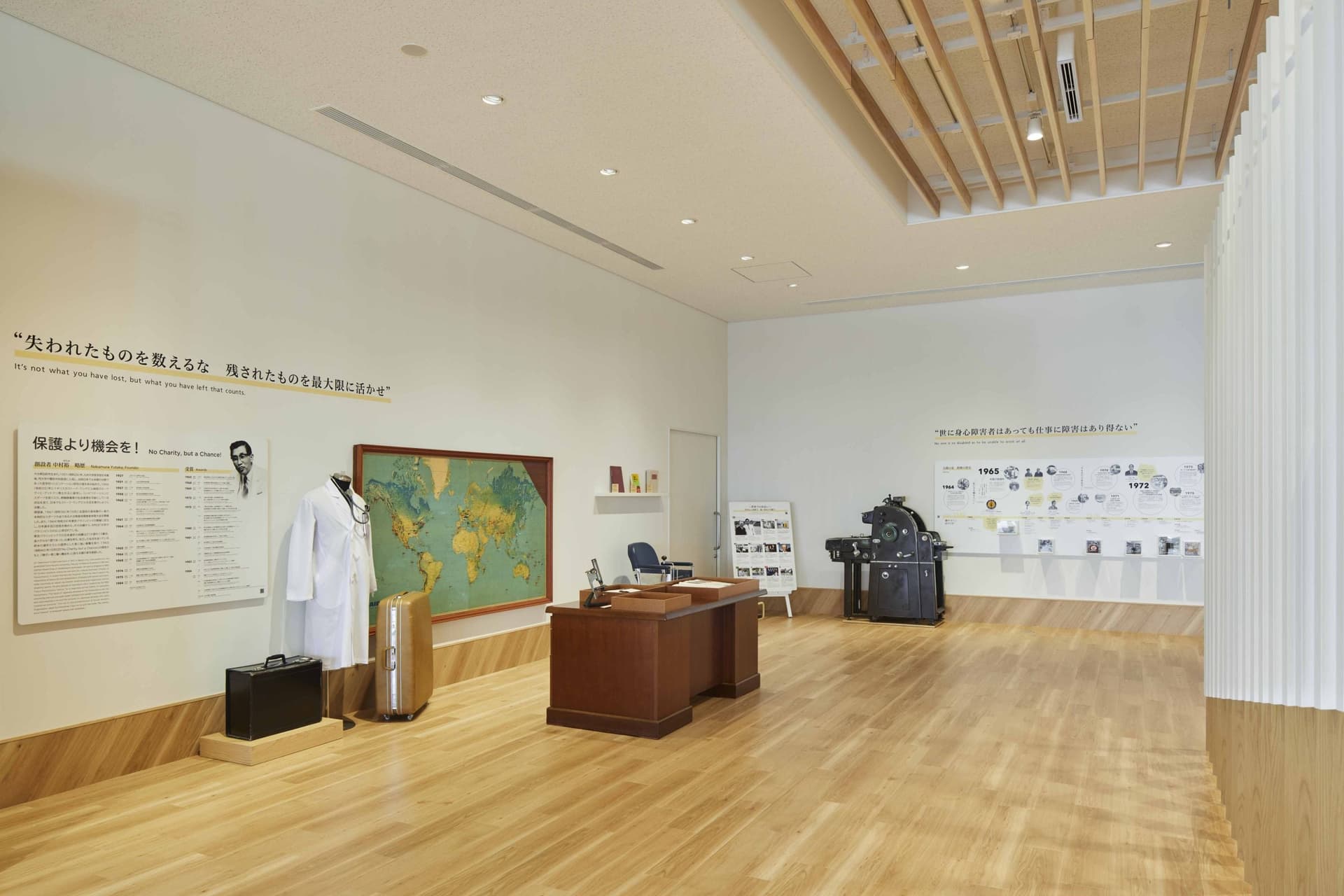
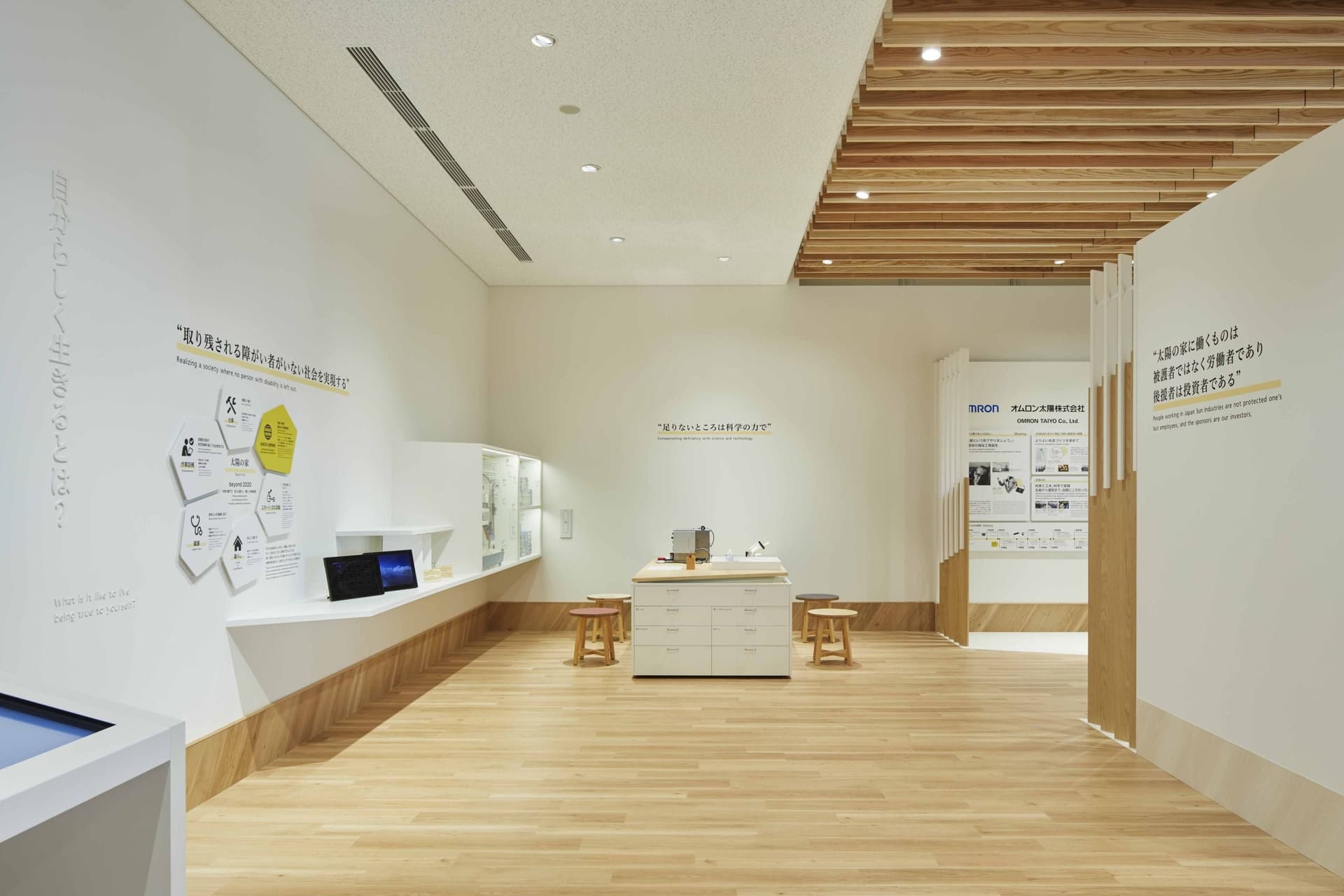
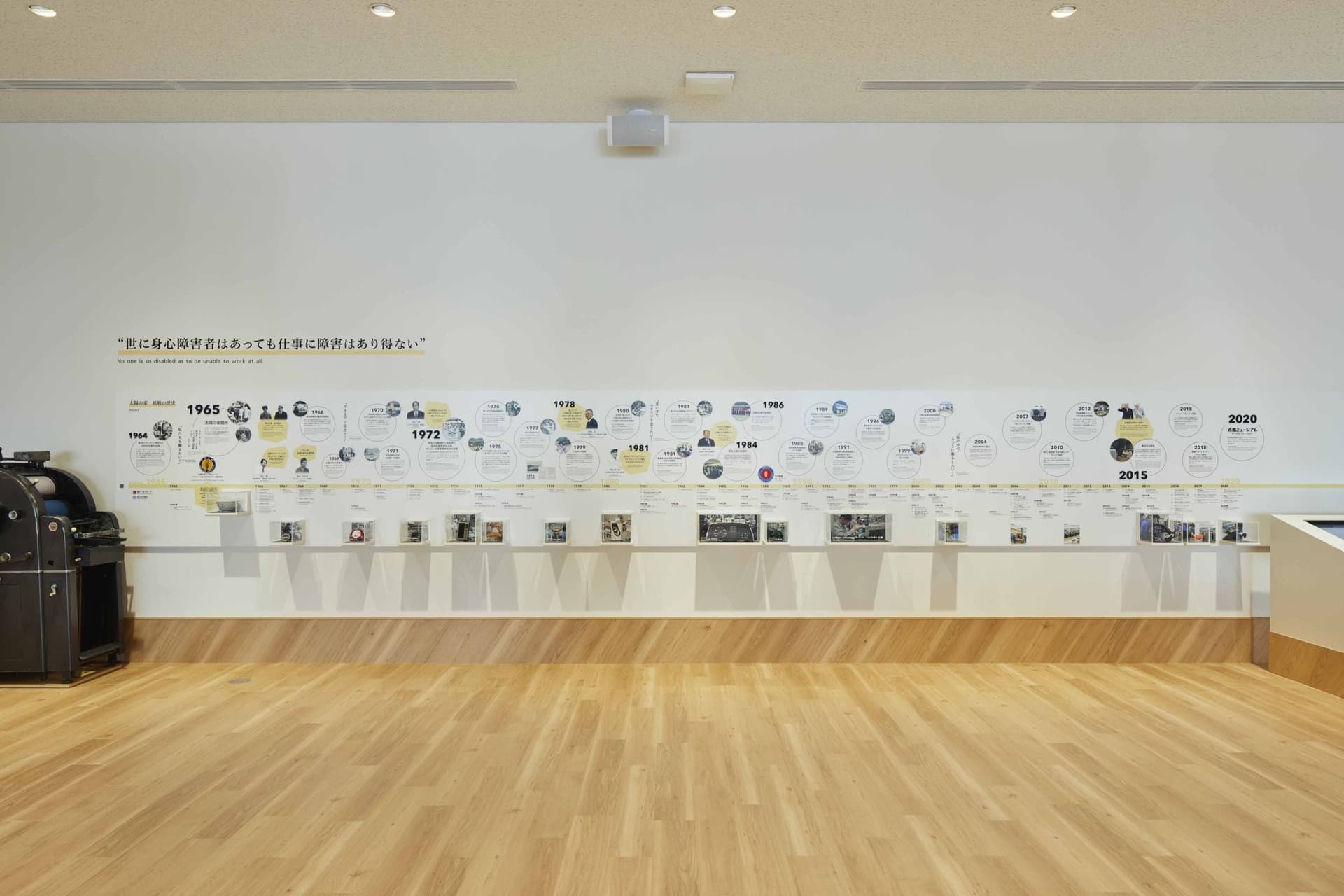
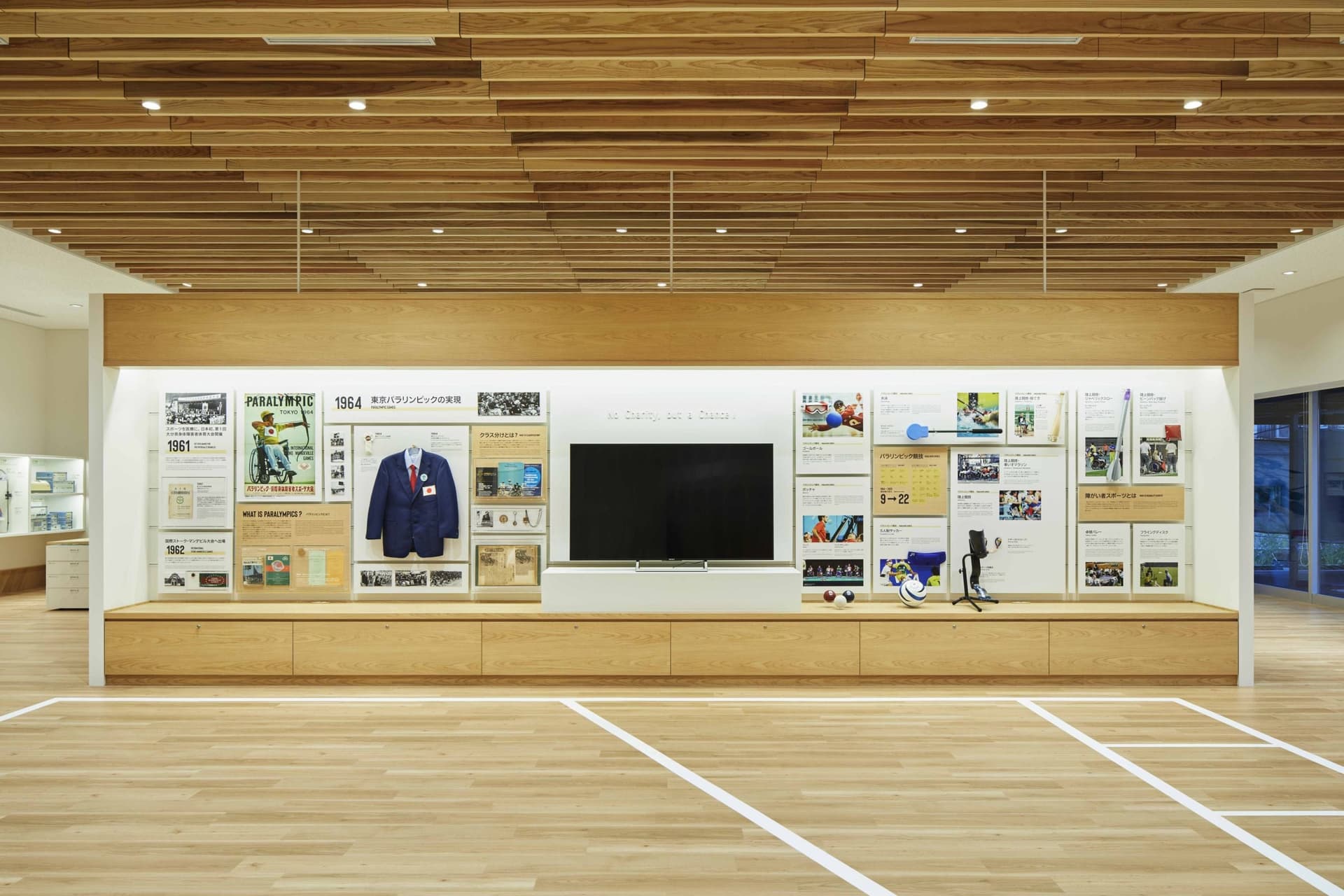
Founded in 1965 by Dr. Yutaka Nakamura, known as the father of sports for people with disabilities in Japan, Taiyo no Ie is a facility that supports the independence of people with disabilities through their lives, work and sports, with the philosophy of "No Charity, but a Chance." Looking back on the founder, Dr. Yutaka Nakamura, the history of welfare for people with disabilities in Japan and Taiyo no Ie, as well as the legacy of the 1964 Tokyo Paralympic Games and the history of sports for people with disabilities, the establishment of the Taiyo Museum was planned as a place where people with physical, intellectual, mental and developmental disabilities who still find it difficult to live can have dreams and hopes.
The concept of this museum is to "learn," "experience," and "be moved," and visitors can view documents and archives, see tools that support the lives of people with disabilities, and try out sports for people with disabilities.
The Taiyo Museum is also a place for local interaction and a base for continuing to disseminate information toward the symbiotic society of the future. We want people to discover their own potential and move toward a society in which everyone can live as they are. We aim to expand the circle of activities toward the realization of a truly symbiotic society from Beppu to both domestic and international audiences.
Issues/requests
I felt that through the discussions, our desire to create a unique, experiential, future-oriented museum, as well as a base for thinking about and communicating about a symbiotic society, became even stronger.
solution
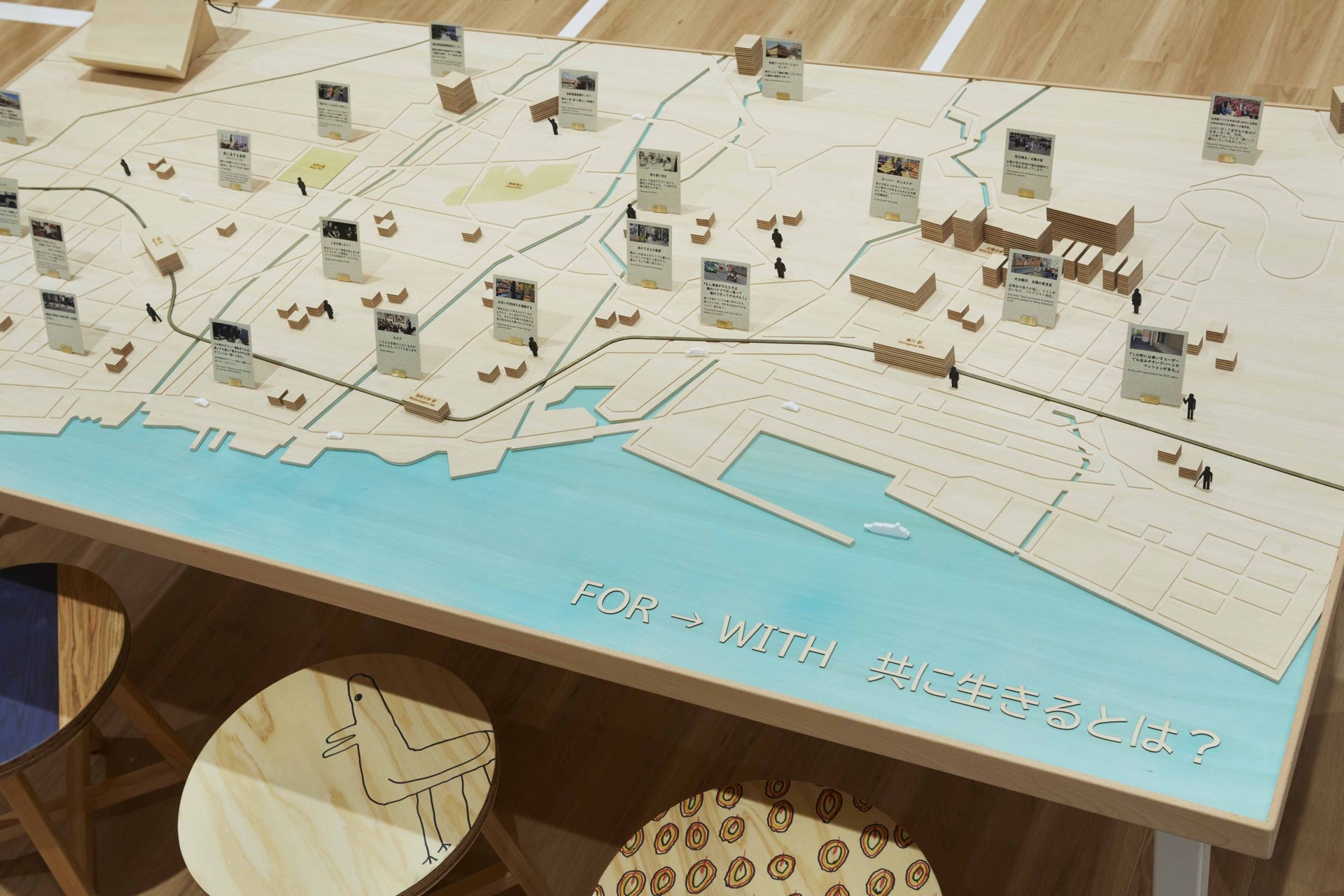
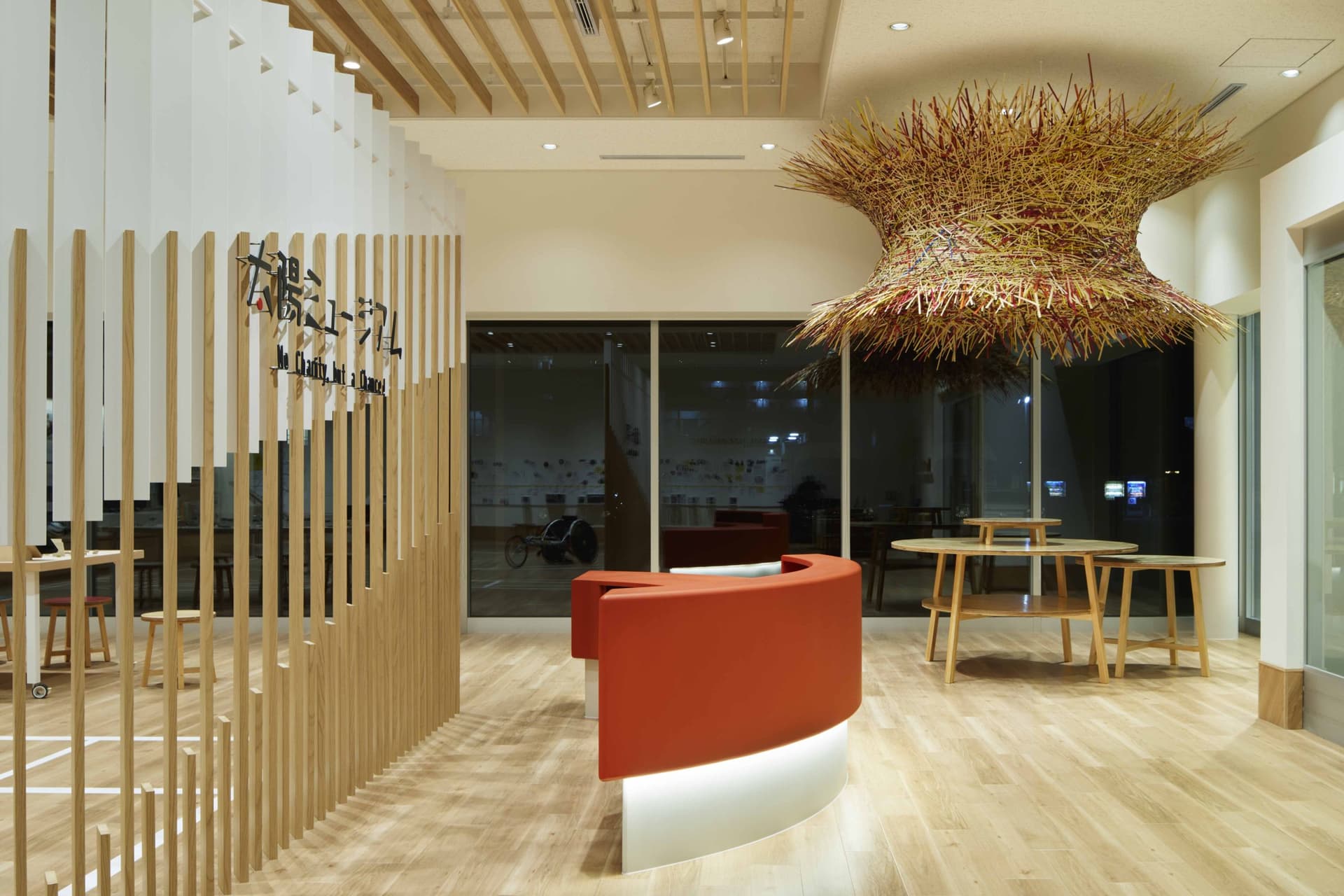
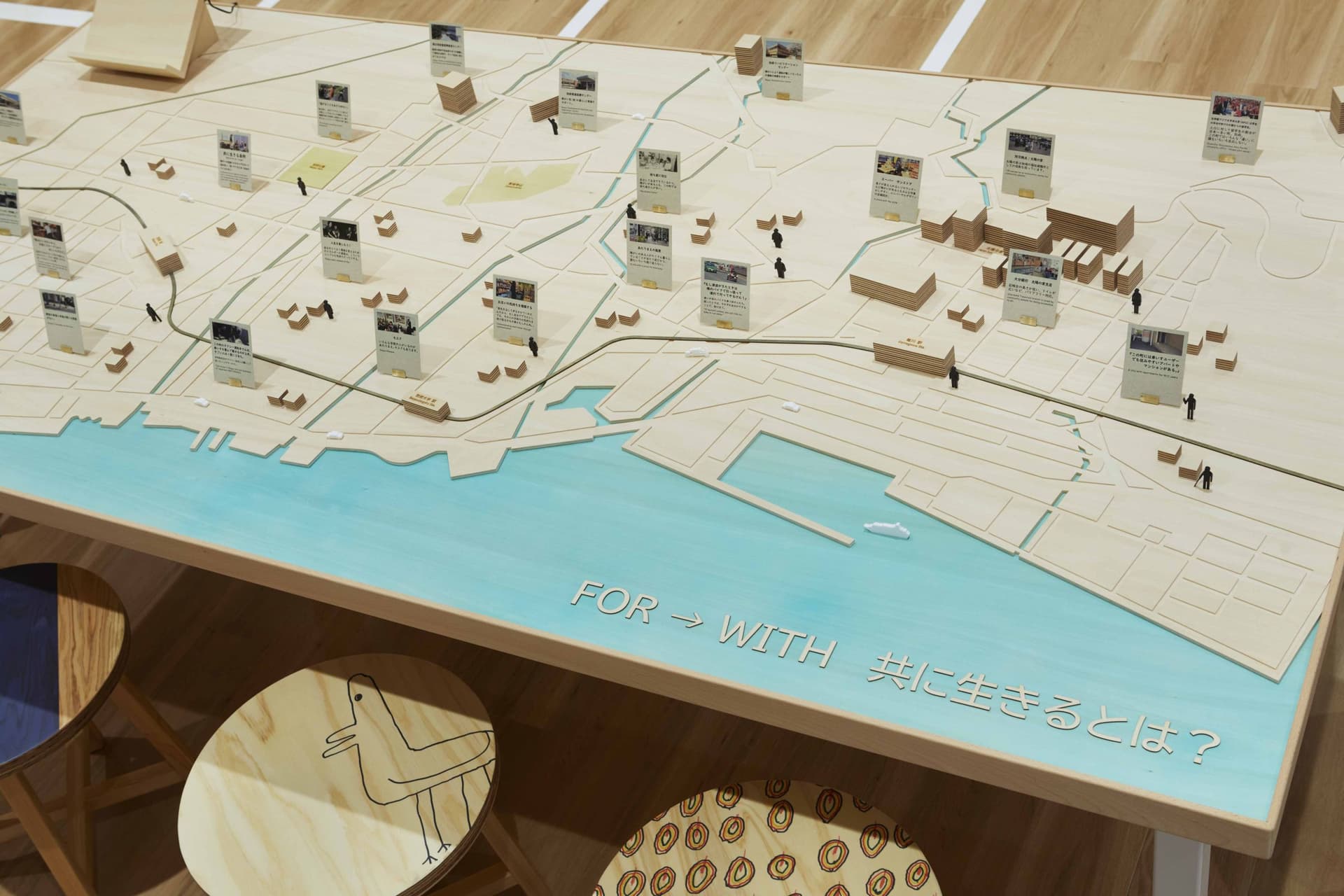
The entire space was designed to be light and airy, with a sunny atmosphere, to foster a feeling in visitors, regardless of disability, that they are inspired to take a step towards the future with dreams and hope. Original music was also created for the space to match the concept, which has a high effect in making visitors' "feelings" future-oriented. The museum logo was created to combine diverse concept design while maintaining harmony, and to convey the image of coexistence. For the key visual used in the graphics, a diagonal line rising to the right was adopted to represent the image of sunlight pouring evenly, which is also in the name of the facility. This diagonal line is also incorporated into various elements of the space. In addition, although the old archives room contained many old and valuable materials, it was important to be careful not to make it look like a history museum, as this would make it difficult to perceive it as a future-oriented museum. Therefore, the selection of displays was carefully discussed and chosen to convey the message we wanted to communicate, and care was taken to ensure that the presentation was as light as possible. Each zone not only covers the history of Taiyo no Ie (House of the Sun) but also incorporates elements that represent the "present." At the end of displays, a map is provided with the theme "For ⇒ With: What does it mean to live together?", plotting examples of coexistence happening in Beppu to encourage reflection on a symbiotic society.
Furthermore, to symbolize coexistence with sunlight, we created and installed "Minna no Taiyo" (Everyone's Sun), an artwork made by 4000 people, including users of Taiyo no Ie (Sun House) and employees of affiliated companies, who freely wove together 400 bamboo strips dyed in various colors, as a symbol of the museum. [Donated (Planning, concept design, Production) NOMURA Co.,Ltd. (tentative)]
Customer's voice
We've received comments such as, "The museum is bright and displays are easy to view," "The interactive displays were very engaging and deepened my understanding of people with disabilities," and "As expected from NOMURA Co.,Ltd.."
project member
Basic information
- open
2020
- location
Oita Prefecture
- client
Social Welfare Corporation "Taiyo no Ie"
- solution
Planning, design, layout, signage and graphic concept design, design administration, interior administration, environmental features, exhibit execution, interior execution, building execution, maintenance management
- remarks
As of March 1, 2022, Nomura Techno's operations will be integrated into Nomura Medias.
What's NewSearch by new achievements
- TOP
- Achievements
- Taiyo Museum ~No Charity, but a Chance!~
Please contact us using the button below if you have an inquiry, want to request a quote or request documents.
We have created a separate “FAQ page” that lists the most common questions we are asked.
Please take a look at this page if you have a question.