
IMARI-ARITA WARE TRADITIONAL CRAFTS CENTER RENEWAL
overview
The Okawachiyama area of Imari City, Saga Prefecture, is the production center of "Nabeshima ware," considered the finest Japanese porcelain, which was produced by the Saga Nabeshima Domain for presentation to the shogunate and as gifts to other domains. The "Imari-Arita Ware Traditional Industry Hall," located at the gateway to this area, is a facility that serves as both a training ground for ceramics workers and an educational displays on Nabeshima ware.
This time, as part of a renewal project timed to coincide with the 350th anniversary of the founding of the Nabeshima clan's Okawachiyama kiln on November 1, 2025, our company was responsible for the design and construction of the renovated entrance, materials displays room, and general displays room.
Issues/requests
The aim of this renovation is to enhance the function of disseminating information about the techniques and history cultivated while producing pottery for the Shogunate and other important figures as the official kiln of the Saga Nabeshima Domain, and to create a space that will increase visitors' interest in Nabeshima ware and Okawachi-yama, and encourage them to stroll around and visit the kilns, by displays current works created using techniques that have been inherited and refined along with history.
solution
The entrance, the displays room, and the main displays hall were concept design to suit their respective functions.
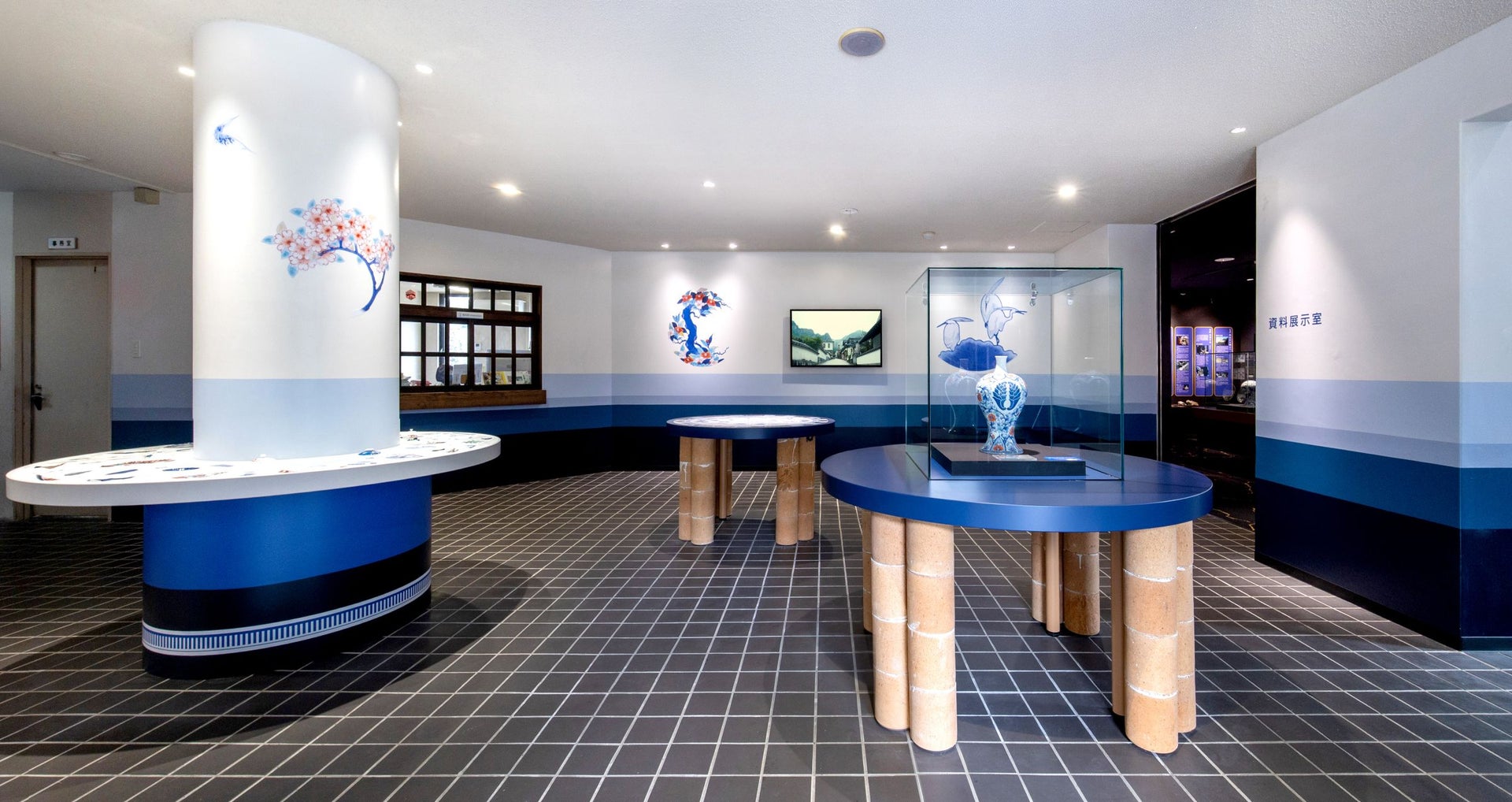
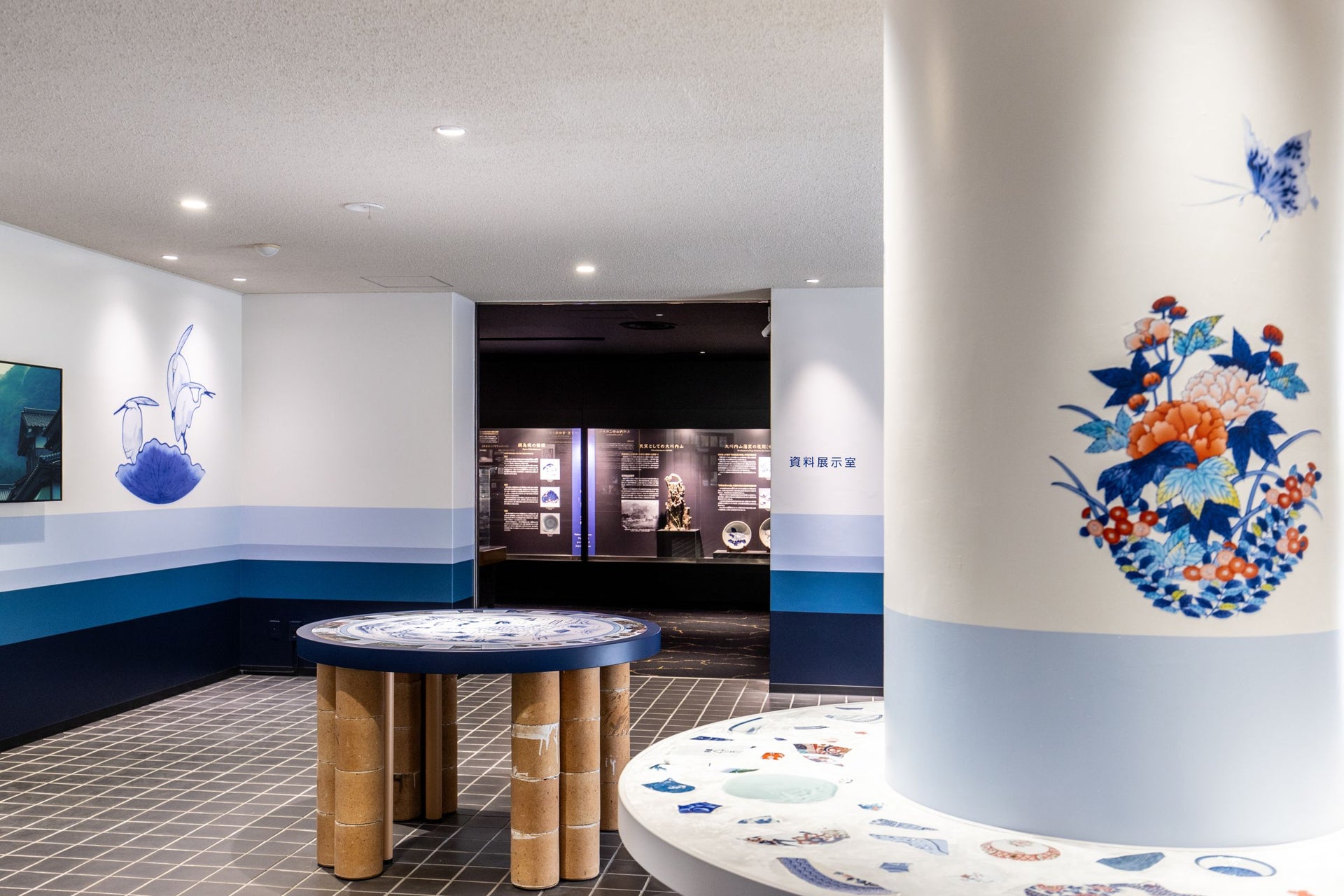
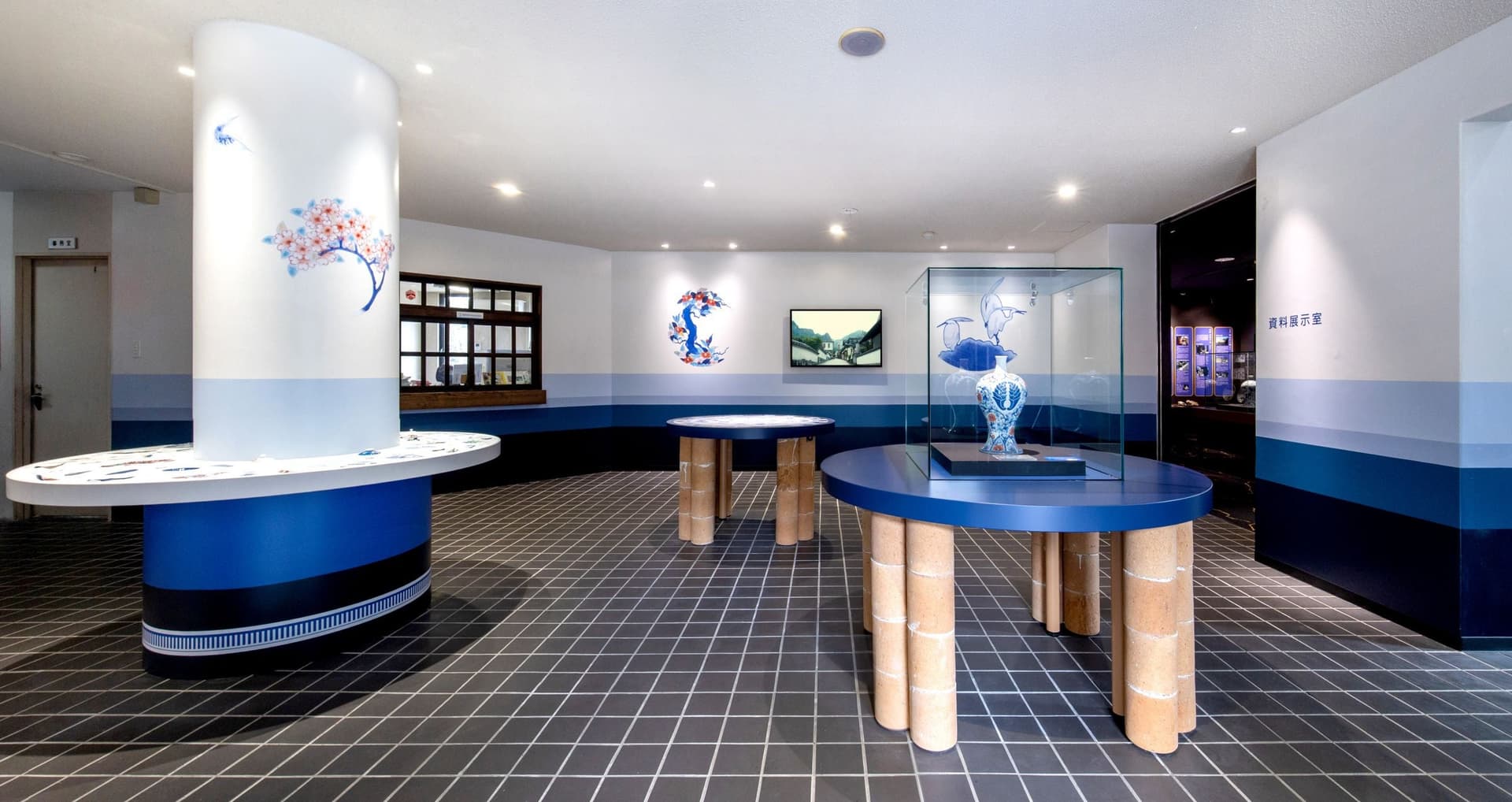
The entrance space at the facility is intended to be a starting point to encourage strolling around Okawauchiyama.
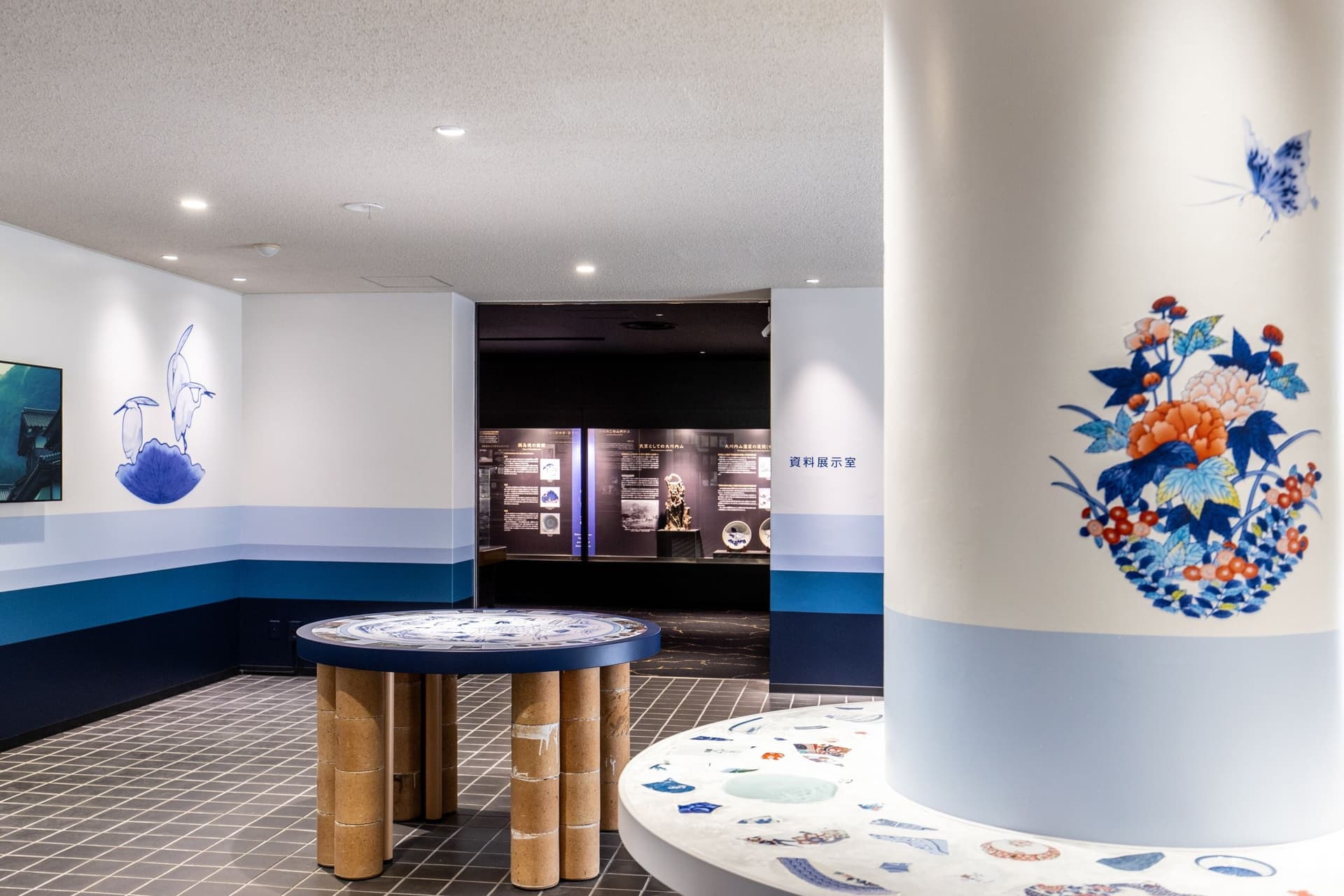
The space is designed to make you feel as if you are immersed in Nabeshima ware, with blue walls that evoke the image of Nabeshima ware and designs commonly used in Nabeshima ware scattered throughout.
The legs of the fixtures are decorated with "boshi," a material used in the pottery production process, and the tabletops are covered with ceramic fragments, so that just by being in the space you can tell that this facility is a pottery production area.
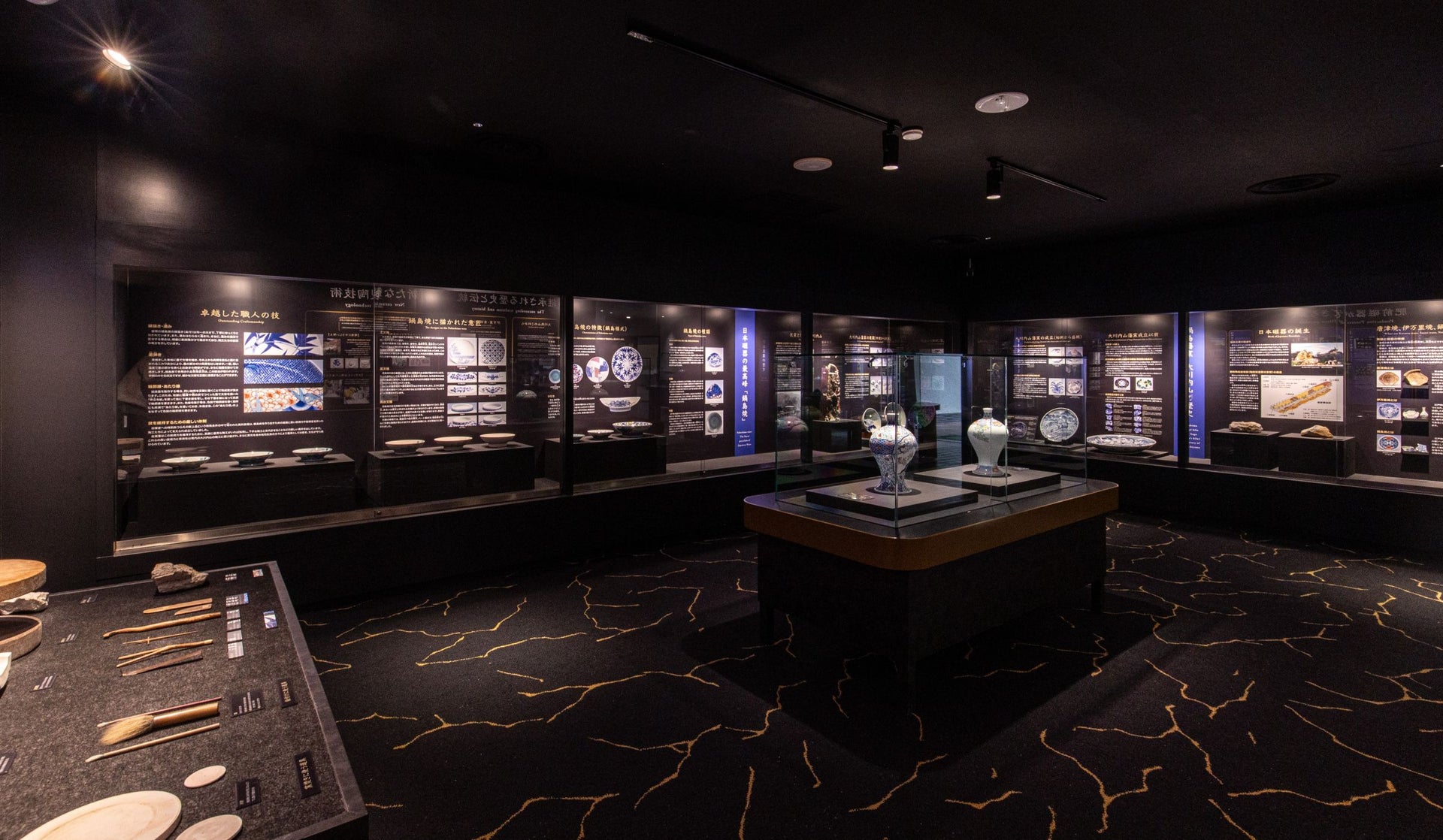
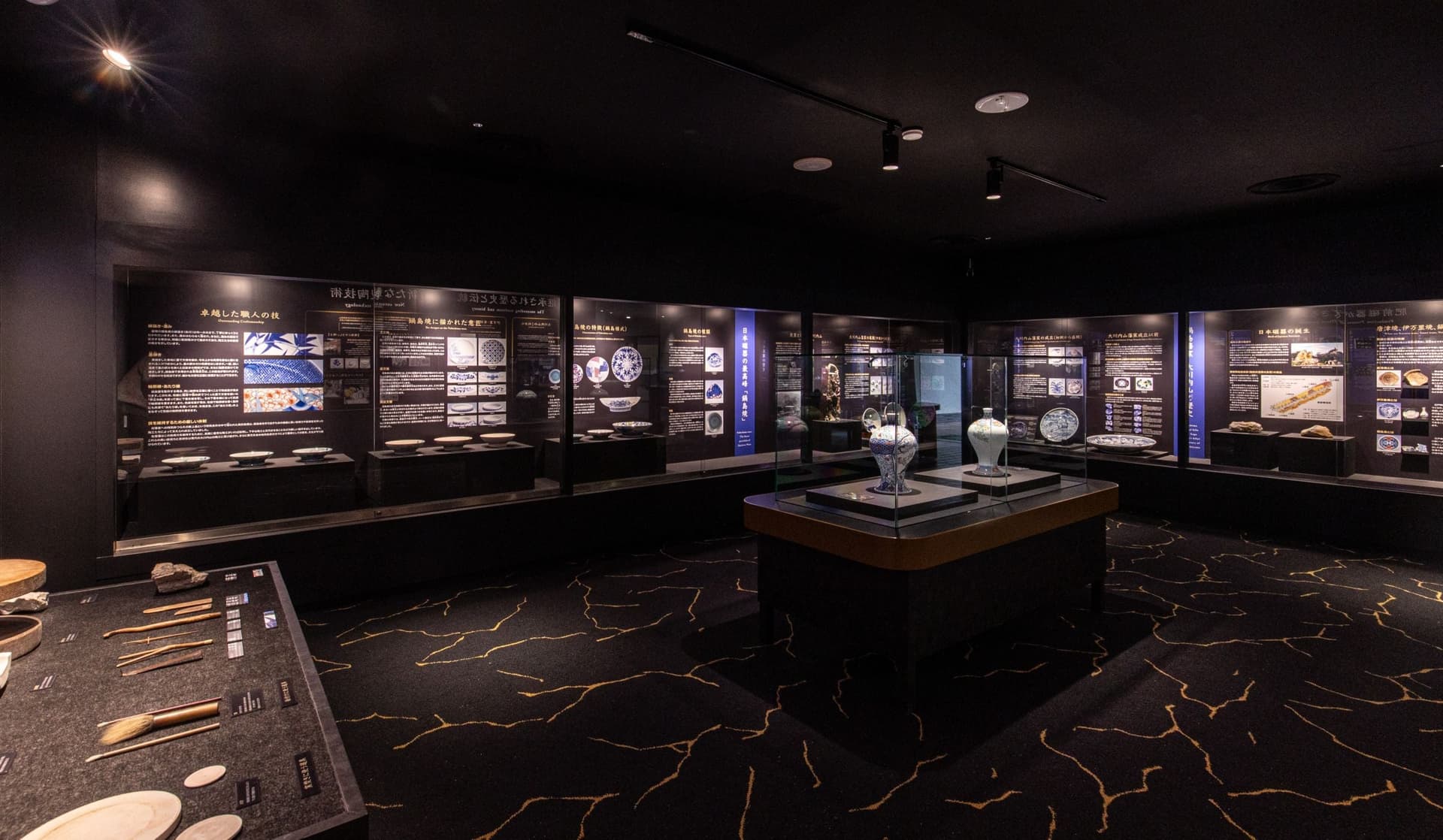
The displays room is designed to deepen understanding of the history and techniques of Nabeshima ware, and has been created to have a calm and tranquil atmosphere.
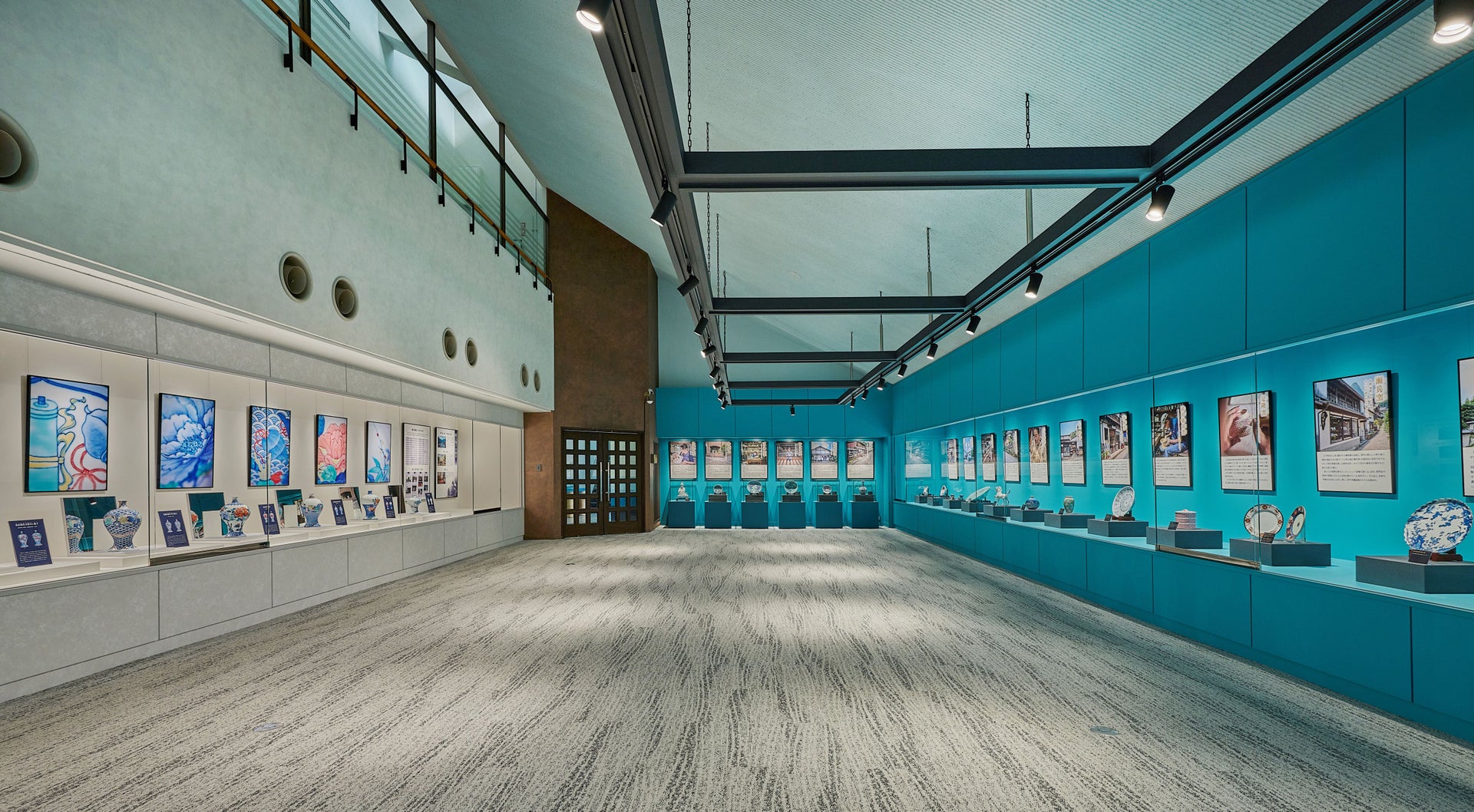
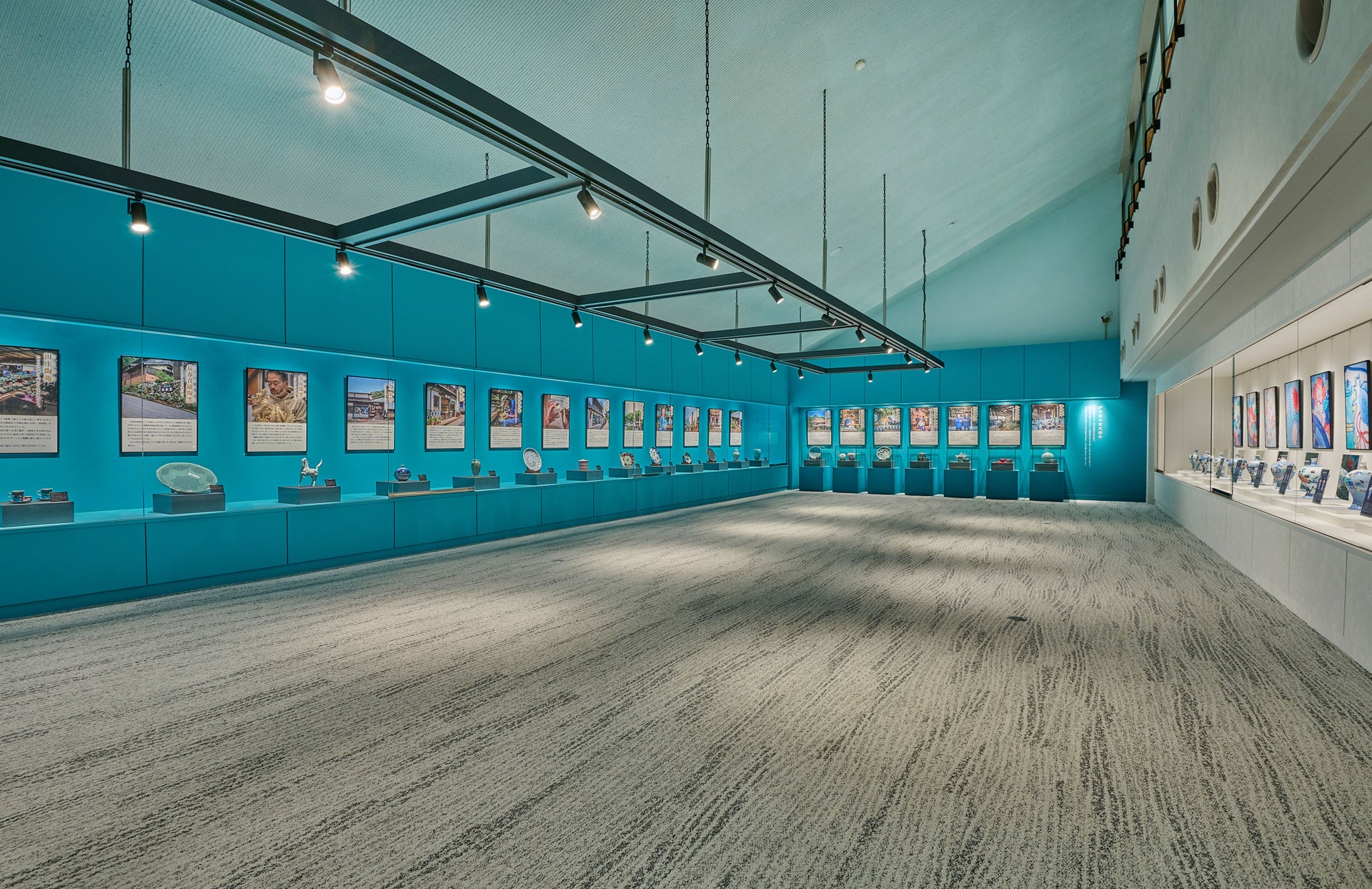
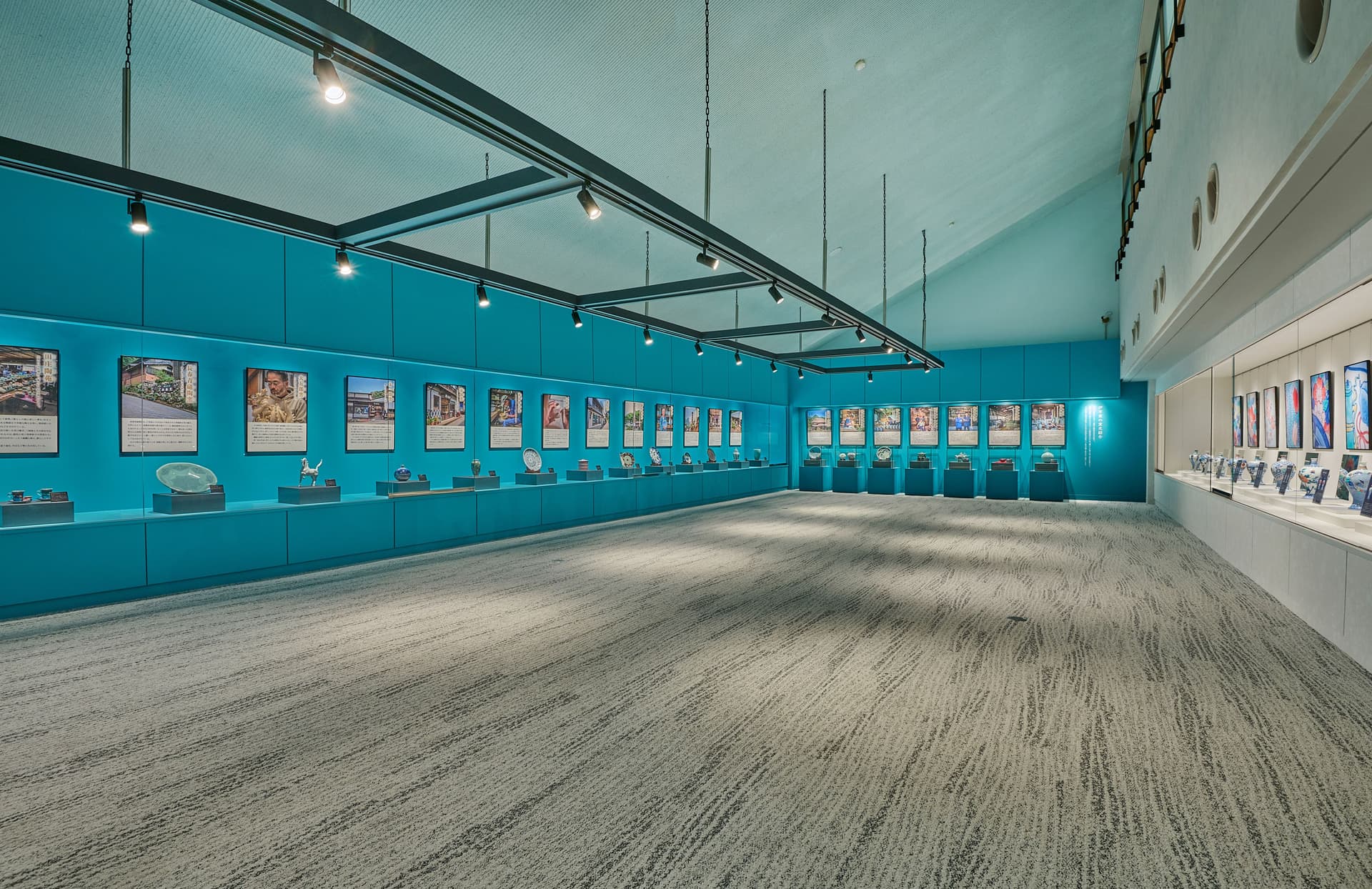
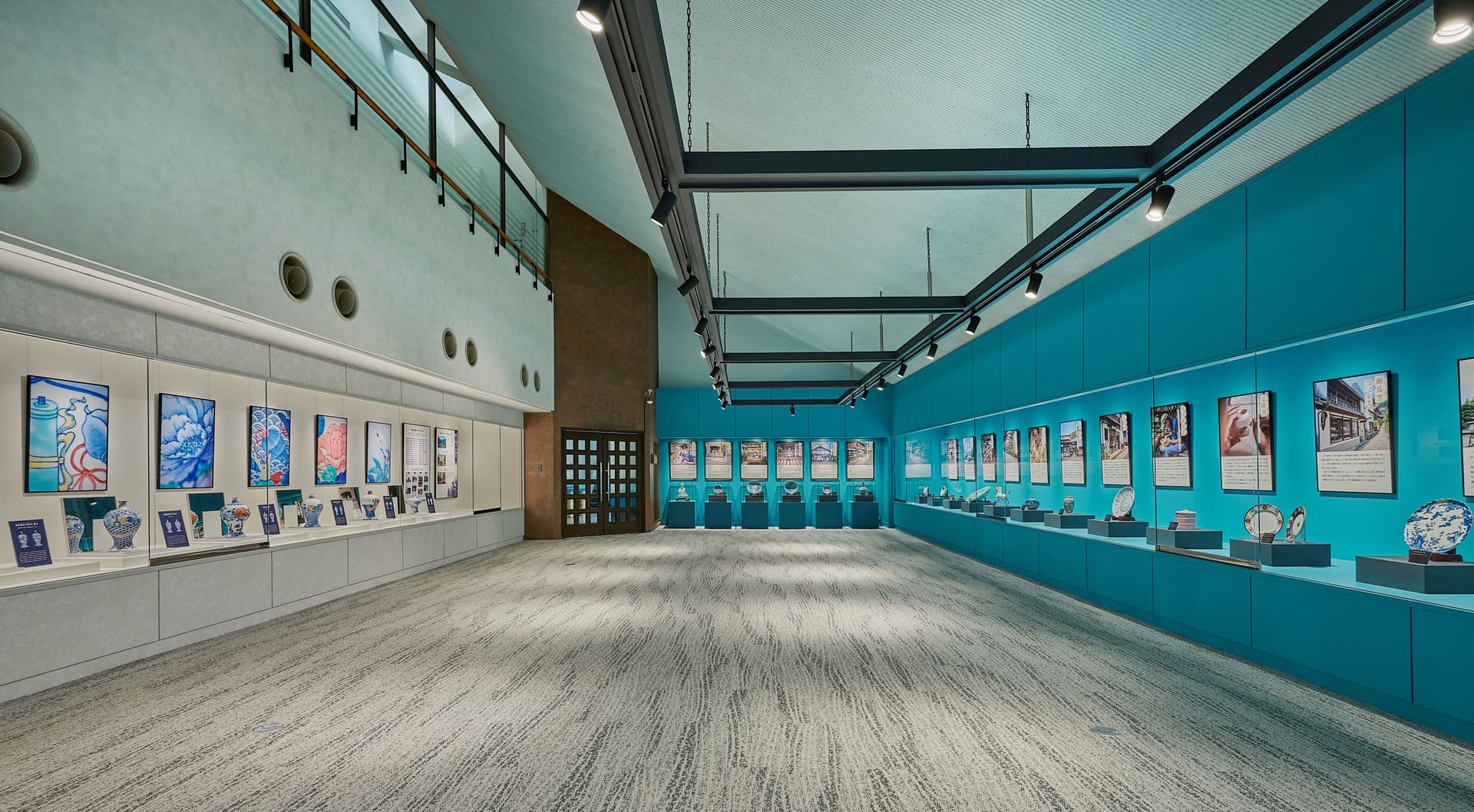
The main displays room focuses on the "present" of Okawachi-yama, and is designed as a space that evokes the natural environment of Okawachi-yama, such as its abundant water and wind, which nurtures the modern pottery studios.
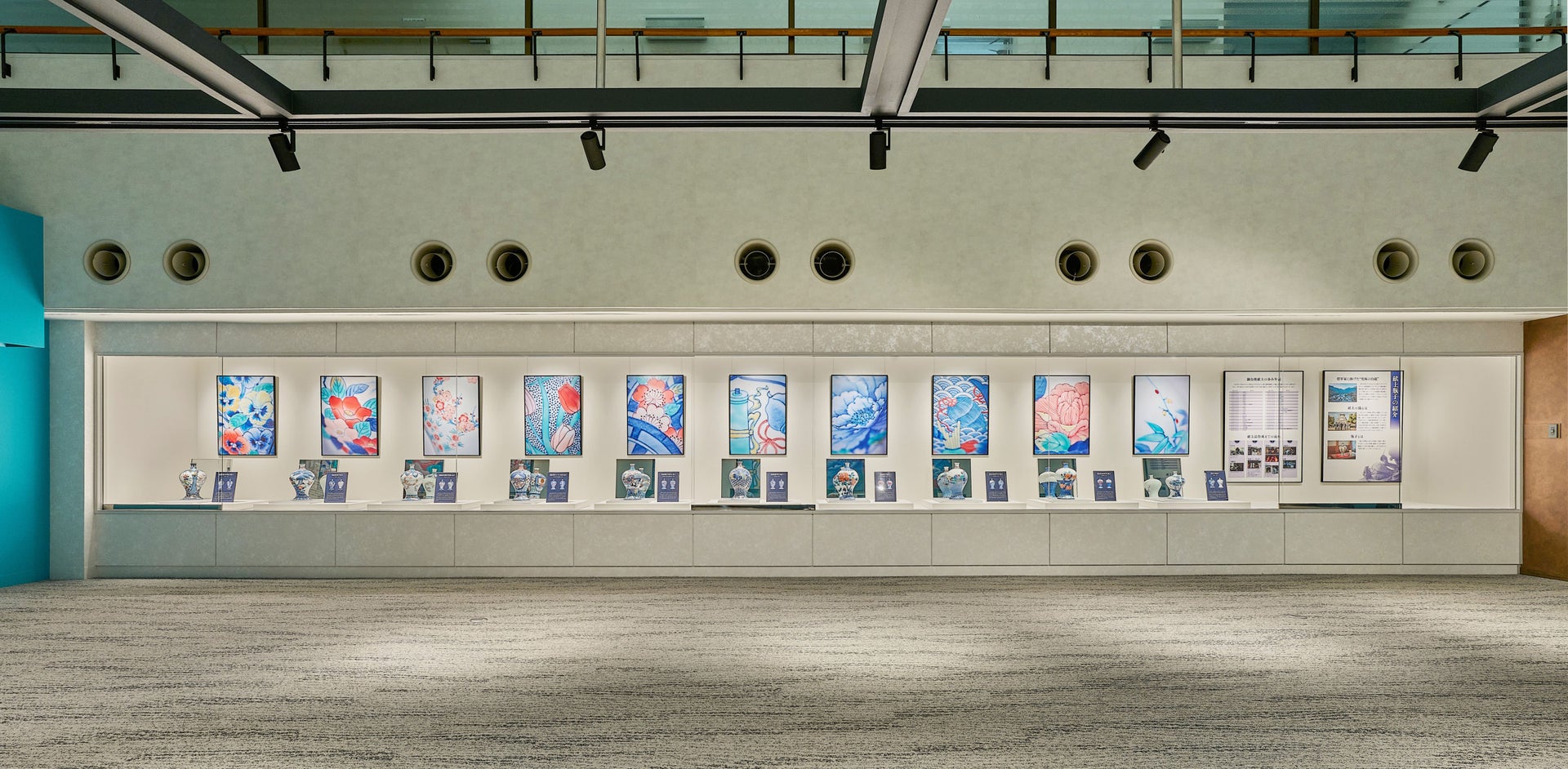
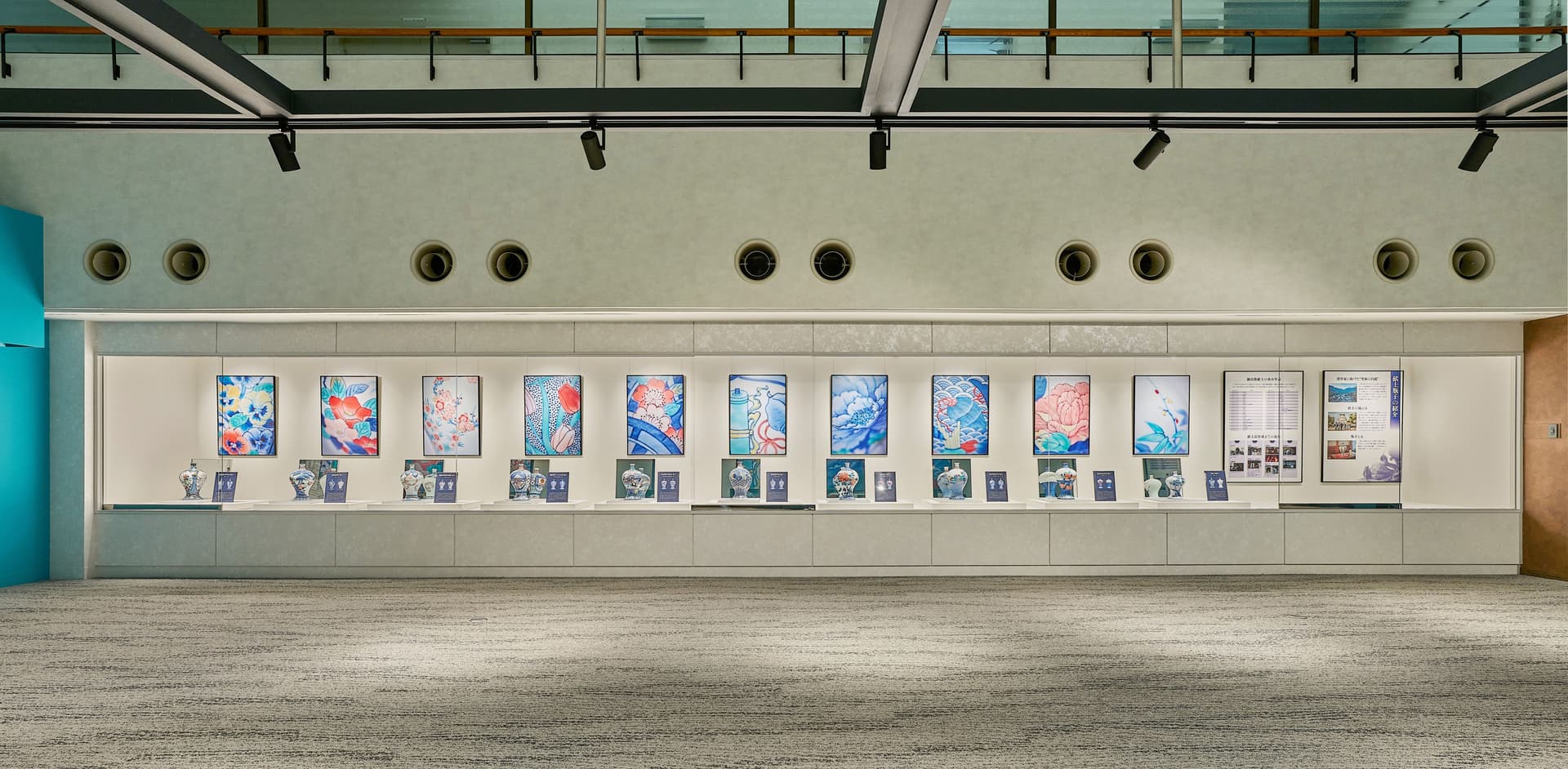
displays consists of two parts: "Introduction to Heishi (Offering Bottles)," which explains how the Edo period's offering ceremony (a ritual in which sake bottles and sake vessels offered to the gods were presented to the shogunate) has been revived in modern times, and "Introduction to Imari Pottery Kilns," which introduces 30 contemporary kilns.
Both exhibits have a simple structure consisting of graphics and displays, but "Introduction to the Presentation Bottles" focuses on the designs tailored to each recipient (each local government or local government where a famous castle is located), and by showing enlarged images of the designs painted on the bottles, visitors can enjoy the intricate and delicate craftsmanship that might not be noticeable to the naked eye, viewing it like a painting.
In "Introduction to Imari Pottery Studios," we actually interviewed and photographed 30 pottery studios. By displays the studios' stories and their works together, we aimed to stimulate visitors' interest in the studios and encourage them to actually visit them.
Customer's voice
We believe the spatial concept design and displays presentation effects of NOMURA Co.,Ltd. Ltd. are as follows:
① Reconstructing History: We were able to organize information on the techniques and history cultivated as a Nabeshima domain kiln and clearly convey the value of the production area (Okawachi-yama) to visitors.
② Added value through concept design: By renovating the sophisticated entrance hall and displays rooms, we were able to transform the space into a modern environment that appeals to younger generations and foreign tourists alike.
③ Strengthening the hub function: We were able to create an environment that enhances the flow of tourism, allowing visitors to gain knowledge at the hall and then tour the surrounding pottery workshops.
④ Establishing a hub for information dissemination: To coincide with the 350th anniversary, we were able to maximize the ability to communicate from the production area by introducing displays are visually appealing on social media and the latest displays technologies.
project member
Basic information
- open
2025
- location
Saga Prefecture
- client
IMARI CITY
- solution
design, layout, signage and graphic concept design, environmental features, interior execution, building execution
What's NewSearch by new achievements
- TOP
- Achievements
- Imari and Arita Pottery Traditional Industry Hall Renewal
Please contact us using the button below if you have an inquiry, want to request a quote or request documents.
We have created a separate “FAQ page” that lists the most common questions we are asked.
Please take a look at this page if you have a question.