
"Nara Prison Museum by Hoshino Resorts" opens on Monday, April 27th | NOMURA Co.,Ltd. is in charge of interiors design, displays design, and construction
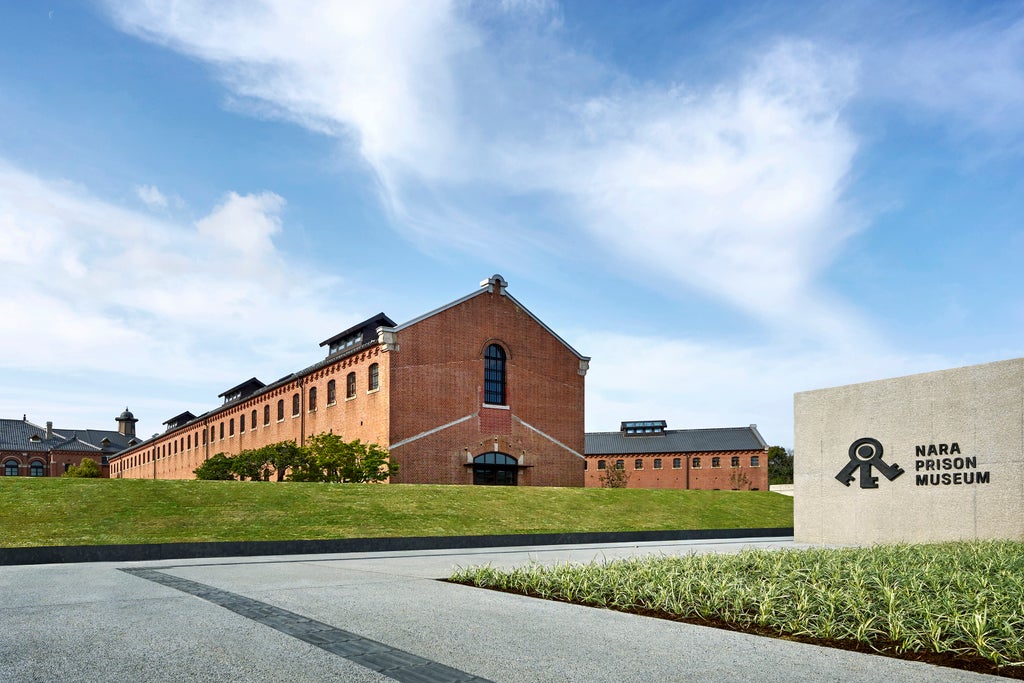
Set in the former Nara Prison, an important cultural property, the question of "freedom" emitted by concept design and art
NOMURA Co.,Ltd. was in charge of the design and construction of the Nara Prison Museum by Hoshino Resorts, which opened on April 27, 2026 (Monday) in Nara City, Nara Prefecture, as part of the preservation and utilization project of displays interiors the Former Nara Prison, an important cultural property. The concept of the museum is "a question from a beautiful prison". The five major prisons of the Meiji era were built as a symbol of Japan's modernization*1. Among them, the only valuable cultural property that has been left in its entirety will be reborn as a new museum.
Together with world-class creators, the Nara Prison Museum will "question" each visitor's outlook on life from essential themes such as "what is freedom?" when we trace the history of executions in Japan and the society of prisons through the unique space of prisons. In addition to learning about the history that has been spun with the red bricks, displays traces the lives of inmates who are limited by rules, and art inspired by the reality of prisons speaks deeply. We will provide a new experience that shakes up the normal daily life.
On the grounds of the former Nara Prison, the Nara Prison Museum and an ancillary hotel business will be developed. In addition to the "preservation area" that retains its original state, such as the third dormitory and the detention center, the museum is divided into three displays buildings and a "displays area" with a café and shop.
*1: Meiji Five Great Prisons: Five prisons completed in the Meiji period. Starting with the former Nara Prison, which began construction in 1901, "Nagasaki Prison", "Kanazawa Prison", "Chiba Prison", and "Kagoshima Prison" were completed one after another
■What is the former Nara Prison?
The former Nara Prison was born in 1908 as a major national project aimed at modernization. The designer is Keijiro Yamashita, who was involved in the construction of many courts and prisons. In 1946, it was renamed "Nara Juvenile Prison" and contributed to the reintegration and rehabilitation of society. Since then, it has been highly regarded for its historical value and beautiful architectural design, and in 2017, it was designated as an important cultural property of the country.
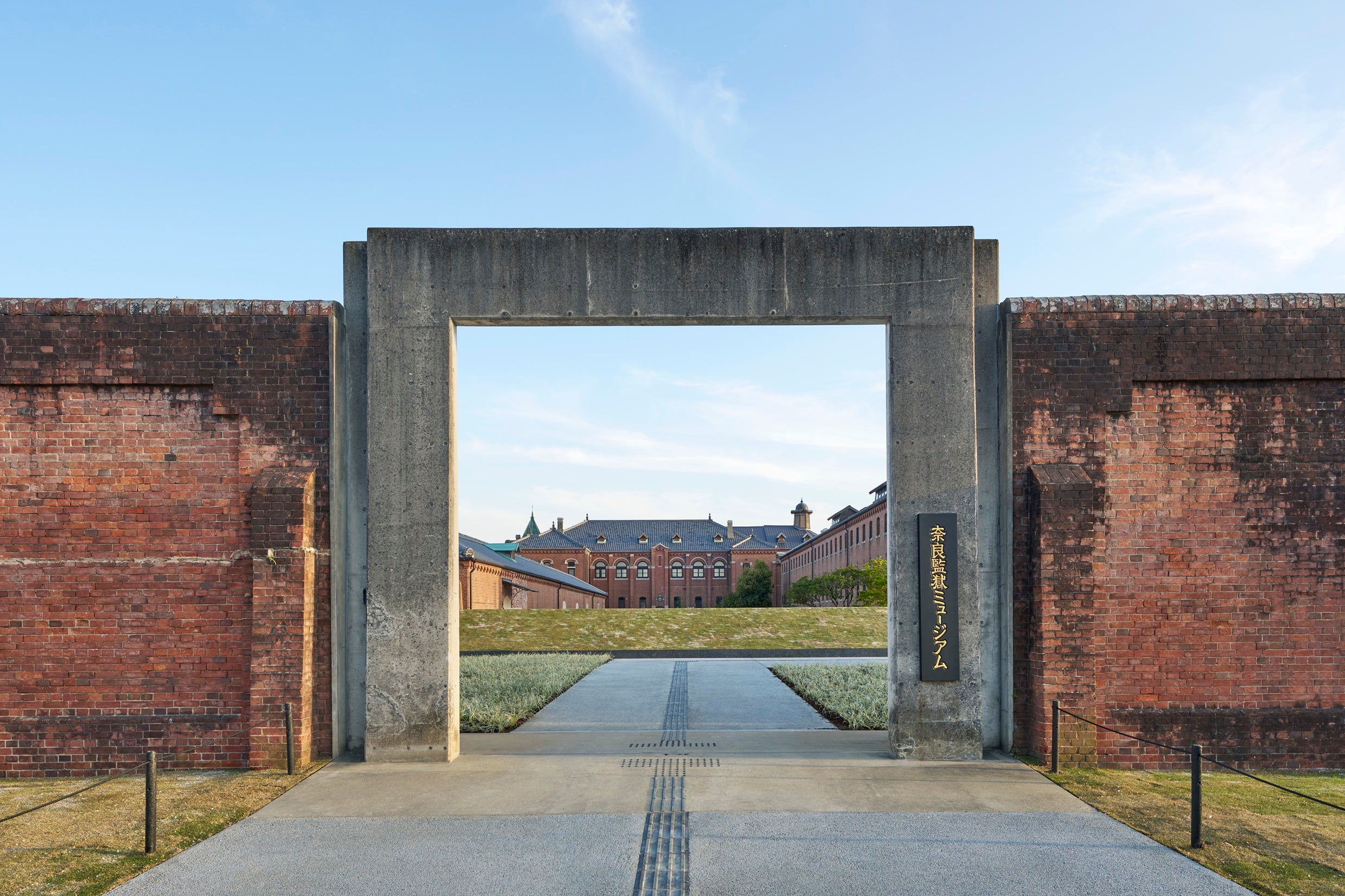
A magnificent prison-style building welcomes you to the museum gate.
Image courtesy of Nara Prison Museum by Hoshino Resorts
■The concept is "Questions from a beautiful prison."
The Nara Prison Museum aims to be a museum that goes beyond historical displays, telling the story of prison through concept design and art, and providing visitors with an opportunity to reflect on their own way of life and values. Confronting the history woven alongside the beautiful red brick architecture, visitors are challenged by the disciplined space and time. They are encouraged to expand their imagination and reconsider the meaning of "freedom" in relation to their daily lives. It is a beautiful prison museum that shakes up the ordinary.
■Four features of the Nara Prison Museum
1. A "Beautiful Prison" where you can trace magnificent architecture and experience the spirit of the Meiji era.
Of the five major prisons designed and built by the Meiji government to modernize prison facilities, the former Nara Prison is the only one that retains its complete structure. The museum showcases the architectural beauty that combines design and functionality from that time, including the "Haviland system" in which cell blocks *2 radiate from the central guardhouse, and the red brick walls laid in the English bond style. The "Third Dormitory," which consists of 96 solitary confinement cells and is designated as a "preservation area," features vaulted ceilings and windows placed high up, allowing natural light to stream in and demonstrating consideration for human rights. The heavy wooden doors with inspection windows and sturdy locks allow visitors to directly experience the atmosphere and remnants of a modern prison.
*2: A general term for rooms such as solitary confinement cells and shared confinement cells.
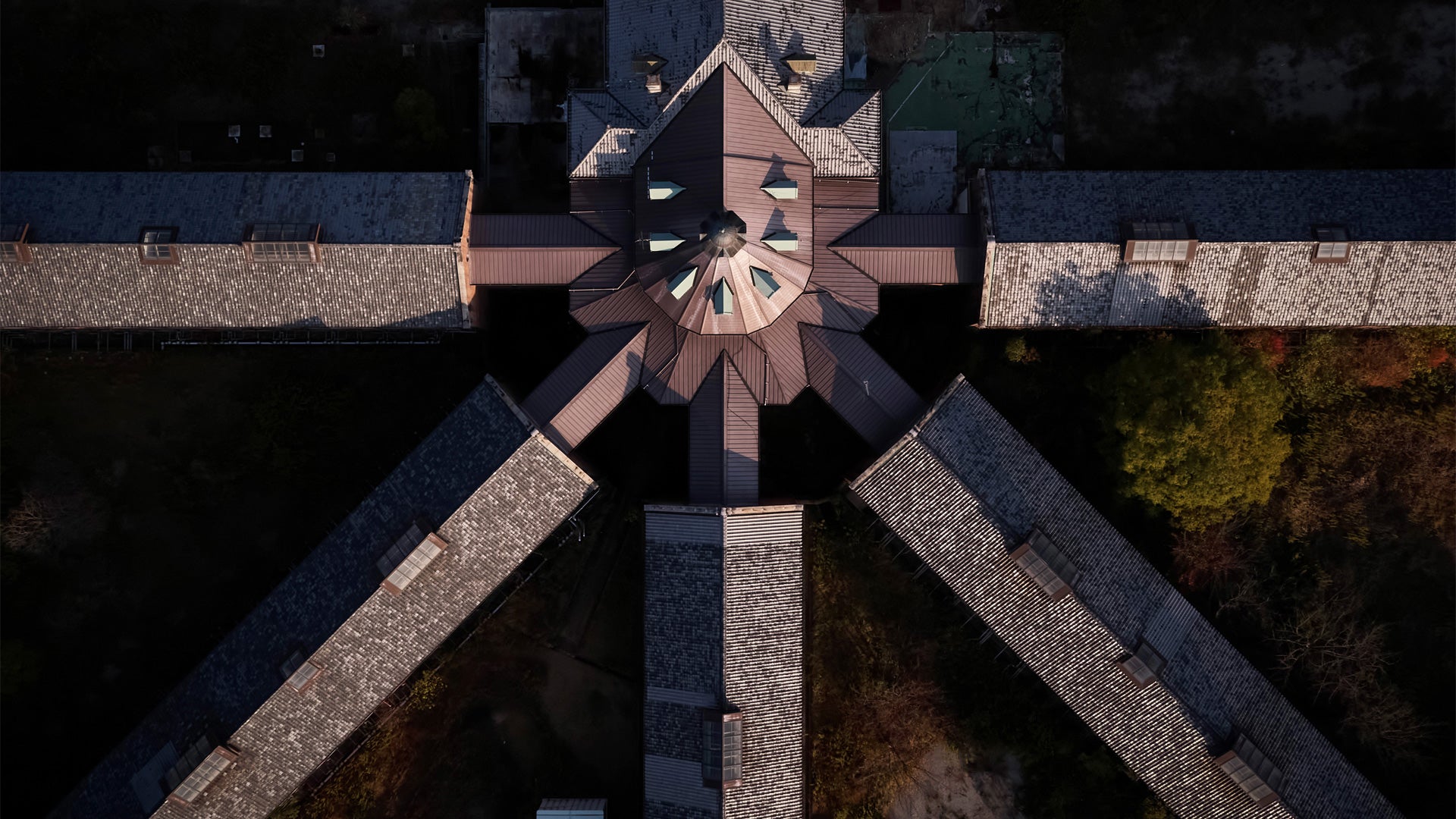
Haviland System
Image courtesy of Nara Prison Museum by Hoshino Resorts
2. displays that prompts questions from diverse perspectives.
displays Area [Building A] "History and Architecture" / Discover the history of penal rites woven by red bricks
Eight displays rooms showcase the history of Nara Prison alongside Japan's administrative system. The Meiji government, with an eye on revising unequal treaties and aiming to be recognized as a rule-of-law state by foreign countries, sought a prison that respected human rights. displays features a 1/420 scale replica model that traces the footsteps of Keijiro Yamashita, the architect who spearheaded this major project, and reveals the structure, including the view from the central guardhouse and the advanced technology of the time. Built with bricks that prioritized fire resistance and durability, Nara Prison was constructed and built by the prisoners themselves under the guidance of craftsmen, with over 150,000 people participating in this massive project in 1906 alone.
During its subsequent era as "Nara Juvenile Prison," it became Japan's first comprehensive training facility, offering not only vocational training but also a correspondence high school program, with inmates referred to as "students." Numerous opportunities for interaction with society were provided, such as the "Wakakusa Barbershop" for local residents and sports exchanges. In Building A, illustrations and photographs displays the work and recreation activities of that time.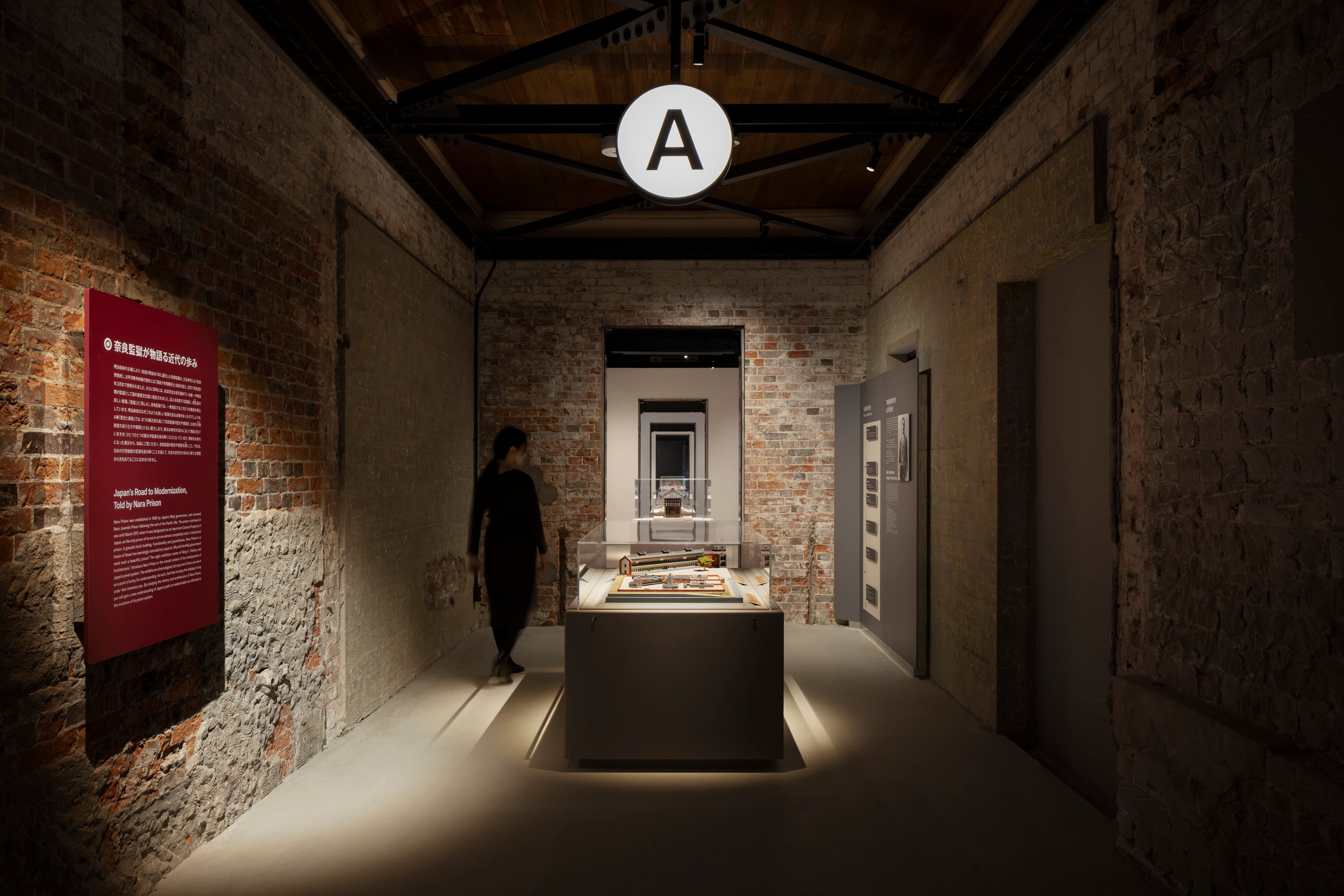
displays Room A-1 Former Nara Prison, an important cultural property
The prologue to Building A. Information about the history of the executions and the building's architectural features is superimposed onto the red brick architectural space, which is imbued with the memories of history.
displays Area [Building B] "Discipline and Life" / Examining "Freedom" through the Daily Lives of Inmates
This exhibition uses concept design to introduce life in the unique environment of a prison, focusing on seven themes: "Discipline," "Food," "Hygiene," "Work," "Rehabilitation," "Money," and "Freedom." "Discipline" displays the strict rules that were in place, from waking up to going to bed and even how to fold one's bedding. "Food" displays menus and tableware that reflect the individuality of prisons across Japan. "Hygiene" graphically illustrates how inmates were required to maintain cleanliness, showing how they cleaned themselves according to prescribed times and methods, such as "How to go to the toilet" and "When is bathing time?" As you trace life in a controlled prison, you will become aware of the minute-by-minute schedules and fixed ideas that bind modern life, and be prompted to ask yourself, "Am I truly free?"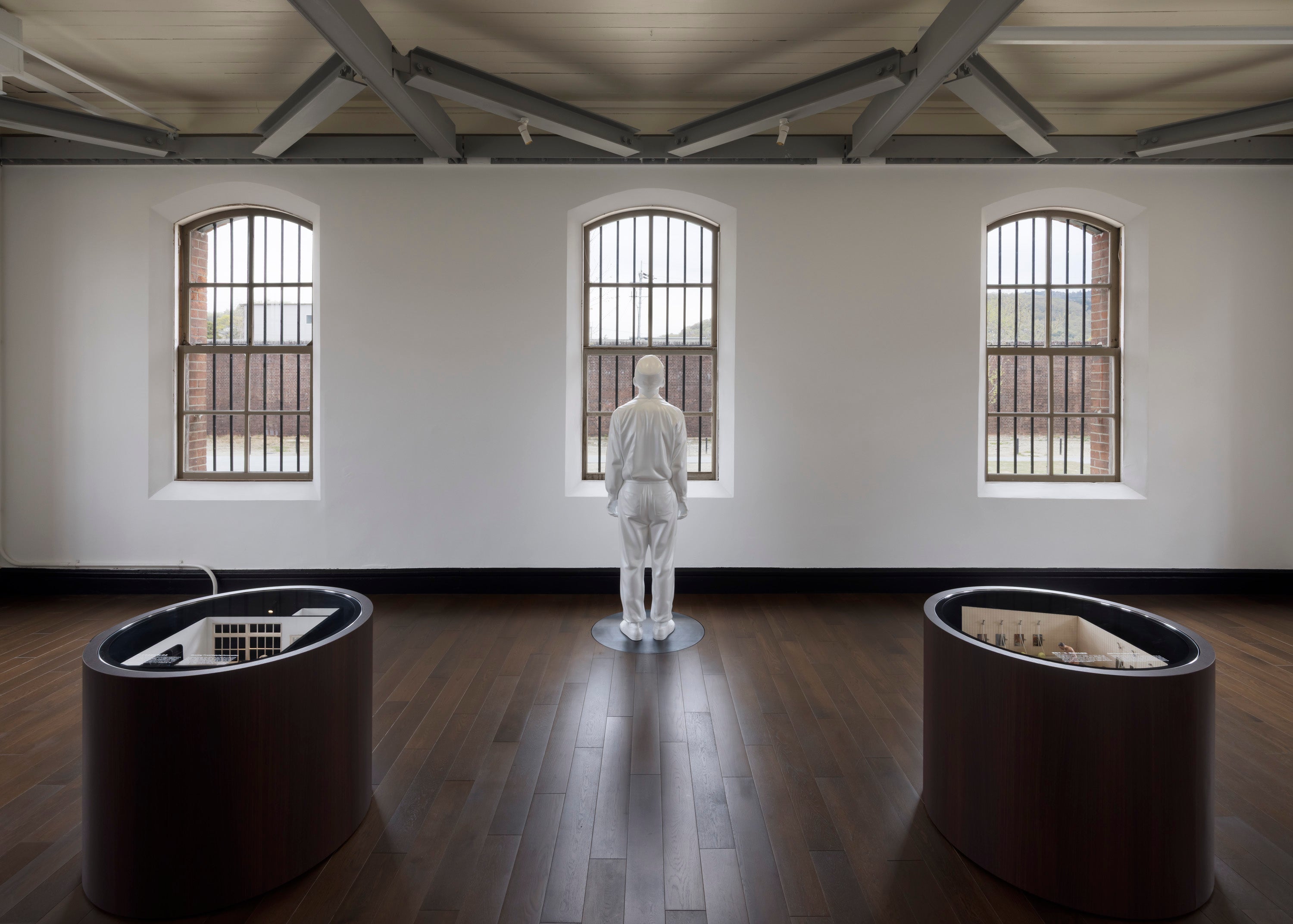
displays Room B-7 Freedom
The epilogue of Building B. In the former prison cells, bathed in soft natural light, we will present displays using techniques such as scene dioramas to provide an opportunity to reconsider the meaning of freedom.
displays Area [Building C] "Prison and Art" / Shaking the senses and updating the ordinary everyday life
In Building C, a renovated former medical office, five artists' works and prison art created by inmates displays under universal themes such as "crime and punishment" and "time and life." By engaging with the sharp questions posed by the art, viewers' sensibilities are stirred, and they are offered an opportunity to update their perspective on everyday life. In addition, in the "Room of Connection," which concludes displays, the "Prison Postcard Project" is being held, where people can send messages to the artists or those close to them.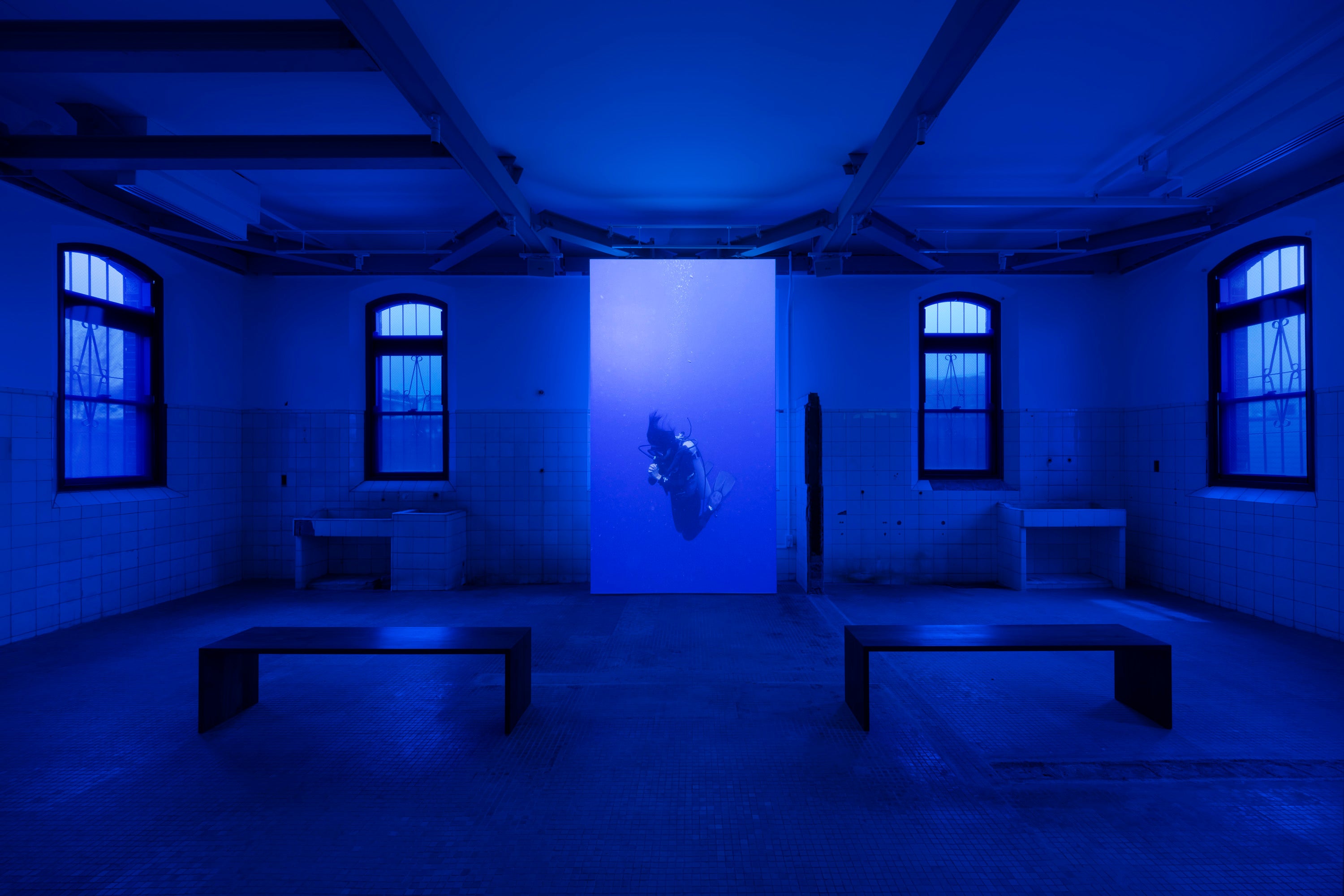
displays Room C-2 Dissolving Prayers into the Sea / Kyun-Chome
Natural light filtering through the filter bathes the former infirmary in a blue glow, expressing the artwork's concept throughout the entire space.
3. Savor the lingering memories at the museum cafe & shop
Brick-shaped curry bread
The museum cafe recommends the curry bread, which is shaped like a red brick, and the local soda. The curry, which reflects the Western food culture of the Meiji era, was a popular menu item during the time it was in a juvenile detention center. You can spend time reflecting while gazing at the sky and gardens that stretch out beyond the red brick buildings.
*The museum shop and cafe are only accessible to museum visitors.
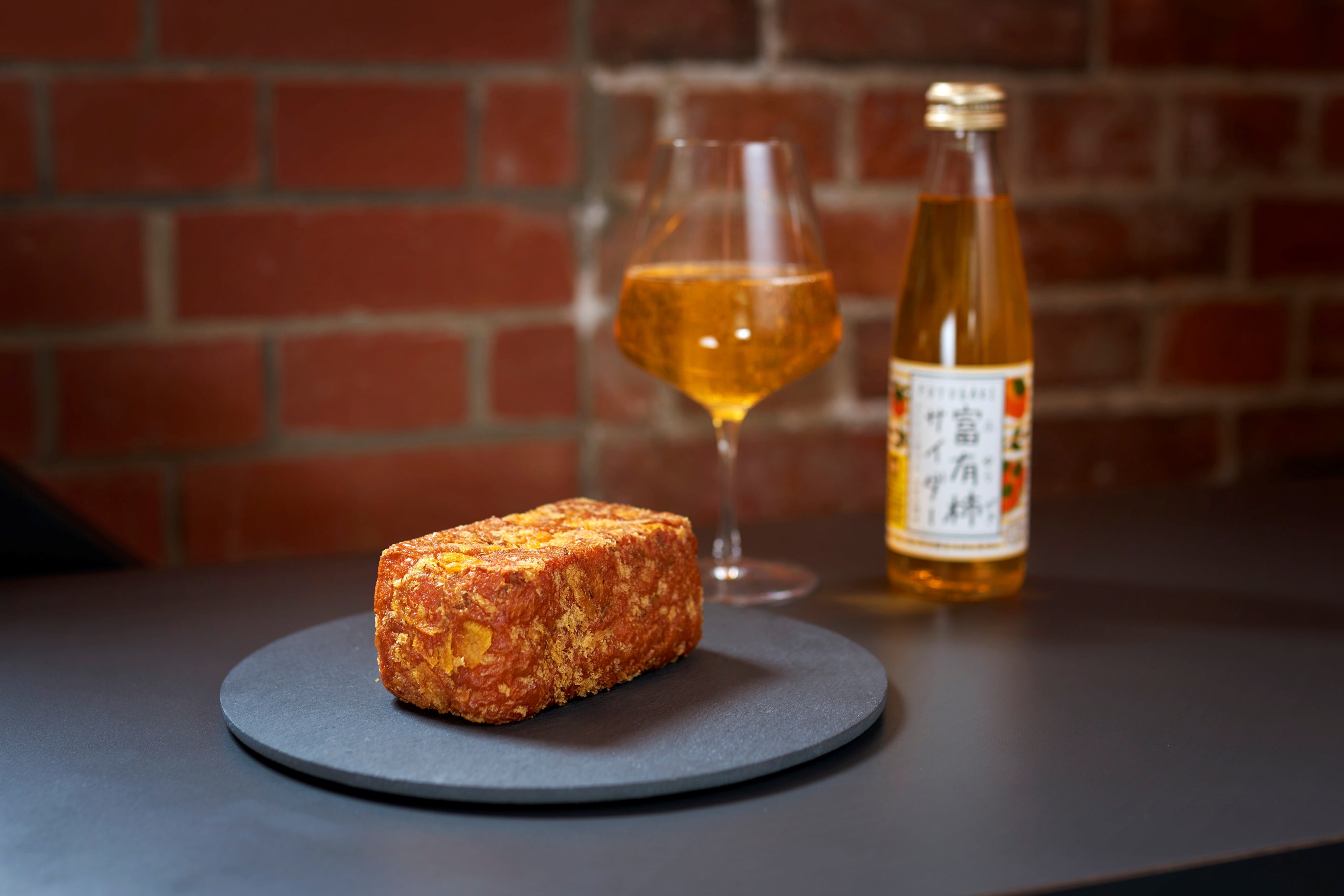
Image courtesy of Nara Prison Museum by Hoshino Resorts
Museum Shop
The shop offers a wide selection of original items, including postcards,雑貨 (miscellaneous goods), and apparel, all showcasing architectural beauty. It also features a gallery featuring products made by prison workers across Japan. These exceptional items, carefully selected by art director Taku Sato from a concept design perspective, are available for purchase.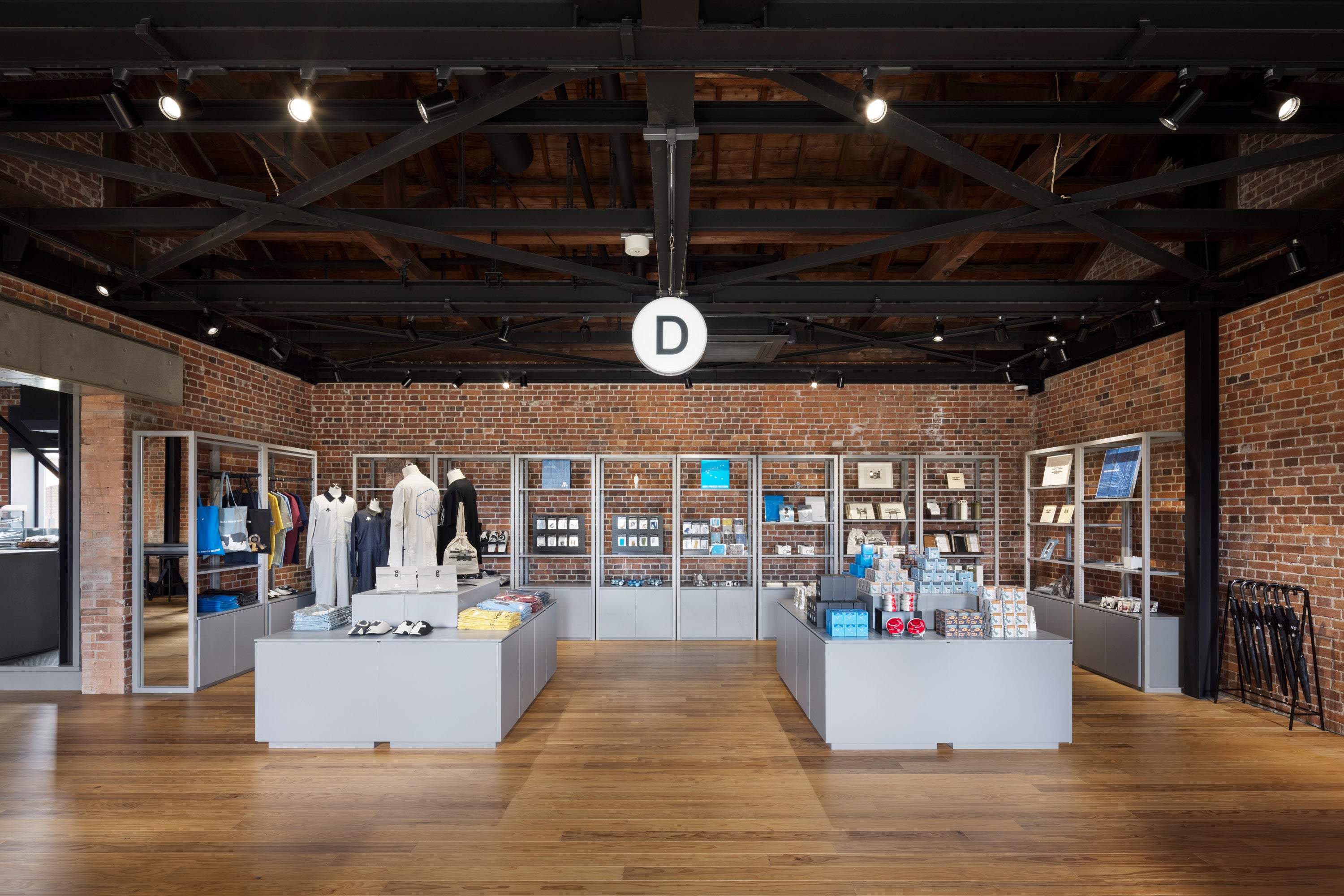
4. Conception and concept design by a world-class team of creators
The Nara Prison Museum is Hoshino Resorts' first museum project. To delve deeply into the unique theme of a prison, world-renowned creators were brought in to participate.
Supervising Creator
■Art Director:
Taku Sato / TSDO
Graduated from the Department of concept design at Tokyo University of the Arts and completed graduate studies at the same university. Works primarily on corporate identity (CI) for companies such as "Lotte Xylitol Gum" and "Meiji Delicious Milk." Served as the overall director for NHK E-TV's "concept design Ah." Recipient of numerous awards, including the Mainichi concept design Award, the Minister of Education, Culture, Sports, Science and Technology Award for Artistic Excellence, and the Purple Ribbon Medal.
■Museography Supervisor:
Adrien Gardère
He has designed permanent displays for more than 13 museums around the world, including the Aga Khan Museum in Toronto (designed by Fumihiko Maki), the Louvre-Lens Museum (designed by SANAA), and the Royal Academy in London (designed by concept design Chipperfield).
Spatial concept design
nora is concept design team of NOMURA Co.,Ltd., focusing on displays and brand experiences. While specializing in creating experiences and spaces conceived from displays ideas, we participate in projects across a wide range of fields.
We integrate information concept design and interior concept design, pursuing the creation of essential experiential value that goes beyond mere tangible form.
Recipient of numerous awards, including the "Japan Spatial concept design Award 2025" KUKAN OF THE YEAR and the "Display Industry Award 2019" Grand Prize.
Official Instagram: @nora_design_official
https://www.instagram.com/nora_design_official
Source of information: PRTIMES Nara Prison Museum press release
https://prtimes.jp/main/html/rd/p/000002171.000033064.html
Related information
| Name of facility | Nara Prison Museum by Hoshino Resorts | ||||||||||||||||||
|---|---|---|---|---|---|---|---|---|---|---|---|---|---|---|---|---|---|---|---|
| opening day | Monday, April 27, 2026 | ||||||||||||||||||
| location | 18 Hannyaji-cho, Nara City, Nara Prefecture | ||||||||||||||||||
| business hours | 9:00 AM - 5:00 PM (Last entry 4:00 PM) | ||||||||||||||||||
| Regular holiday | None. *In case of closures for maintenance, etc., we will announce it on the website. | ||||||||||||||||||
| Fee | Adults: 3,500 yen for those residing overseas, 2,500 yen for those residing in Japan, and 2,000 yen for those residing in Nara Prefecture. | ||||||||||||||||||
| Access | Take the direct bus and get off at "Nara Prison Museum" bus stop, then it's a 1-minute walk. | ||||||||||||||||||
| Official website | |||||||||||||||||||
| Ticket sales | |||||||||||||||||||
| Architectural information/Responsible area | Architectural information
|
※please note
The linked website is not the website of NOMURA Co.,Ltd., and is not under our control.
・The address of the website posted in this notice is the one at the time of creation of this page. Website addresses are subject to obsolescence or change. Please check yourself for the latest address.
・Please check with the linked organization/organization regarding the linked website.
Please contact us using the button below if you have an inquiry, want to request a quote or request documents.
We have created a separate “FAQ page” that lists the most common questions we are asked.
Please take a look at this page if you have a question.