
"Takekoma no Mori CAFÉ Ichirimanbai" at Takekoma Shrine, one of Japan's three great Inari shrines, will open on December 26th | A place to create excitement for the local community in Iwanuma City, Miyagi Prefecture
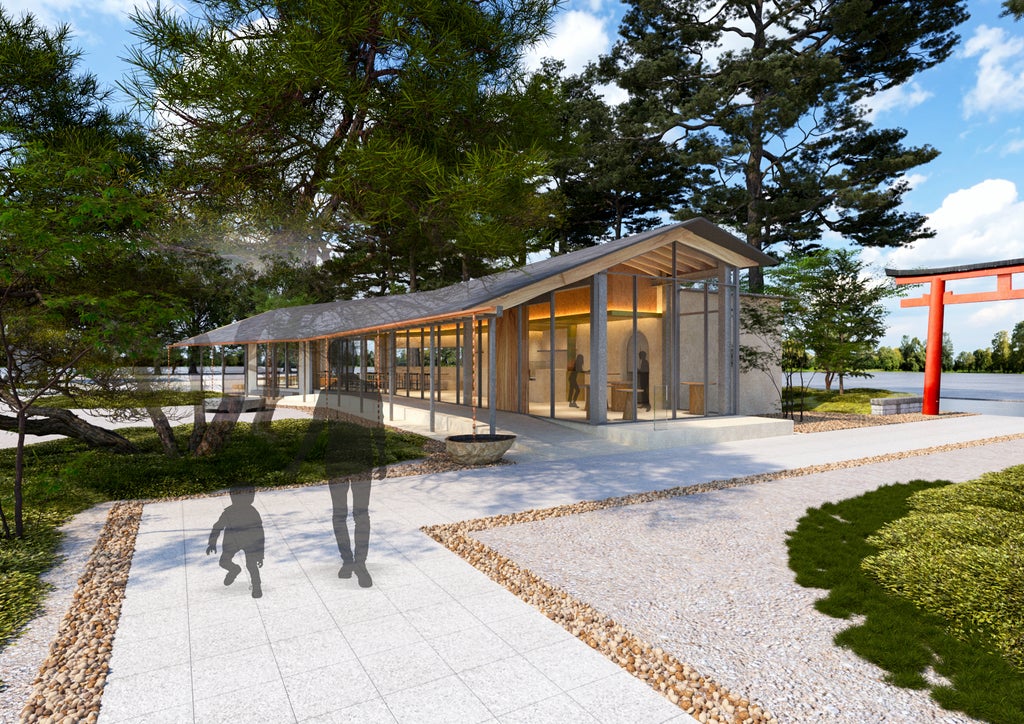
NOMURA Co.,Ltd. is responsible for overall production, including planning, product development, and architectural, interiors, and landscape concept design.
Takekoma Shrine (a religious corporation) in Iwanuma, Miyagi Prefecture, one of the three great Inari shrines in Japan, is launching a new initiative called the "Takekoma no Mori Project" to build a local community and generate more activity. As the first phase, "Takekoma no Mori CAFÉ Hitobabai," a cafe attached to a rest area within the shrine grounds, will open on December 26, 2024 (Ichibanamanbai Day).
Phase 1 covers approximately 1,500 square meters and focuses on creating a safe and comfortable space for everyone at "Takekoma no Mori CAFÈ Ichiryu Manbai," as well as developing the sacred grove of "Takekoma no Mori" to enhance its seasonal beauty. In the future, Phase 2 is planned to open an event plaza, fostering community by establishing events that connect with the local area, such as seasonal shrine events and projects involving local residents. Promotions targeting younger generations via social media and inbound tourism will also be implemented. NOMURA Co.,Ltd., Ltd. is responsible for overall production, including planning, support for opening the café within the rest area, menu and product development, and architectural, interiors, and landscape concept design.
Takekoma Shrine faced challenges such as the weakening of local community ties and an aging and decreasing frequency of visits among worshippers, triggered by the spread of COVID-19. NOMURA Co.,Ltd. participated from the conceptual stage, and for two and a half years, together with shrine officials, reconsidered the significance of Takekoma Shrine and explored new ideas through community collaboration and marketing. Moving forward, they will gradually advance an activity plan that utilizes the entire shrine grounds, aiming to ensure that Takekoma Shrine becomes an indispensable part of the lives and lifestyles of citizens, sustainably continuing its history of over 1180 years.
NOMURA Co.,Ltd., in collaboration with shrines and local businesses, will use this project to propose solutions to local issues through creativity and to suggest to society the future role of shrines.
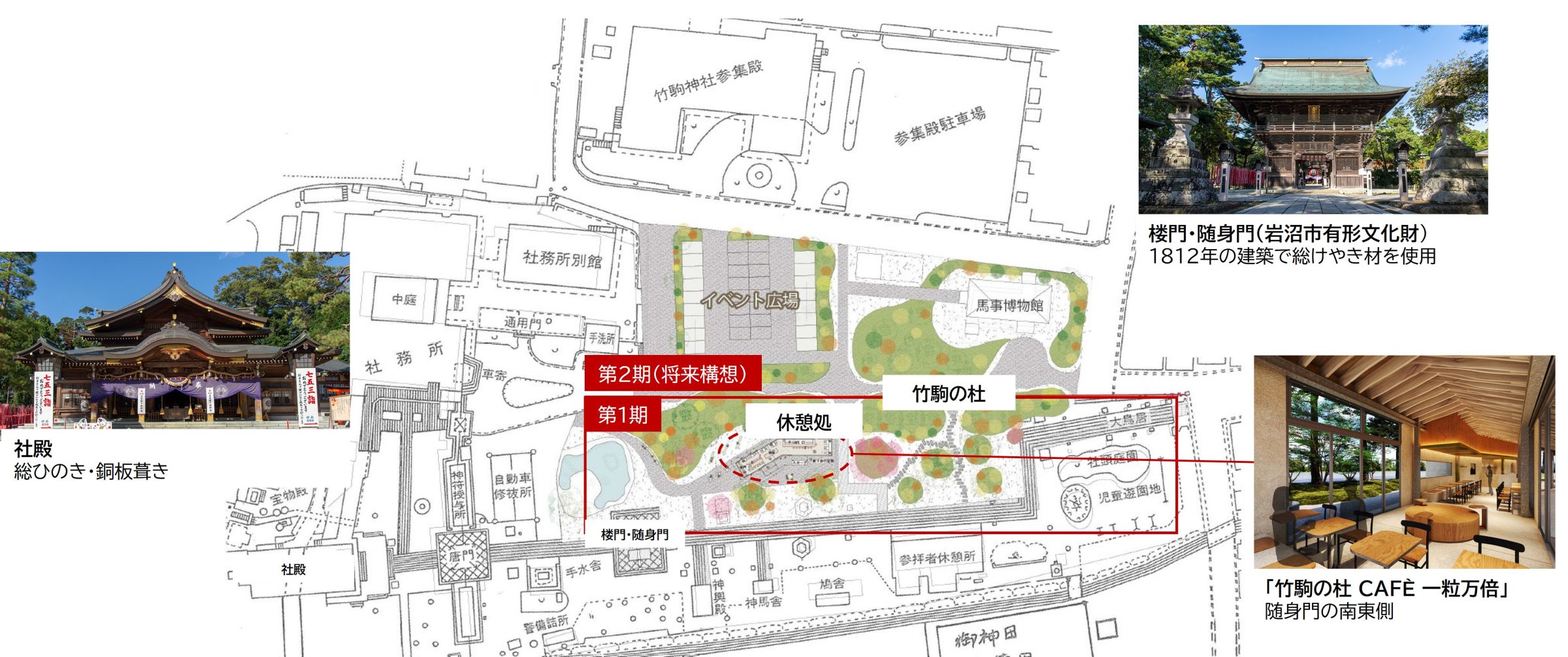
Overall layout of the Takekoma Shrine grounds and the Takekoma Forest Project
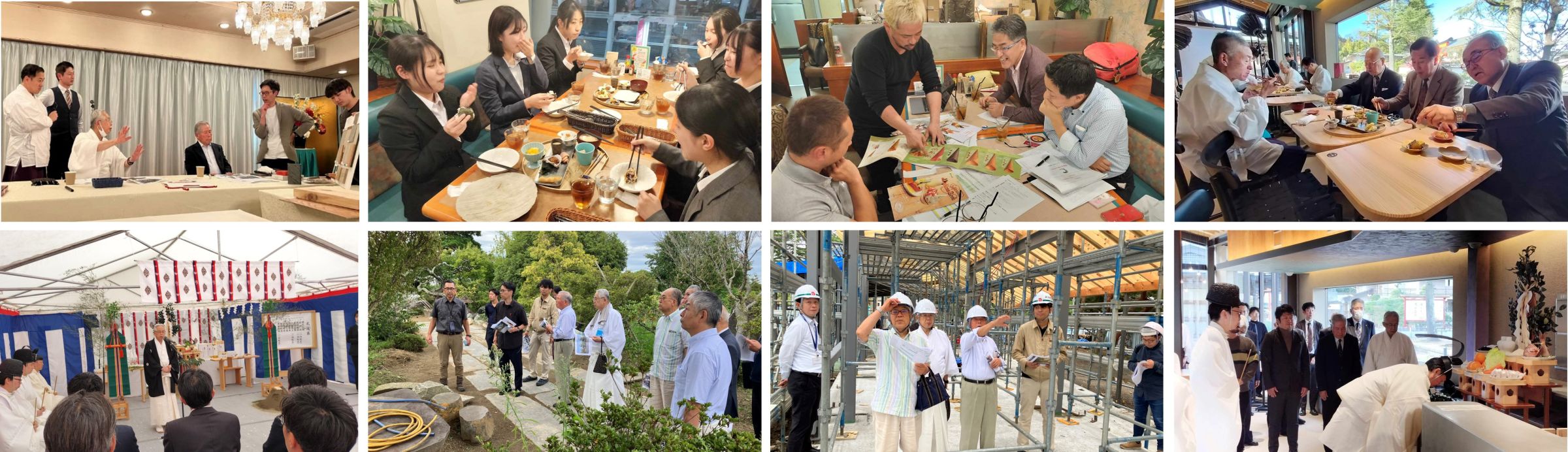
"Takekoma no Mori CAFÉ Hitotsubu Manbai" Partner companies and their roles

Overview of the preview event for "Takekoma no Mori CAFÉ Hitotsubu Manbai"
Date and time: Thursday, December 26, 2024 *Hitotsubumanbai Day 9:30am (Registration opens at 9am)
Location: The grounds of Takekoma Shrine, one of the three Inari shrines in Japan "Takekoma Forest CAFÉ Ichiri Manbai" (1-1 Inaricho, Iwanuma City, Miyagi Prefecture)
Ceremony
■Opening Ceremony: 9:30-10:30 (60 minutes)
・Greetings from the Chief Priest
・Greetings from the President of Tregion
・Explanation of the Takekoma no Mori Project and the thoughts behind "Takekoma no Mori CAFÉ Ichiribu Manbai"
・ Ribbon cutting ceremony
・Gagaku performance (shrine maiden dance)
■Mass media briefing: 10:30-11:30 (60 minutes)
・Tour and tasting session
Q&A session
Speakers:
Takekoma Shrine, one of Japan's three major Inari shrines, Chief Priest: Murata
Kei Yoshida, Representative of Tregion, operator of "Takekoma no Mori CAFÈ Ichiryu Manbai" / Kenichi Sakazume, General Producer NOMURA Co.,Ltd. / Kensaku Shiroto, Creative Director, NOMURA Co.,Ltd. Kogeisha
For inquiries regarding the preview, please contact: Religious Corporation Takekoma Shrine, Shintaro Muraoka and Kiho Hirazawa (0223-22-2101)
About rest areas
Considering the current issues and local needs, we thought that the existence of a community and a cafe would be an opportunity to encourage people to visit the shrine. Takekoma Shrine is home to three deities associated with business prosperity, bountiful harvests, and matchmaking. In keeping with this, we planned to create a lively atmosphere, food and drink experiences, and community collaboration through products and events. An auspicious rest area with a cafe attached was born, an experience that can only be found at Takekoma Shrine.
The overall production of the rest area is handled NOMURA Co.,Ltd., which also handled the spatial design of the Kanda Myojin Cultural Exchange Center "EDOCCO" in Tokyo. Menu development is by "nacrée," a leading Michelin-starred restaurant in Sendai, and operation is handled by "Tregion," which develops food and beverage, event, and coffee businesses mainly in the Tohoku region.

About brand concept design
About the name
We named the cafe "Takekoma no Mori CAFÉ Hitobori Manbai" after the god of rice cultivation and bountiful harvests, who is the deity enshrined at Takekoma Shrine, and we hope that by developing the shrine forest and enriching the approach to the shrine, people will be able to feel the changing seasons. In addition to bringing good luck, we hope that the good deeds of each individual will revitalize the local area and become a force for building a bright future. We sincerely hope that this rest area will not only be a place of healing, but also become a part of the local community.
About logo concept design
The design combines the essence of Takekoma Shrine, which enshrines the god of abundant harvests, with the initial "C" of the words "Community," "Café," and "Celebration," which represent the building's main functions and roles, expressing its role as a core of the community and a new hub for communication.

About the Takekoma Project
Project starts in Spring 2022
To commemorate the 1180th anniversary of its founding, the "Takekoma Project" was launched as a commemorative initiative to reconsider the significance of Takekoma Shrine's existence and realize regional revitalization with new ideas. NOMURA Co.,Ltd., Ltd., which has a proven track record in shrine revitalization, joined the project, and the project team, consisting of the shrine, the local community, and the company, worked together as a unified force for two and a half years from conception to completion.
Multigenerational and cross-industry project members
Since the goal was to revitalize the area and build a community, opinions from multiple generations were necessary. For this reason, the project involved approximately 100 members in their 20s to 80s, and more than 50 meetings were held, including regular meetings, tasting sessions, and tree planting information sessions, as well as more than 10,000 digital chat sessions, during which opinions were exchanged lively.
The project team also served as a forum for multigenerational and local interaction, allowing participants to take local issues personally and deepen mutual understanding, allowing them to utilize diverse ideas and know-how from different industries in the cafe menu at the lounge and in event planning.
An auspicious dining experience with an original menu
The menu was developed in collaboration with Chef Minoru Ogata, a one-star Michelin chef. Food items such as the "Takekoma Inari Shrine Visit Meal" and "Rice Ball Matchmaking Meal" use ingredients from the Tohoku region. The restaurant offers Japanese sweets that combine impressive appearance with deliciousness, such as the "Ichiri Manbai Parfait," "Oyasu Walnut Monaka," and "Red and White Soft Serve Ice Cream," as well as the "Ichiri Manbai Inari Sushi," "Takekoma Blend," and "Okitsunesama Cookies in the Happiness Can, Friendship Can, and Love Can," which are perfect as souvenirs.
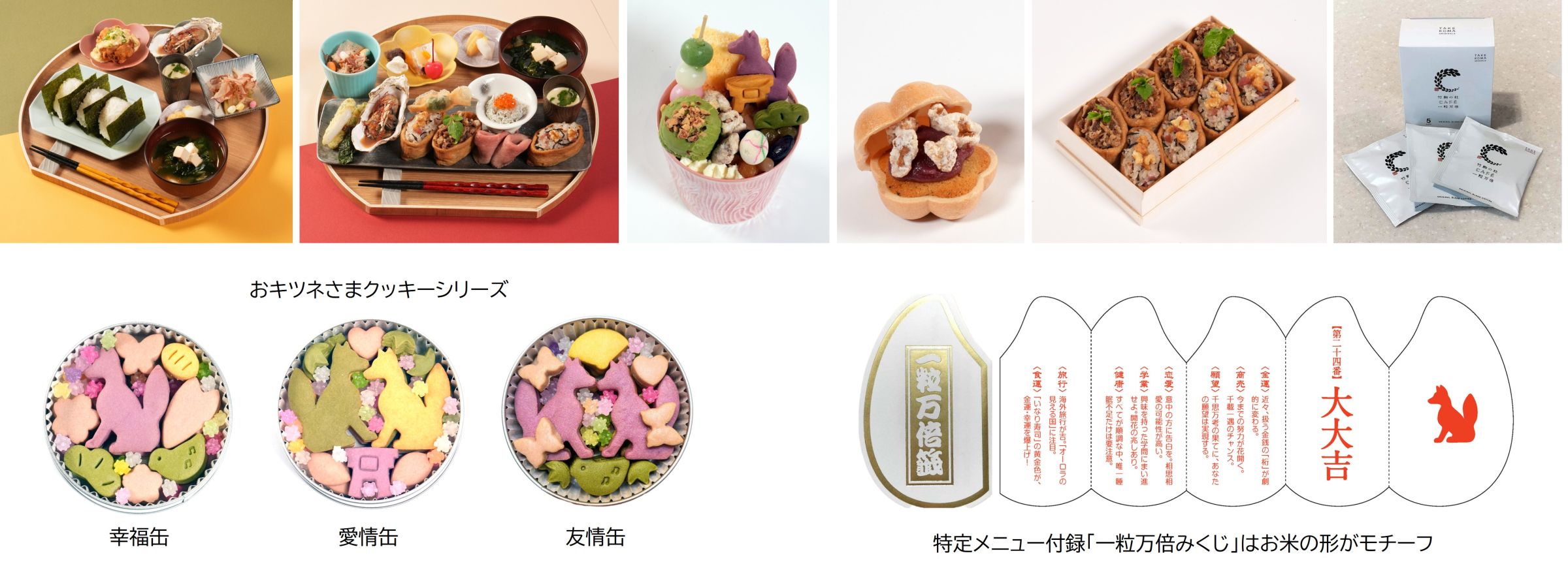
Top: Food menu, sweets menu, souvenirs Bottom: Souvenirs, special menu supplements
Regional collaboration through product sales and events
Products from Miyagi Prefecture will be on sale, including "Temari," a traditional craft that has been considered an "auspicious gift," "obico," an upcycled product of vintage kimonos and obi, and "Tennen Kaiki," an aroma and cosmetics brand that uses natural materials from Tohoku. Participatory events such as "Temari" workshops will also be held to promote interaction between the shrine and worshippers and to foster community building.

Video promotion with an eye on inbound tourism
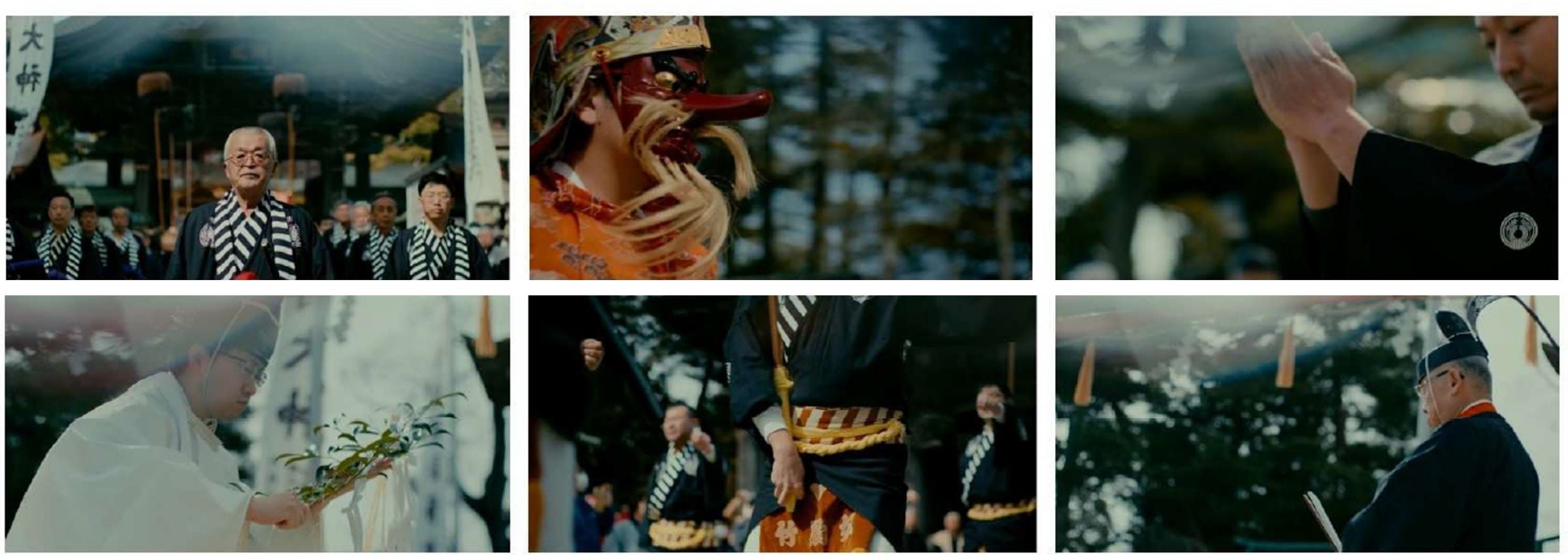
The video was produced by the Sendai-based creative team MOREDRAW. The Cannes Film Festival-winning creators from Paris, France, capture on camera the development of local culture and community centered around Takekoma Shrine.
Key points of spatial concept design
The spatial concept design concept is "to evoke." Just as worshippers feel liberated and healed by being surrounded by the sacred atmosphere of a shrine, we envisioned a resting place that would evoke feelings that tend to fade in daily life. The "Takekoma no Mori" grove of the shrine, which allows you to feel the four seasons, the architecture that blends with nature, and the interior that conveys the strength and warmth created by nature will stimulate the senses of visitors—sight, touch, smell, etc.—and aim to create a place where people can feel enriched, interact, and lively.
To create a sense of unity with nature, the landscaping, architecture, and interior design are seamlessly integrated. From the rest area, large openings are created on the approach side, with the entire surface made of glass, allowing visitors to spend time while gazing at the sacred grove and the "Zuishinmon" gate. interiors materials include soil and wood originating from the Tohoku region, and by using the same materials for both the exterior and interior spaces, the feeling of being nestled in the forest is maximized. Sustainable concept design is also a priority, aiming to create a space that people will cherish for many years to come.
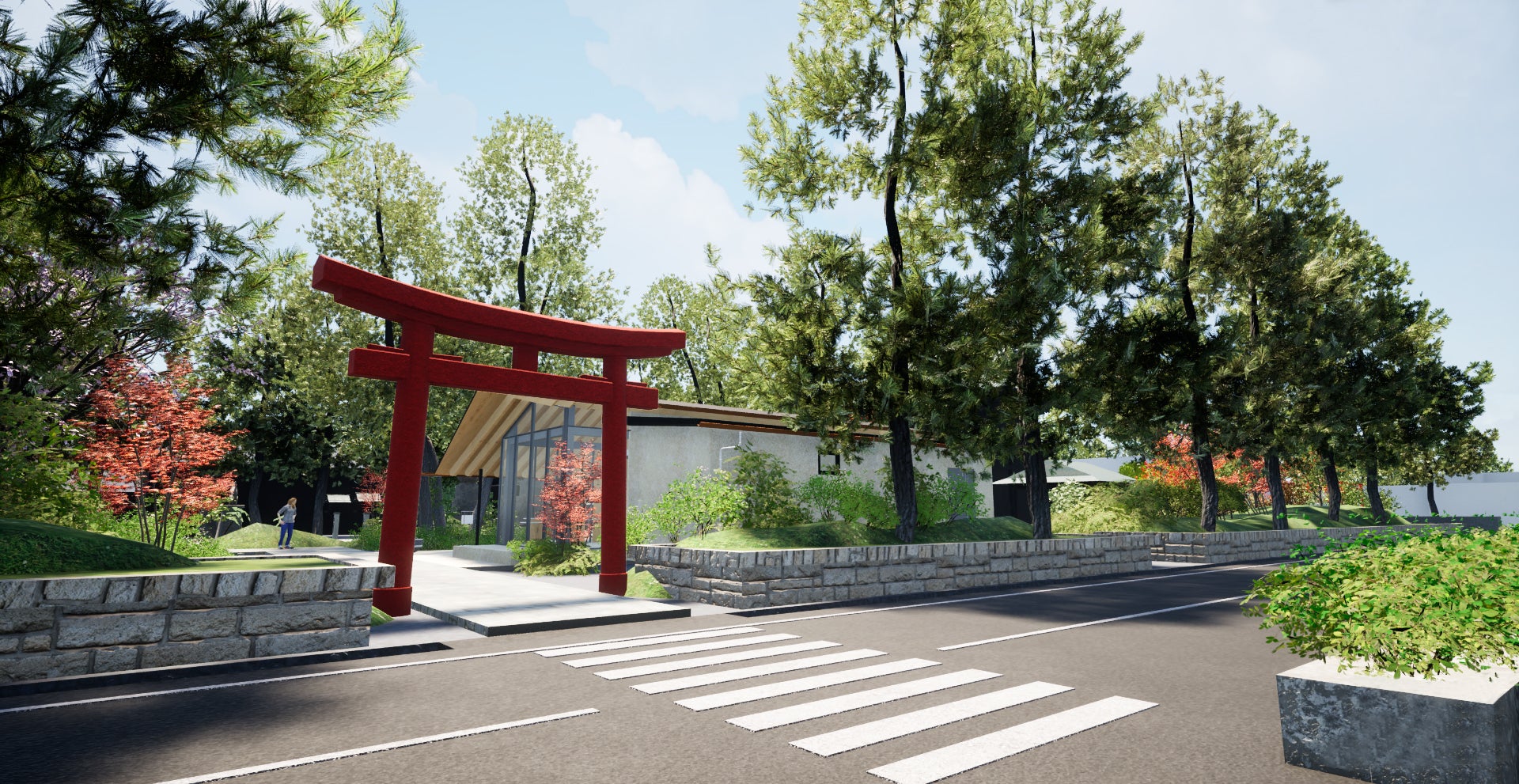
Landscaping | Maintenance of the Shrine Forest
Based on the theme of a natural forest that changes its appearance with the seasons, we made use of the existing pine and Himalayan cedar trees and combined evergreen and deciduous trees.
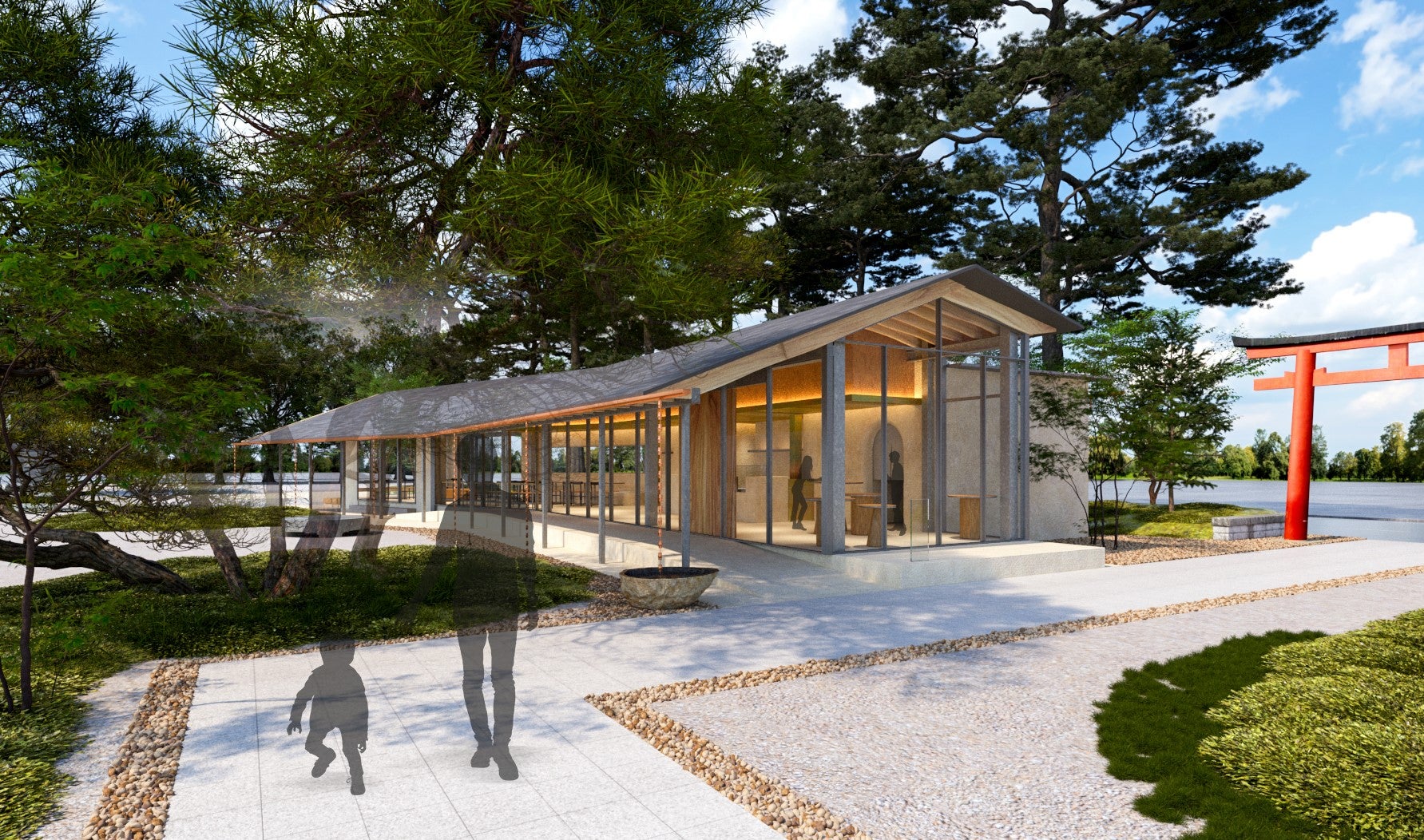
Architecture | Building and gable roof leading to Zuishinmon Gate
The building is located along the approach to the shrine. A wooden gabled roof connects the axis from the torii gate at the entrance to the shrine to the Zuishinmon Gate. The rafters are made from local red pines (trees that gods reside in) and wood from the Tohoku region, as there are many red pines on the site.
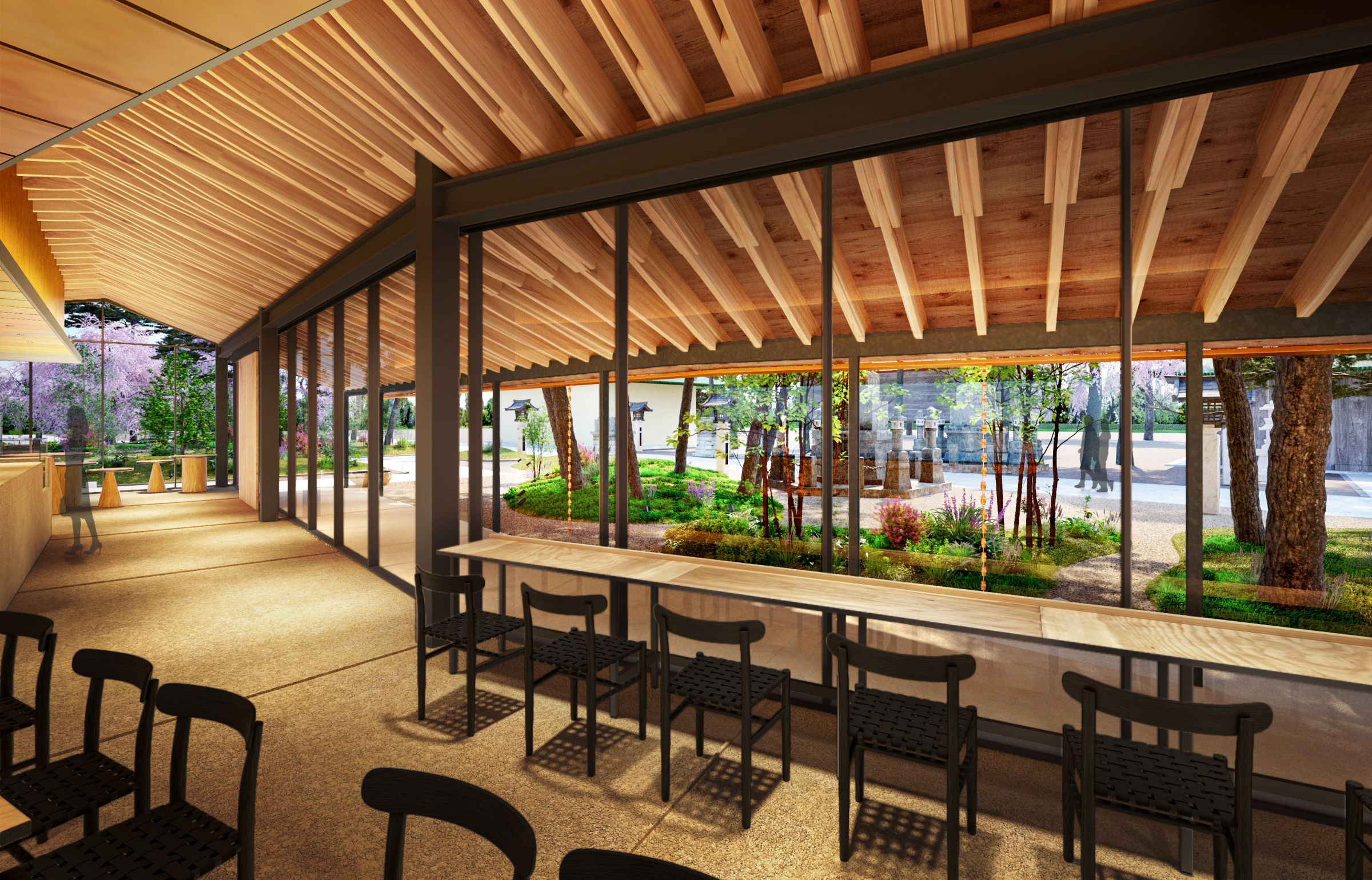
Interior Design | Creating a sense of unity with nature
The design, including the openings, natural interiors materials, gradient-painted ceiling, and lighting plan, highlights the rich and ever-changing scenery of the forest throughout the seasons. Its open layout, facing the approach to the shrine, also ensures easy access for visitors.
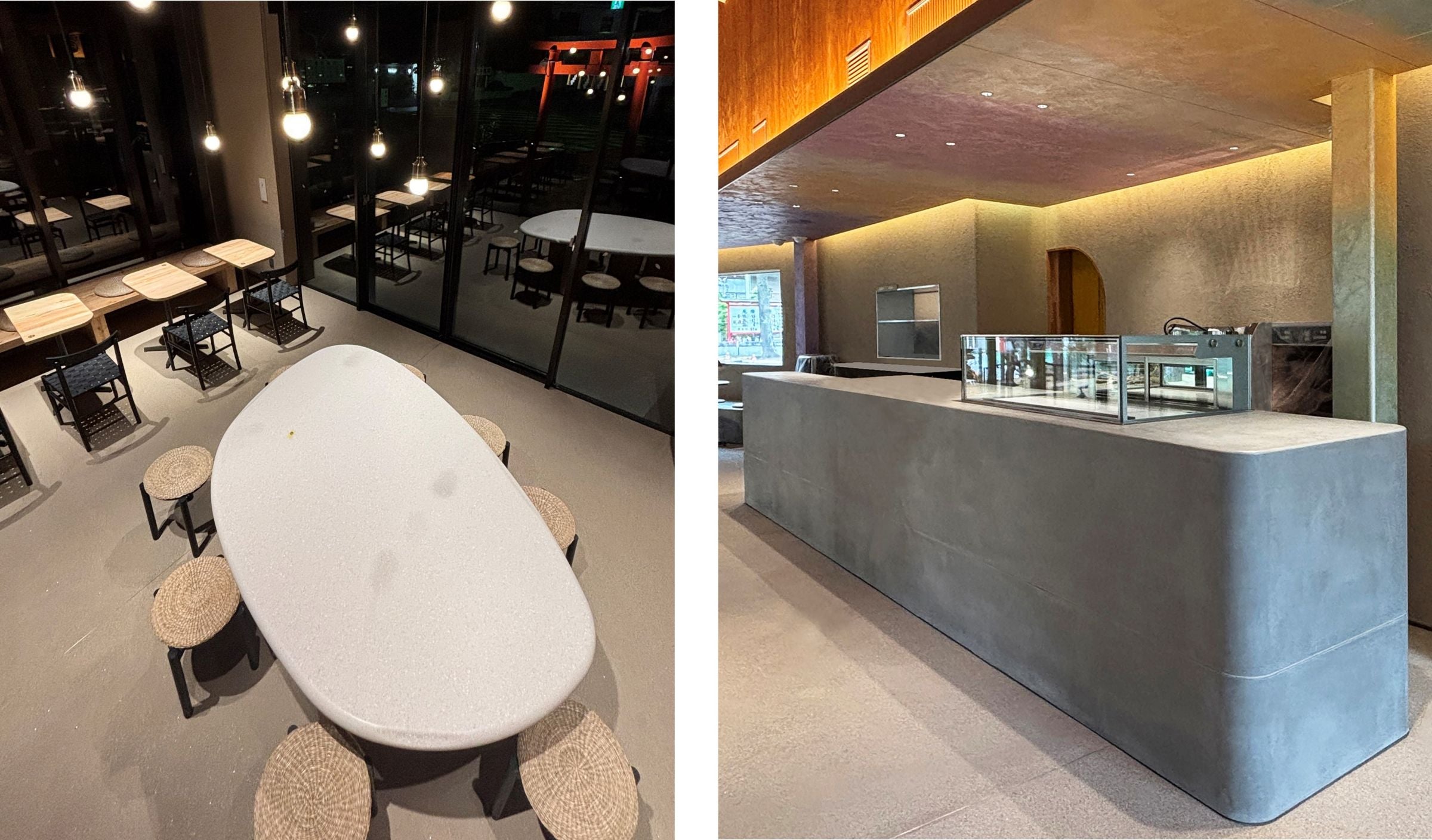
Interior | The brand's passion is reflected in the motif
The grain of the slogan "ichiribu manbai" (``one grain is worth ten thousand grains'') which is also in the facility's name is represented on the symbol table, while the ``millstone'' necessary for processing grains is represented as the motif of the main counter.
Amenities, logos, main visuals, etc.
Sustainable Initiatives
The timber used was selected in collaboration with the forestry cooperative in Tome City, Miyagi Prefecture, to source local tree species. Even oak wood affected by oak wilt, which is generally difficult to distribute, was used for fixtures and other items, contributing to the forest cycle. construction and processing were carried out in cooperation with companies in the Tohoku region, taking into consideration the use of local resources and the reduction of environmental impact, such as energy consumption and carbon dioxide emissions during transportation.
Use of wood for fittings and fixtures
The entrance door is made of zelkova, the other doors are made of wild cherry, and the original furniture such as tables and chairs are made of cut Himalayan cedar and fir trees that were growing on the shrine grounds and were at risk of falling due to rotting. The interior space is filled with the atmosphere of a rich forest created by the diverse trees. *The recycled trees are branded with the Takekoma Shrine's name as a message.

Wood preparation and processing: Tome Town Forestry Association
Related information
| Shrine name | Takekoma Shrine, one of the three Inari shrines in Japan (1-1 Inaricho, Iwanuma City, Miyagi Prefecture) |
|---|---|
| Total site area | Shrine total site area: Approximately 41,000 m2 / Project plan area: Approximately 1,500 m2 (first phase only) |
| First phase opening details and area | "Takekoma no Mori CAFÉ Hitobumimanbai" (building area 187.46 m2), Takekoma no Mori (first phase development: approx. 1,500 m2) |
| Overview of "Takekoma no Mori CAFÉ Hitotsubu Manbai" | Business hours and holidays: 10:00-17:00 (may vary depending on the season) Open all year round (planned) Opening date: Thursday, December 26, 2024 from 12:00 p.m. |
| "Takekoma no Mori CAFÉ Hitobito Manbai" Official Website |
※please note
The linked website is not the website of NOMURA Co.,Ltd., and is not under our control.
・The address of the website posted in this notice is the one at the time of creation of this page. Website addresses are subject to obsolescence or change. Please check yourself for the latest address.
・Please check with the linked organization/organization regarding the linked website.
Please contact us using the button below if you have an inquiry, want to request a quote or request documents.
We have created a separate “FAQ page” that lists the most common questions we are asked.
Please take a look at this page if you have a question.